
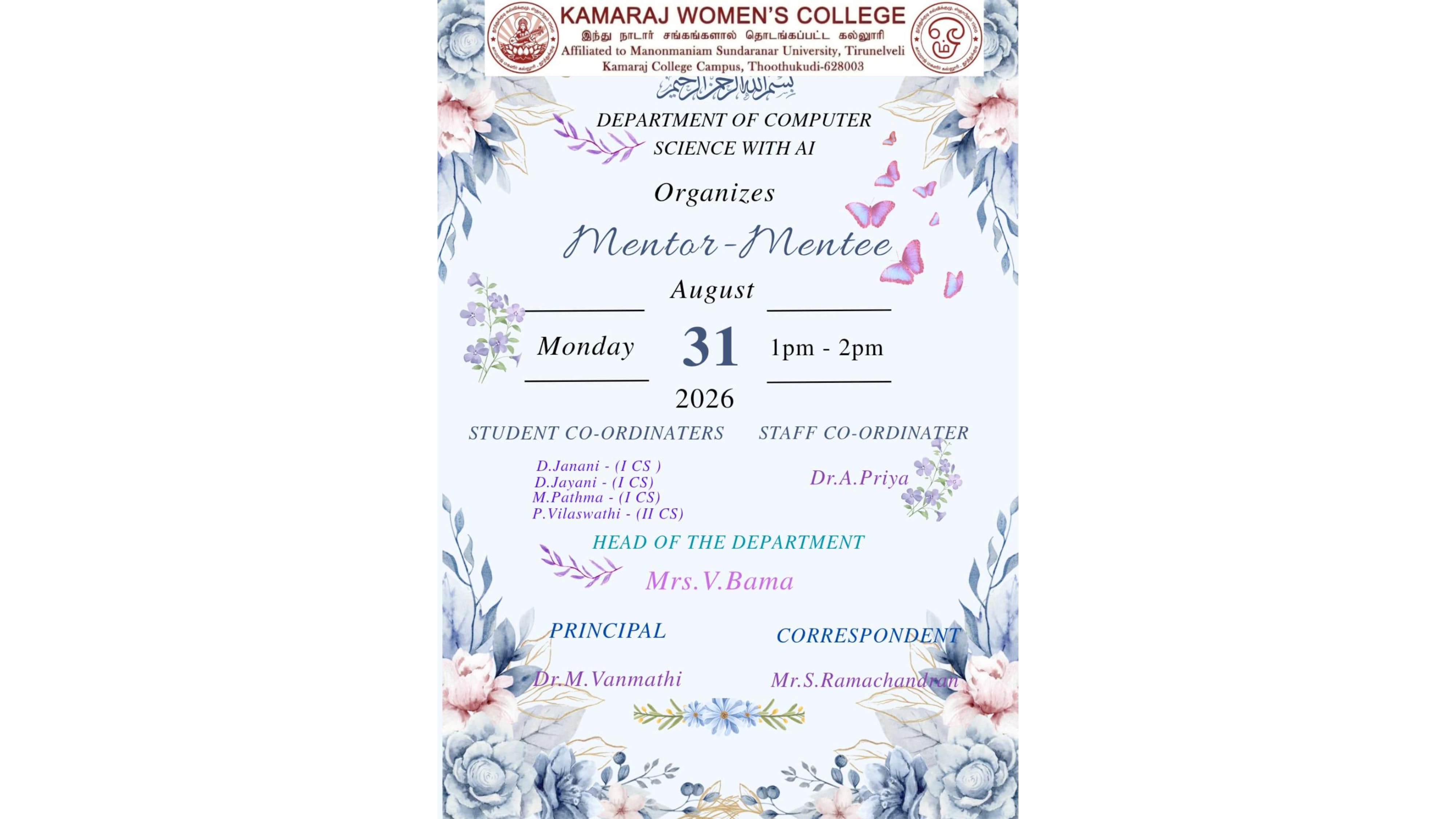
CS with AI Mentoring Supports Student Growth at KWC
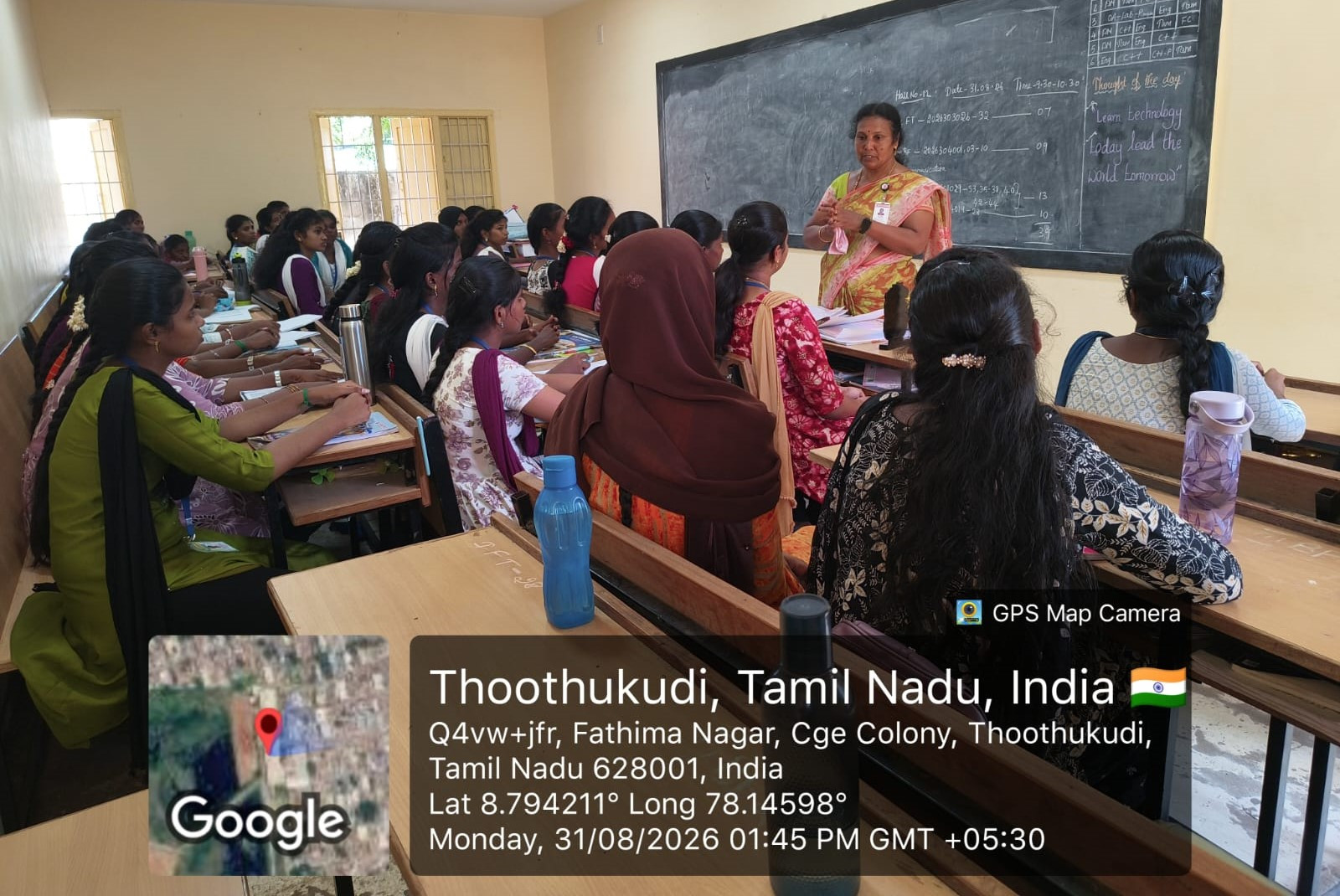
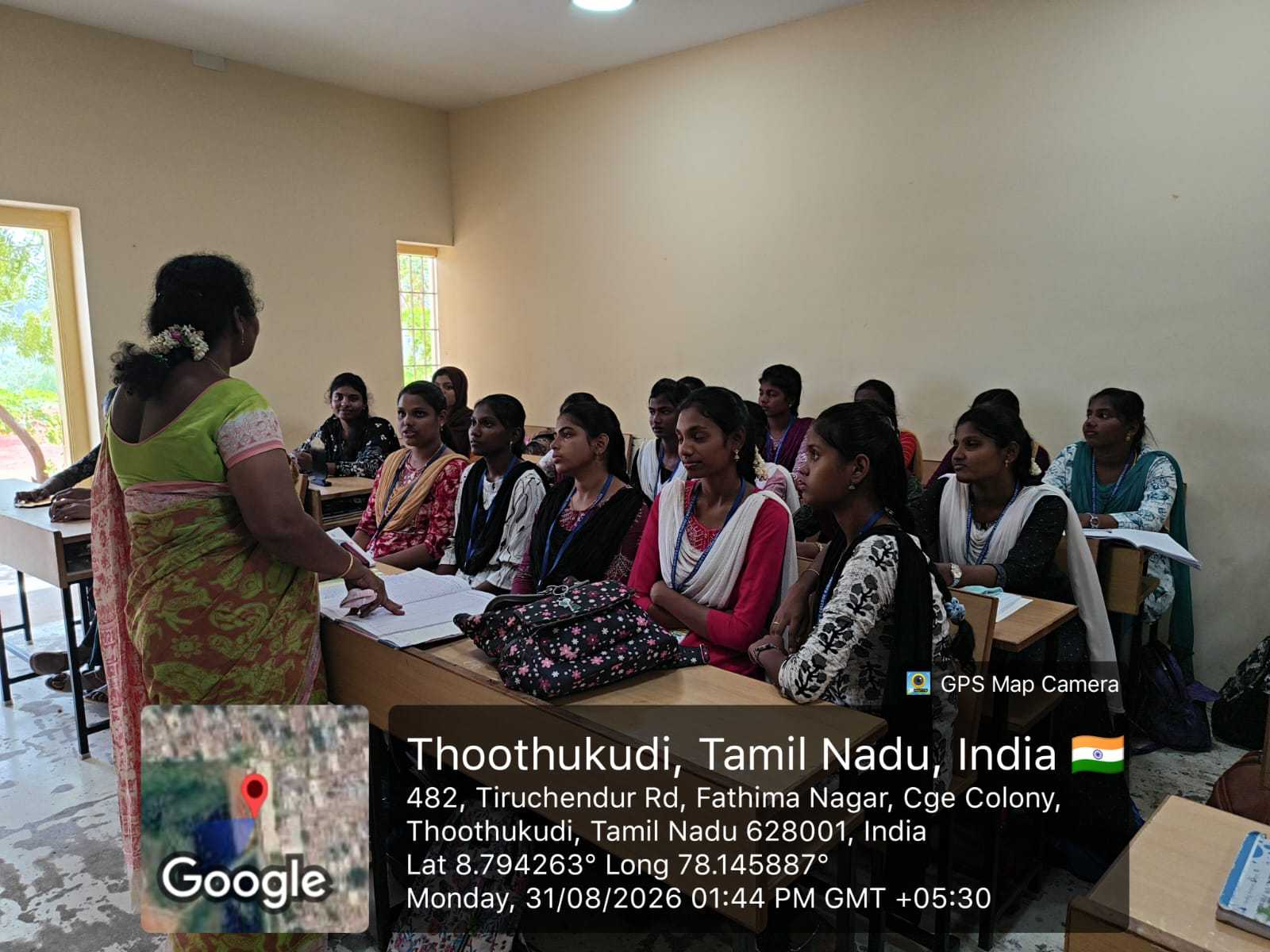
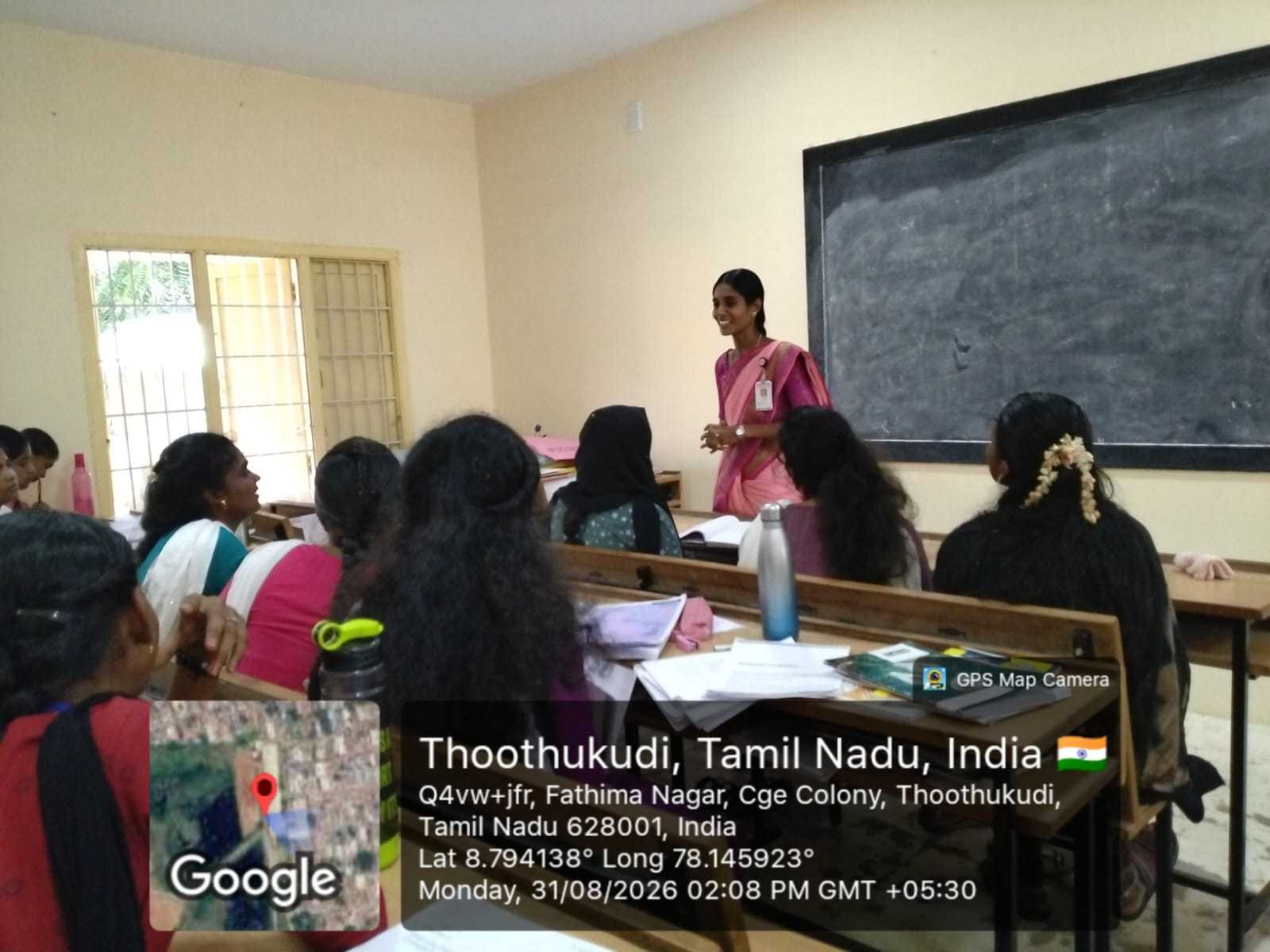
Report on CS with AI Mentoring Programme
The CS with AI Mentoring programme organized by the Department of Computer Science with Artificial Intelligence, Kamaraj Women’s College, Thoothukudi, was held on 31 August 2026 from 1.00 p.m. to 2.00 p.m. The programme focused on strengthening the relationship between students and faculty mentors while providing academic and personal guidance.
During the programme, mentors interacted with their respective mentees and discussed their academic progress, attendance, learning difficulties, career goals and overall development. Moreover, students were encouraged to share their concerns openly and seek suitable guidance whenever required.
Objectives of the CS with AI Mentoring Programme
The programme focused on the following objectives:
- Strengthen the relationship between mentors and mentees
- Monitor students’ academic progress
- Review attendance and regularity
- Identify learning difficulties
- Provide academic and personal guidance
- Understand the individual needs of students
- Encourage students to discuss their concerns freely
- Guide students towards suitable career goals
- Support academic improvement and personal growth
Thus, the programme combined academic monitoring, individual guidance and student support.
Interaction Between Mentors and Mentees
The mentor–mentee interaction formed the main part of the programme.
Faculty mentors interacted directly with the students and reviewed their academic progress. The discussions gave students an opportunity to communicate openly and seek guidance on matters related to their studies and overall development.
Furthermore, regular interaction helped mentors understand the strengths, needs and difficulties of individual students.
Review of Academic Progress
The mentors reviewed the students’ academic performance and progress during the interaction.
Students were encouraged to remain consistent in their studies and improve in areas where they faced difficulties. In addition, mentors provided suggestions to help them manage their academic responsibilities more effectively.
The discussions also encouraged students to take greater responsibility for their learning and maintain steady progress.
Attendance and Regularity
Attendance formed another important part of the mentoring discussion.
The mentors encouraged students to attend classes regularly and make effective use of classroom learning. Regular attendance helps students follow lessons continuously and reduces learning gaps.
Moreover, consistent participation gives students better opportunities to interact with faculty members and clarify doubts.
Addressing Learning Difficulties
The CS with AI Mentoring programme also focused on identifying learning difficulties faced by students.
Mentors encouraged the mentees to discuss subjects, concepts or academic activities that they found challenging. Following this, suitable suggestions were provided to help them improve.
This individual approach enabled faculty members to understand the specific needs of students rather than providing general guidance alone.
Encouraging Open Communication
Students were encouraged to communicate freely with their mentors and share concerns that affected their academic or personal development.
A supportive mentor–mentee relationship can help students feel more comfortable seeking guidance. Therefore, the programme emphasized open communication and regular interaction.
Moreover, students were encouraged to approach their mentors whenever they required academic or personal support.
Career Goals and Future Planning
Career planning was another important aspect of the programme.
The mentors interacted with students about their career goals and future plans. Students were encouraged to think about suitable opportunities related to Computer Science and Artificial Intelligence and identify areas that matched their interests.
Furthermore, early career planning can help students understand the skills and knowledge they need to develop during their degree programme.
Identifying Individual Student Needs
The programme placed importance on understanding the individual needs of every student.
Students may differ in their academic strengths, learning styles, confidence levels and career interests. Therefore, mentors discussed these areas individually and provided suitable guidance.
As a result, the programme supported a more personalized approach to student development.
Supporting Personal Growth
The mentoring programme was not limited to academic performance alone. It also focused on the overall development and personal growth of students.
Mentors encouraged students to develop confidence, discipline, responsibility and a positive approach towards learning.
In addition, students received guidance to help them balance academic responsibilities with their broader personal and career goals.
Strengthening the Mentor–Mentee Relationship
Regular mentoring plays an important role in building trust and communication between students and faculty members.
Through the CS with AI Mentoring programme, mentors could monitor student progress more closely and provide timely support.
At the same time, students gained confidence to approach their mentors for guidance. Therefore, the programme contributed to a stronger and more supportive academic environment.
Programme Outcomes
The CS with AI Mentoring programme provided several meaningful outcomes:
- Students received individual academic guidance
- Academic progress was reviewed and discussed
- Students understood the importance of regular attendance
- Learning difficulties were identified
- Students were encouraged to communicate openly with mentors
- Career goals and future plans were discussed
- Individual student needs were identified
- Suitable support was provided for academic improvement
- The programme encouraged personal growth and overall development
- The mentor–mentee relationship was strengthened
Consequently, the programme provided students with academic guidance, personal support and career direction.
Conclusion
The CS with AI Mentoring programme organized by the Department of Computer Science with Artificial Intelligence, Kamaraj Women’s College, successfully created a supportive platform for interaction between students and faculty mentors.
The programme addressed academic progress, attendance, learning difficulties, career goals and overall development. Most importantly, students were encouraged to discuss their concerns openly and seek guidance whenever required.
The programme helped mentors understand the individual needs of their mentees and provide suitable support for their academic improvement and personal growth. Overall, the session strengthened the mentor–mentee relationship and encouraged students to remain focused on their academic and future goals.