
World Hepatitis Day Awareness Programme Promotes Liver Health
Report on World Hepatitis Day Awareness Programme
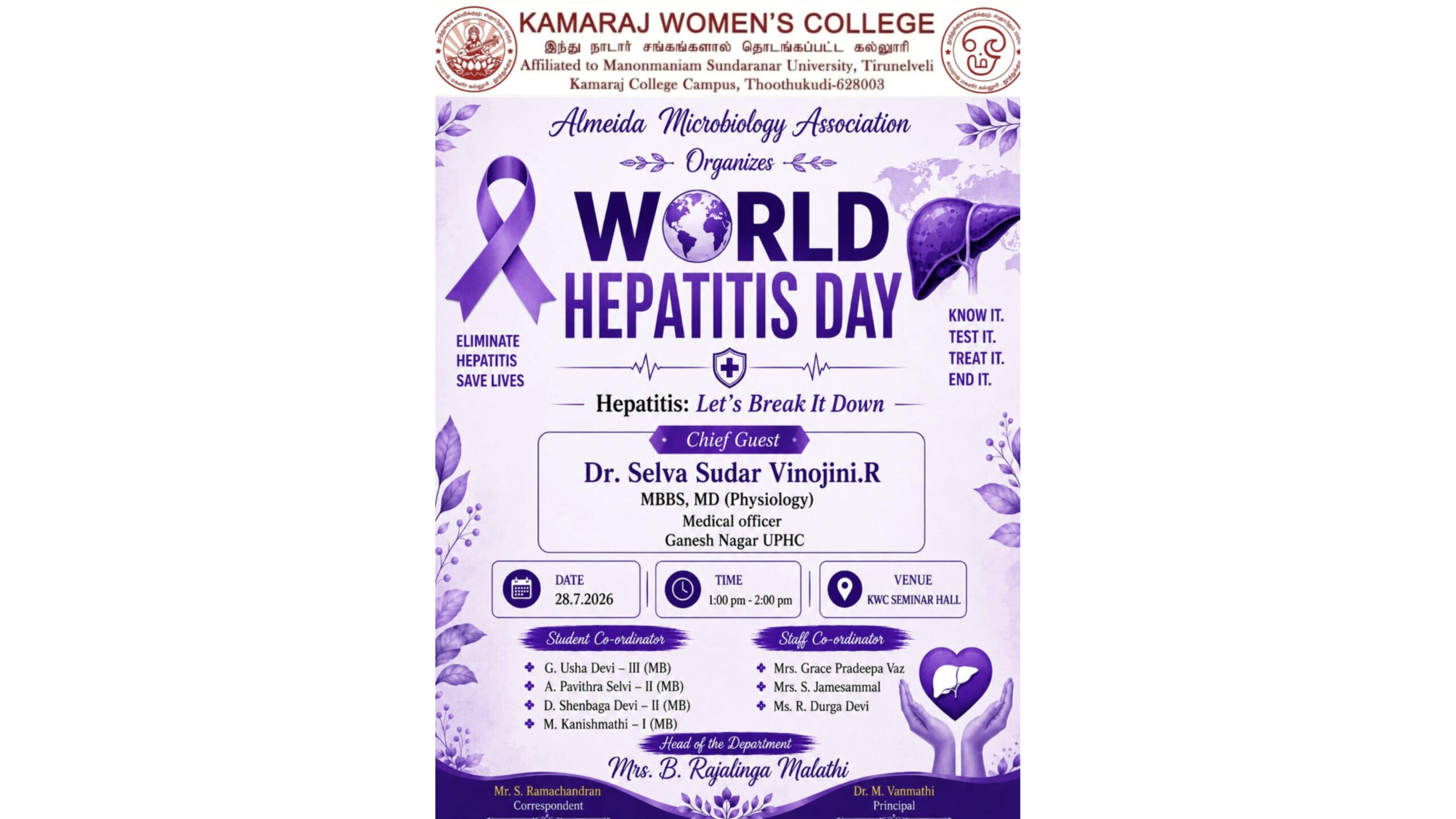
The Department of Microbiology and the Almeida Microbiology Association of Kamaraj Women’s College, Thoothukudi, organized a World Hepatitis Day Awareness Programme titled “Hepatitis: Let’s Break It Down” on 28 July 2026 from 1.00 p.m. to 2.00 p.m. at the KWC Seminar Hall.
The programme aimed to educate students about hepatitis, its causes, symptoms, prevention, diagnosis, treatment, and the importance of vaccination. It also encouraged students to protect liver health by following healthy lifestyle practices and spreading awareness in society.
Faculty members and students of the Department of Microbiology actively participated in the programme.
Objectives of the Programme
The programme was organized to:
- Create awareness about hepatitis and liver health
- Explain the different types of viral hepatitis
- Teach preventive measures and healthy habits
- Highlight the importance of early diagnosis
- Promote Hepatitis B vaccination
- Encourage safe hygiene and infection control practices
- Motivate students to become health ambassadors
As a result, students gained practical knowledge about preventing hepatitis and protecting themselves and their communities.
Welcome Address
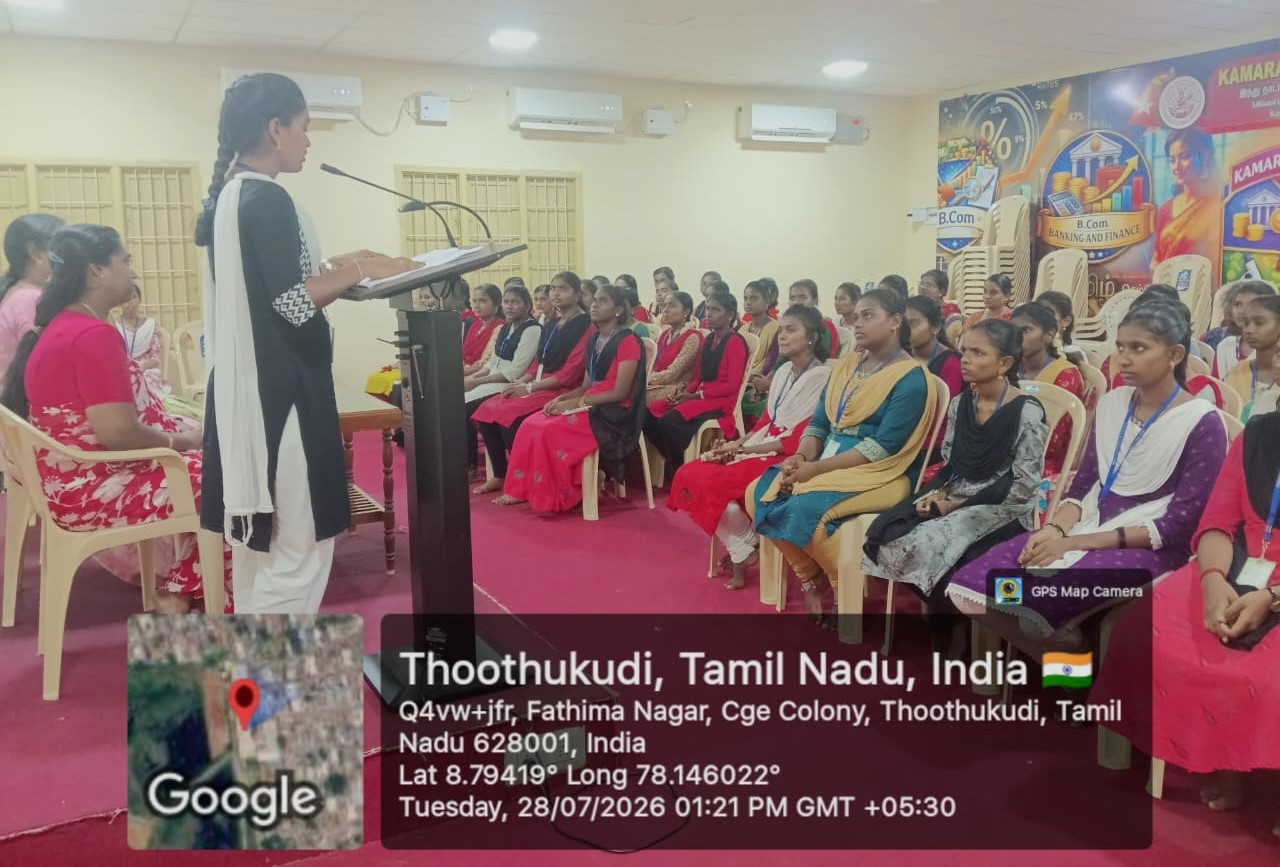
The programme began with a warm welcome to the resource person, faculty members, and students.
Next, the organizers explained why World Hepatitis Day is observed every year on 28 July. They highlighted the need to increase public awareness about viral hepatitis, encourage early diagnosis, and promote timely treatment.
The introduction also reminded students that many liver diseases can be prevented through proper awareness and healthy habits.
Guest Speaker
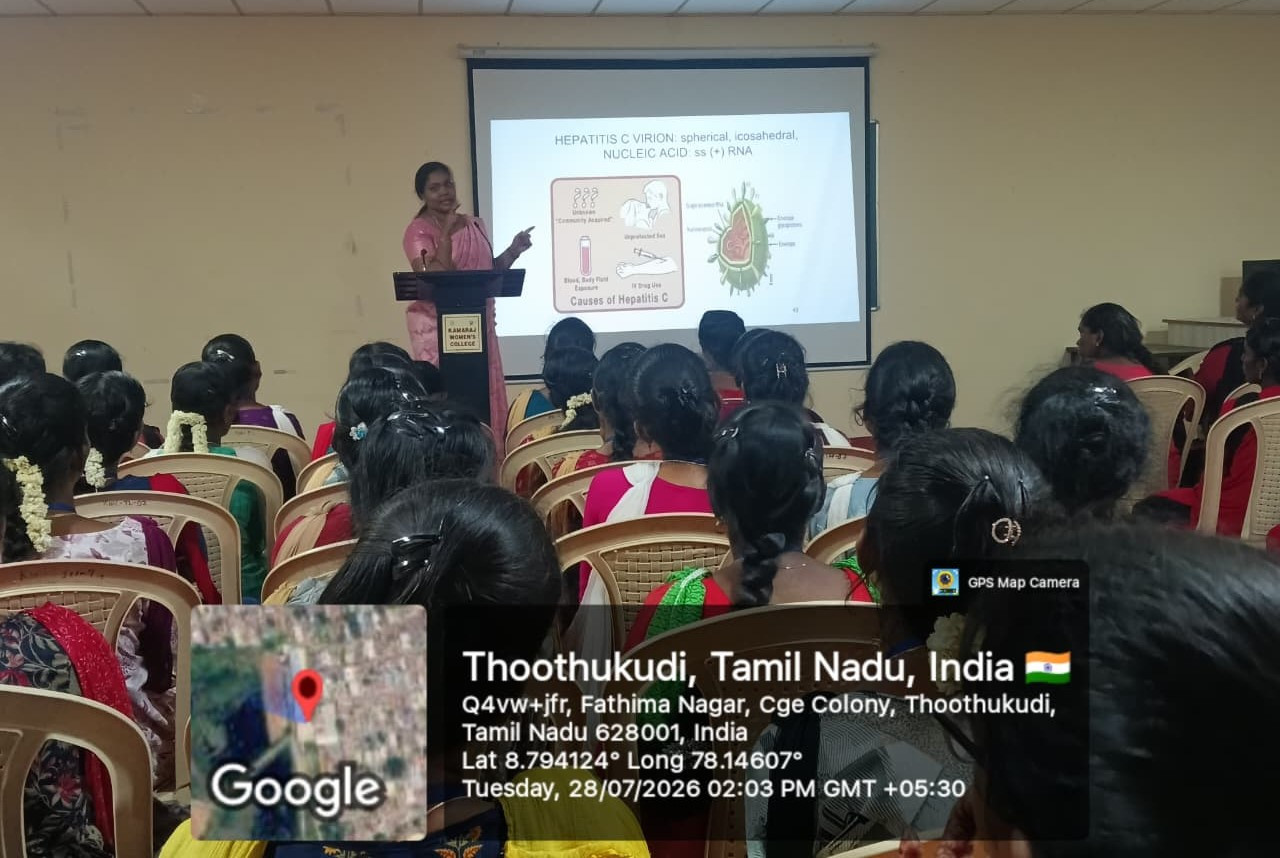
The guest lecture was delivered by Dr. Selva Sudar Vinojini R., MBBS, MD (Physiology), Medical Officer, Ganesh Nagar Urban Primary Health Centre.
She began her presentation by explaining the structure and functions of the liver. She described how the liver helps digest food, removes harmful substances from the body, stores nutrients, and supports overall health.
Furthermore, she explained that protecting the liver is essential for leading a healthy life.
Understanding Hepatitis
The speaker gave a clear explanation of hepatitis and its causes.
She explained that hepatitis is a disease that causes inflammation of the liver. Viral infections are the most common cause. However, alcohol abuse, autoimmune diseases, certain medicines, and harmful chemicals can also damage the liver.
Moreover, she explained that some forms of hepatitis last only a short time, while others may become chronic and require long-term treatment.
Types of Hepatitis
The resource person explained the five major hepatitis viruses:
- Hepatitis A
- Hepatitis B
- Hepatitis C
- Hepatitis D
- Hepatitis E
She explained that Hepatitis A and Hepatitis E usually spread through contaminated food and drinking water.
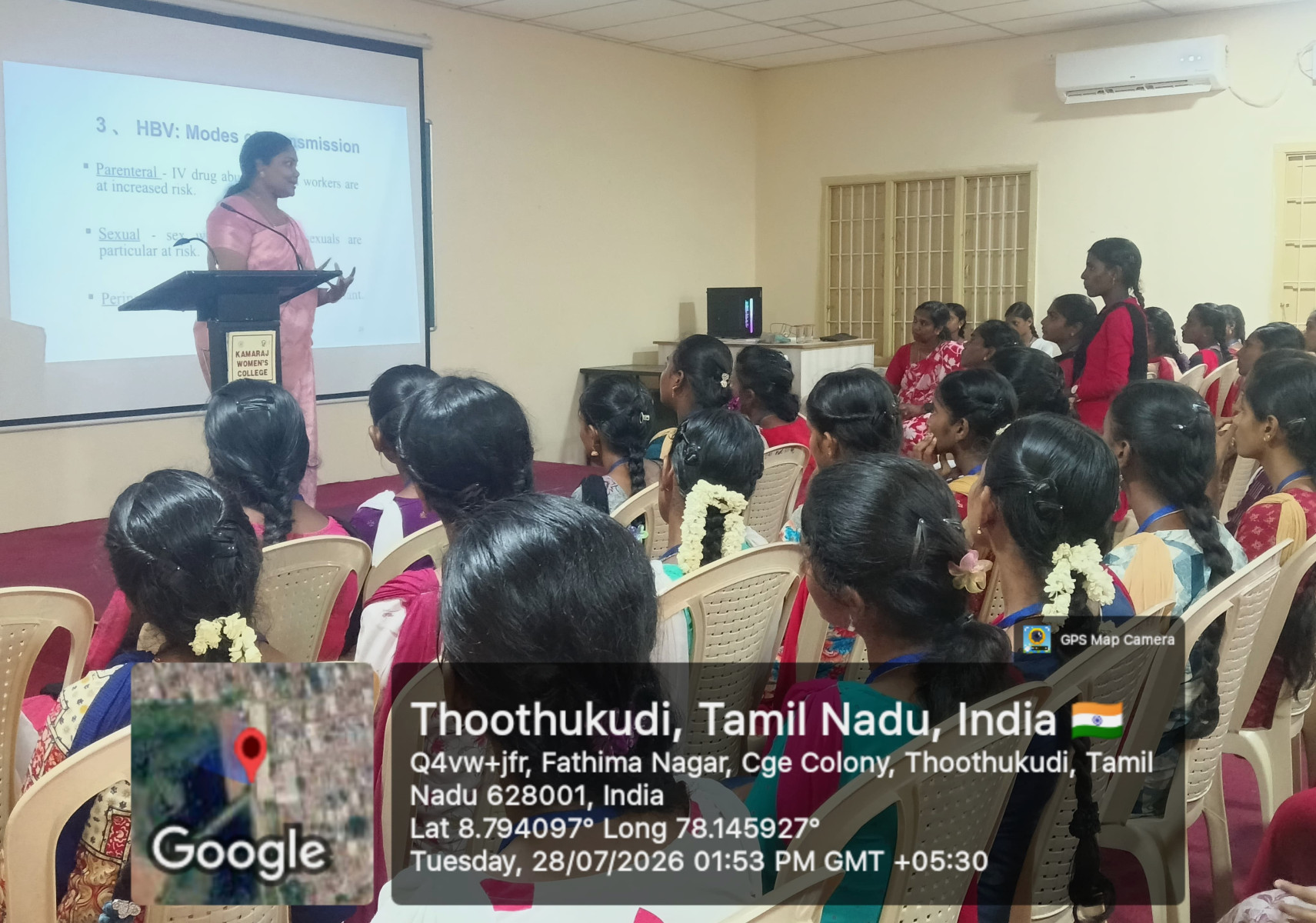
In contrast, Hepatitis B, Hepatitis C, and Hepatitis D spread through infected blood, unsafe injections, contaminated medical instruments, and unprotected sexual contact.
Therefore, she encouraged students to maintain good hygiene, avoid unsafe medical practices, and ensure safe blood transfusion procedures.
Common Symptoms
The speaker discussed the common symptoms of hepatitis, including:
- Fever
- Fatigue
- Nausea and vomiting
- Loss of appetite
- Abdominal pain
- Dark urine
- Pale stools
- Jaundice
However, she also explained that some people with chronic hepatitis may not show symptoms for many years.
Because of this, regular health check-ups and early screening are very important.
Complications of Hepatitis
The speaker explained that untreated hepatitis can seriously damage the liver.
It may lead to:
- Liver cirrhosis
- Liver failure
- Liver cancer
- Permanent liver damage
Therefore, early diagnosis and proper medical treatment can prevent these complications and improve recovery.
Diagnosis and Treatment
The resource person explained the tests used to diagnose hepatitis.
These include:
- Liver function tests
- Blood tests
- Serological investigations
- Molecular diagnostic tests
- Ultrasound and imaging tests
She also explained that modern medical technology helps doctors diagnose hepatitis quickly and accurately.
Next, she discussed the available treatment methods.
Some patients require only supportive care, while others need antiviral medicines and long-term follow-up.
She advised students to follow medical advice carefully and avoid self-medication.
Importance of Vaccination
The speaker strongly emphasized the importance of Hepatitis B vaccination.
She explained that vaccination is one of the best ways to prevent Hepatitis B infection.
Moreover, she encouraged every student to complete the recommended vaccination schedule.
She gave special attention to healthcare workers and laboratory science students because they have a greater chance of coming into contact with infected blood.
Healthy Lifestyle Practices
The students also learned several practical ways to protect liver health.
The speaker encouraged everyone to:
- Maintain good personal hygiene
- Drink clean and safe water
- Eat a balanced diet
- Avoid alcohol consumption
- Use sterile medical equipment
- Complete the Hepatitis B vaccination schedule
- Seek medical advice whenever symptoms appear
Furthermore, she reminded students that prevention is always easier and safer than treatment.
Interactive Session
An interesting question-and-answer session followed the lecture.
Students actively asked questions about:
- Vaccination schedules
- Modes of transmission
- Laboratory diagnosis
- Recent advances in treatment
- Preventive practices
The guest speaker answered every question patiently with clear scientific explanations.
As a result, students gained better knowledge and greater confidence in understanding hepatitis and liver health.
Student Participation
Students participated enthusiastically throughout the programme.
They listened carefully to the lecture, interacted with the guest speaker, and actively joined the discussion.
Moreover, the programme encouraged them to:
- Protect their own health
- Promote vaccination
- Follow healthy hygiene practices
- Create awareness in their communities
- Support liver disease prevention
The active participation of the students made the programme informative and meaningful.
Programme Outcomes
The World Hepatitis Day Awareness Programme successfully achieved its objectives.
The programme helped students:
- Understand different types of hepatitis
- Identify common symptoms
- Learn safe preventive practices
- Understand the value of early diagnosis
- Recognize the importance of Hepatitis B vaccination
- Develop awareness about liver health
- Become responsible health ambassadors
Consequently, the students became more aware of the importance of protecting liver health through vaccination, hygiene, and timely medical care.
Conclusion
The programme concluded with a heartfelt Vote of Thanks.
The student coordinator thanked Dr. Selva Sudar Vinojini R. for delivering an informative and inspiring lecture. The coordinator also thanked the college management, faculty members, student organizers, and participants for making the programme successful.
Overall, the World Hepatitis Day Awareness Programme increased awareness about hepatitis prevention, vaccination, early diagnosis, and treatment. Most importantly, it inspired students to adopt healthy lifestyle practices and share their knowledge with their families and communities.