
World English Language Day Explores the Evolution of English at KWC
Report on World English Language Day Celebration
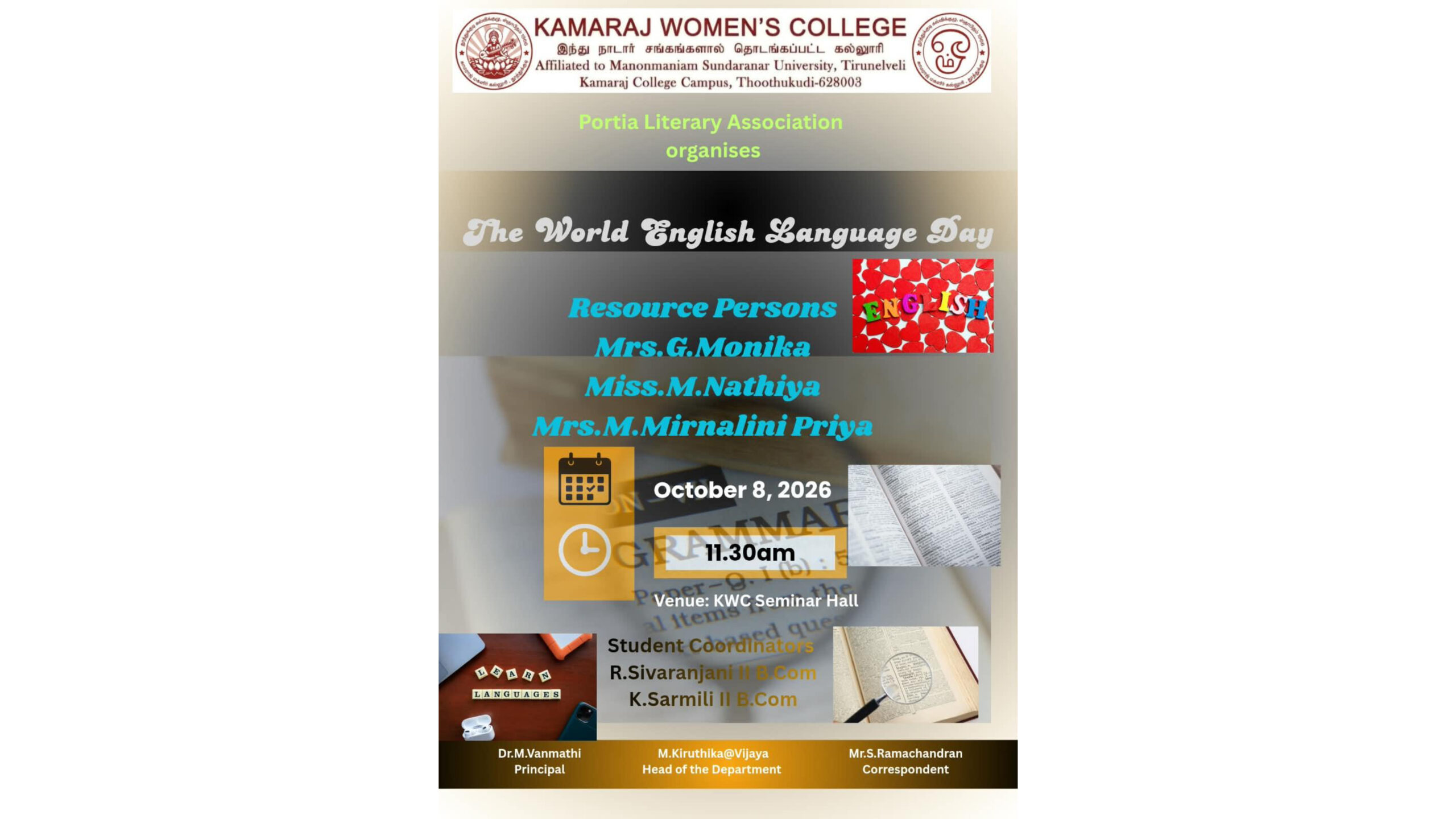
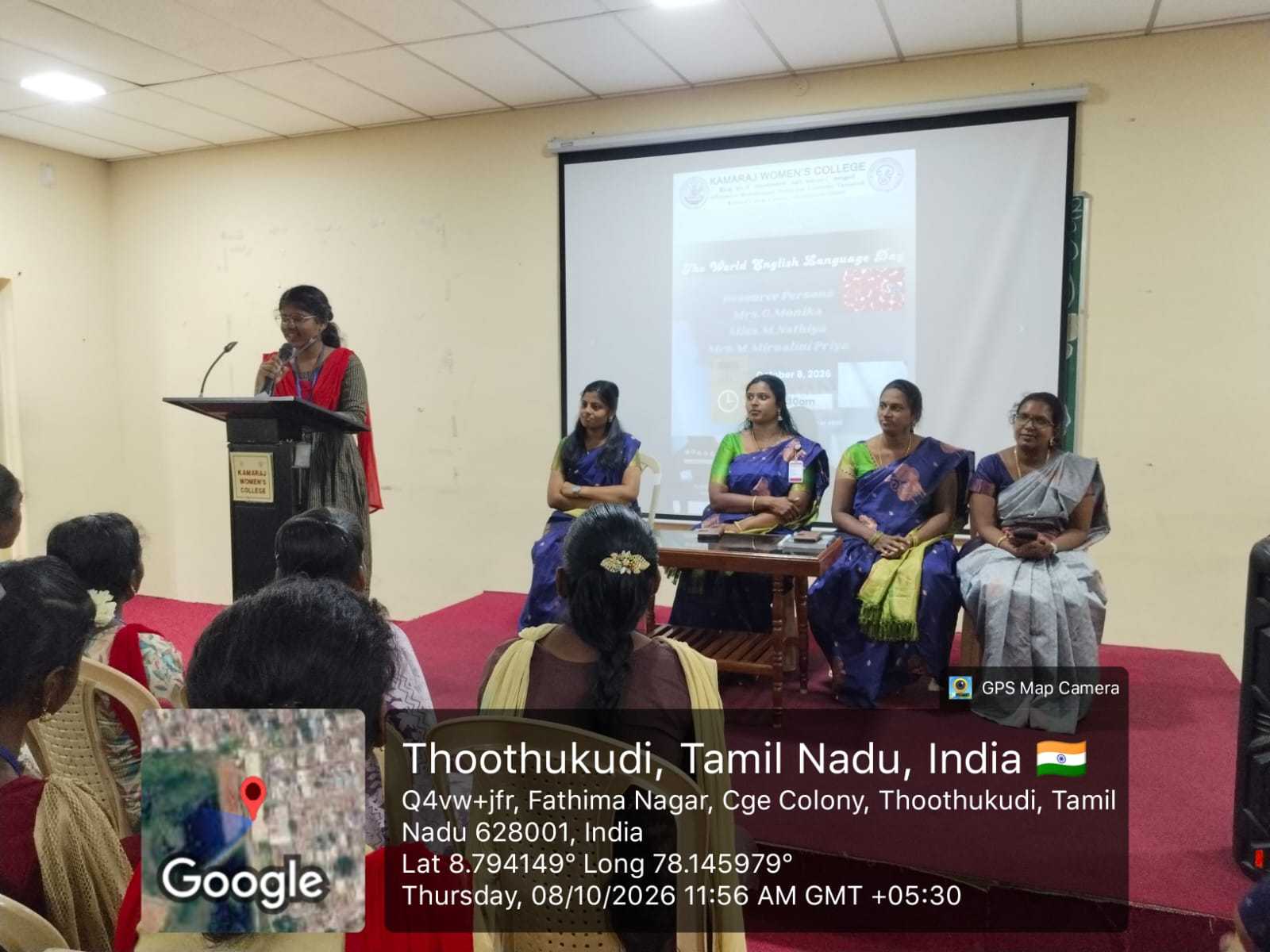
The Portia Literary Association of Kamaraj Women’s College, Thoothukudi, organized a special programme to celebrate World English Language Day on 8 October 2026 at 11.30 a.m. in the KWC Seminar Hall. The programme aimed to help students understand the history, development and changing nature of the English language.
The celebration took place under the guidance of Dr. M. Vanmathi, Principal; Ms. M. Kiruthika @ Vijaya, Head of the Department; and Mr. S. Ramachandran, Correspondent.
Three faculty members delivered informative presentations on different aspects of English. Moreover, the programme combined historical knowledge, cultural understanding and modern language trends to create an engaging learning experience.
Objectives of World English Language Day
The programme focused on the following objectives:
- Create awareness about the history and evolution of the English language
- Help students understand the development of alphabet systems
- Explore the historical journey of English in India
- Highlight the distinctive features of Indian English
- Introduce students to modern language trends and Gen Z vocabulary
- Encourage active participation through interactive learning
- Develop language awareness and communication skills
- Promote interest in English language learning
Thus, the celebration encouraged students to explore English from historical, cultural and contemporary perspectives.
From Pictures to Words: The Birth of the Alphabet
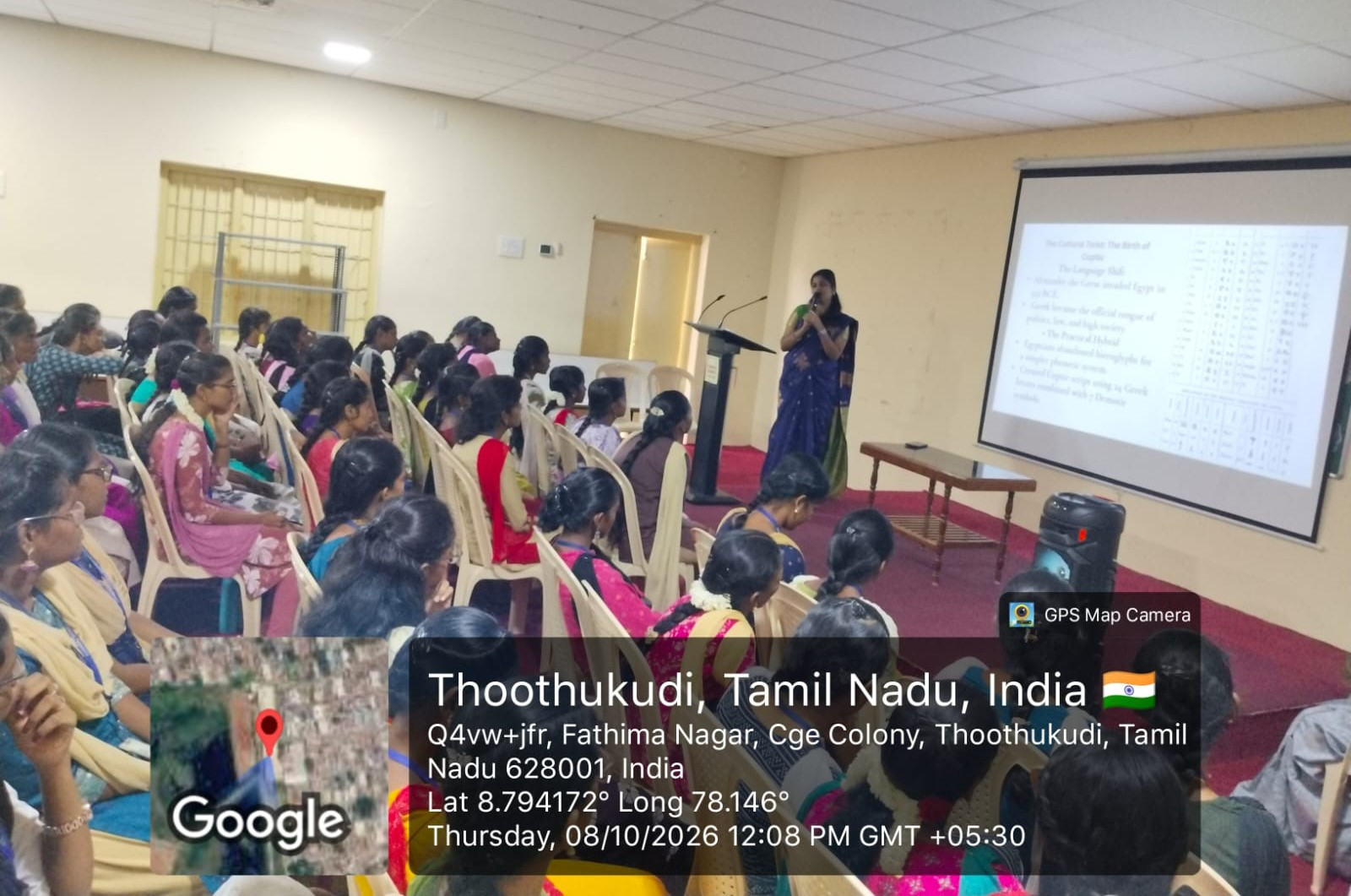
The first presentation, “From Pictures to Words: The Birth of the Alphabet,” was delivered by Ms. M. Nathiya.
She introduced students to the fascinating history of human communication and explained how early writing systems developed over time.
Her presentation traced the journey from ancient picture-writing and Egyptian hieroglyphs to the development of alphabetic writing systems.
Furthermore, she explained how people gradually developed more systematic ways to represent language through written symbols.
The session helped students understand that modern alphabets emerged through a long process of change and adaptation.
Moreover, the presentation encouraged students to appreciate the historical foundations of written communication and the importance of language in human civilization.
From East India Company to Indian English
The second presentation, “From East India Company to Indian English,” was delivered by Mrs. G. Monika.
She explored the historical and social development of the English language in India.
The session explained how English entered India through colonial trade and administration, particularly during the period of the East India Company.
Furthermore, she discussed how English gradually developed a wider role in education, administration and communication.
The presentation also highlighted the emergence of Indian English as a distinctive variety shaped by India’s languages, cultures and social experiences.
Students learned that Indian English reflects local expressions, pronunciation patterns and cultural influences.
Moreover, the session helped them understand how a language can adapt to different societies while developing its own identity.
The presentation encouraged students to recognize the relationship between language, history, culture and communication.
Quiz of Gen Z Language
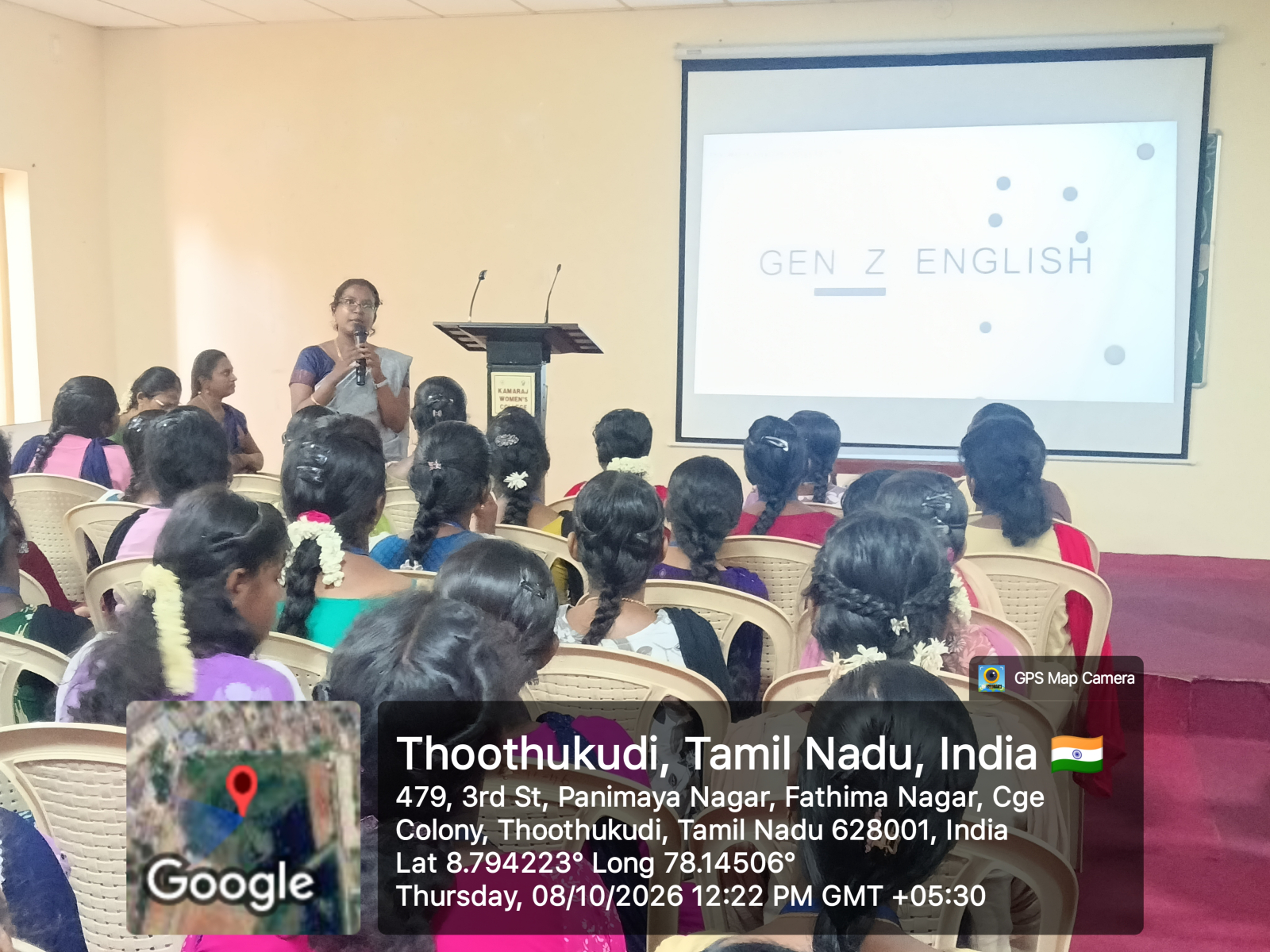
The third session, “Quiz of Gen Z Language,” was conducted by Mrs. M. Mirnalini Priya.
She introduced a contemporary and interactive element to the World English Language Day celebration through an engaging language quiz.
The quiz focused on modern internet vocabulary, acronyms, informal expressions and language trends associated with Generation Z.
Students actively participated in the session and explored how digital communication influences everyday English.
Furthermore, the activity highlighted how social media, online conversations and changing communication habits contribute to the development of new expressions.
The interactive format encouraged students to think quickly, recall familiar terms and understand their meanings.
Moreover, the session demonstrated that English continues to evolve as younger generations develop new ways of communicating.
Understanding the Evolution of English
One of the important features of the programme was its approach to the English language across different historical periods.
The first presentation explored the origins of writing systems. Meanwhile, the second session examined the development of English in India.
The final session brought students into the present by exploring the language of Generation Z.
Together, the three presentations demonstrated that language is constantly changing.
Furthermore, students gained a broader understanding of how historical events, cultural influences and technological developments shape communication.
The programme therefore connected the past, present and continuing development of English in a meaningful way.
Interactive Learning and Student Participation
The World English Language Day celebration encouraged active student participation throughout the programme.
Students showed considerable interest in the faculty presentations and participated enthusiastically in the discussions.
Moreover, the Gen Z language quiz created a lively atmosphere and encouraged students to engage directly with contemporary vocabulary.
The combination of presentations and interactive activities made the programme both informative and enjoyable.
As a result, students had an opportunity to improve their language awareness while exploring English beyond their regular classroom lessons.
Promoting Language and Communication Skills
The celebration emphasized the importance of understanding language as a tool for communication, learning and cultural exchange.
By exploring the history of writing, students gained an appreciation of how communication systems developed.
Furthermore, the session on Indian English helped them understand the relationship between language and cultural identity.
The Gen Z quiz also introduced them to the changing vocabulary of modern digital communication.
These activities encouraged students to develop a wider interest in English vocabulary, language history and effective communication.
Programme Outcomes
The World English Language Day celebration provided students with opportunities to:
- Understand the historical development of writing and alphabet systems
- Learn about ancient picture-writing and Egyptian hieroglyphs
- Explore the historical journey of English in India
- Understand the development and distinctive identity of Indian English
- Recognize the influence of culture and society on language
- Become familiar with Gen Z vocabulary and internet expressions
- Understand how digital communication influences modern English
- Develop language awareness and vocabulary knowledge
- Improve confidence through discussions and quiz participation
- Develop greater interest in English language learning
Overall, the programme encouraged students to explore the English language through history, cultural understanding and contemporary communication.
Conclusion
The World English Language Day celebration organized by the Portia Literary Association of Kamaraj Women’s College provided students with an informative and engaging learning experience.
The three faculty presentations, “From Pictures to Words: The Birth of the Alphabet,” “From East India Company to Indian English,” and “Quiz of Gen Z Language,” offered different perspectives on the development and changing nature of English.
Furthermore, the interactive discussions and quiz encouraged students to participate actively and explore the language with greater interest.
The programme successfully connected language history, Indian cultural influences and modern communication trends.
Overall, the celebration strengthened students’ understanding of English as a language that continues to grow and adapt across generations. It also encouraged them to develop their vocabulary, communication skills and interest in language learning.