
Startup Idea Presentation Encourages Innovation at KWC
Report on Startup Idea Presentation Programme
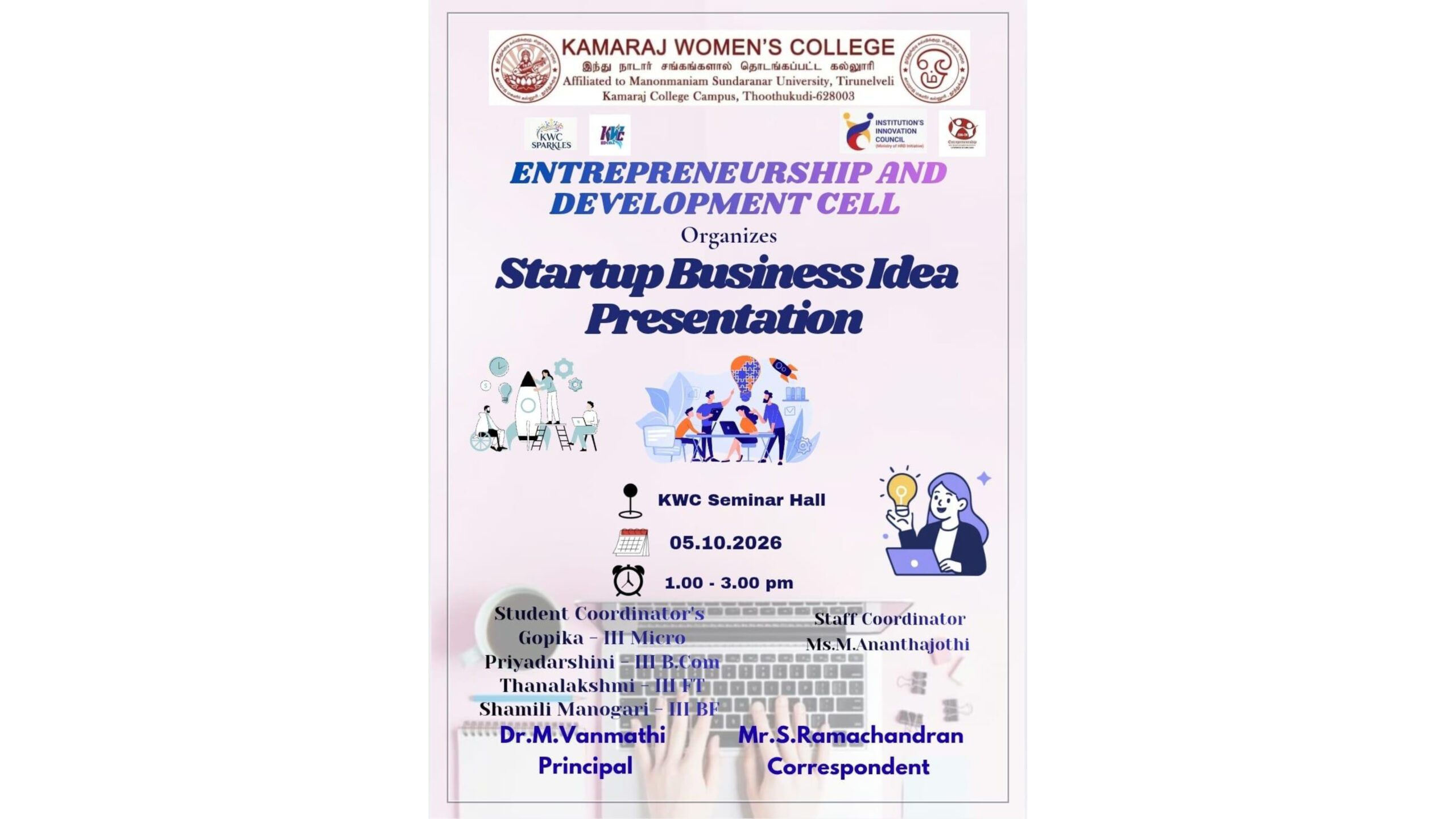
The Entrepreneurship Development (ED) Cell, Kamaraj Women’s College, Thoothukudi, organized a Startup Idea Presentation programme on 5 October 2026 at the KWC Seminar Hall. The programme provided a platform for students to present innovative business ideas and explore their potential for further development.
Six student presenters pitched distinct startup concepts during the programme. Moreover, the session allowed them to receive constructive feedback on their ideas, market potential, funding needs and operational plans.
The programme aimed to encourage innovation, entrepreneurship, business thinking and practical problem-solving among students.
Objectives of the Startup Idea Presentation
The programme focused on the following objectives:
- Encourage entrepreneurial thinking among students
- Provide a platform to present innovative startup ideas
- Evaluate the practical potential of student-led business concepts
- Develop business presentation and pitching skills
- Help students understand target markets
- Encourage students to examine the feasibility of their ideas
- Improve understanding of business models and scalability
- Provide constructive feedback from faculty evaluators
- Identify promising ideas for further incubation support
- Promote entrepreneurship as a possible career path
Thus, the programme combined innovation, business planning, pitching and entrepreneurial development.
Introduction to Startup Evaluation
The programme began with a brief introduction by the ED Cell Coordinator.
The introductory session explained the purpose of the programme and outlined the main criteria for evaluating each startup idea.
The assessment focused on:
- Target market potential
- Technical feasibility
- Business model clarity
- Scalability
These criteria encouraged the student presenters to think beyond the basic idea and consider how their concepts could work as practical business ventures.
Furthermore, the evaluation framework helped students understand some of the important factors involved in developing a startup.
Presentation of Six Startup Ideas
Six students presented their individual startup concepts during the Startup Idea Presentation.
The ideas covered different areas, including women’s safety, bakery products, customized gifts, chocolate manufacturing, sustainable food labelling and specialized photography.
Each concept reflected a different approach to entrepreneurship. Moreover, the variety of ideas demonstrated how students can identify opportunities across technology, food, gifting and creative services.
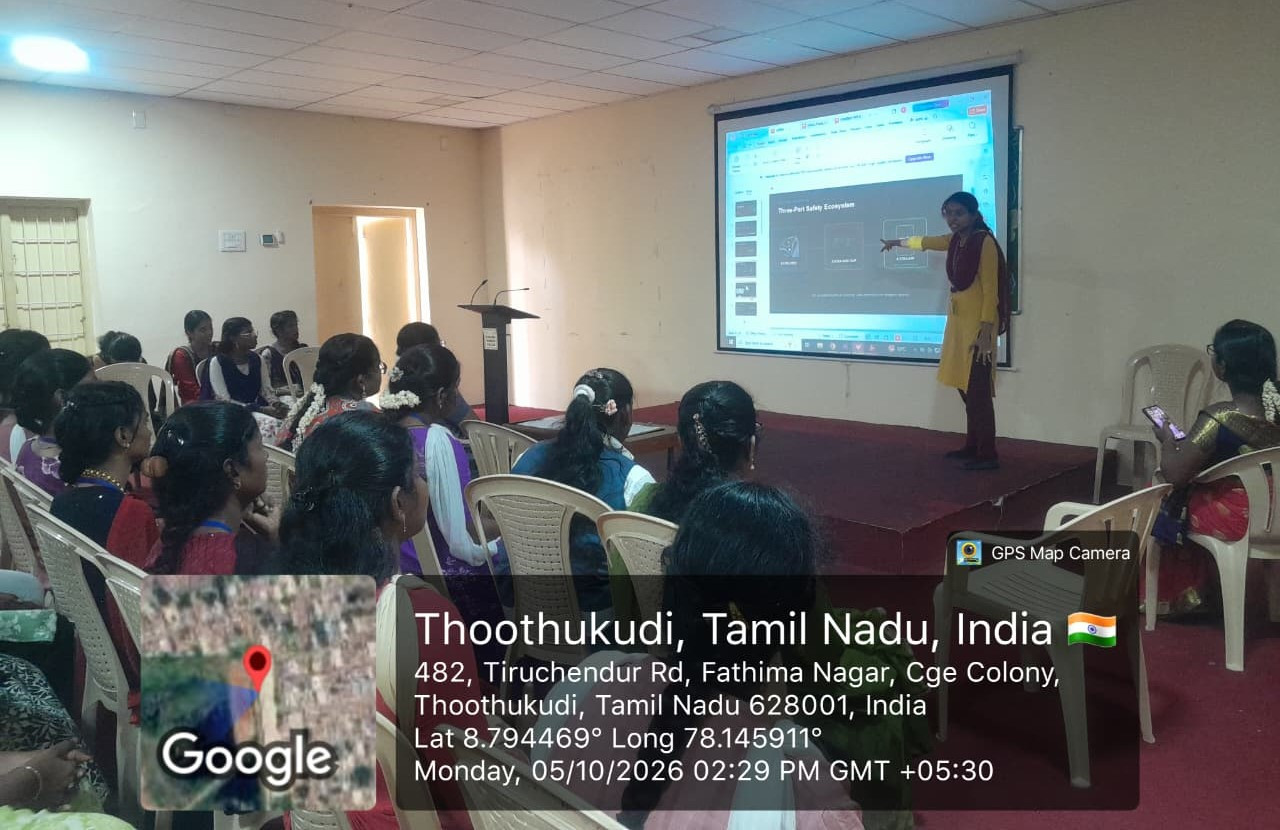
AI-Driven Women’s Safety Platform
The first student presented an AI-driven personalized safety platform designed to support women’s safety.
The idea explored how Artificial Intelligence could contribute to a technology-based safety solution.
Furthermore, the presentation demonstrated how students can connect emerging technologies with practical social needs.
The concept also encouraged discussion about the target users, technical feasibility and potential development of the proposed platform.
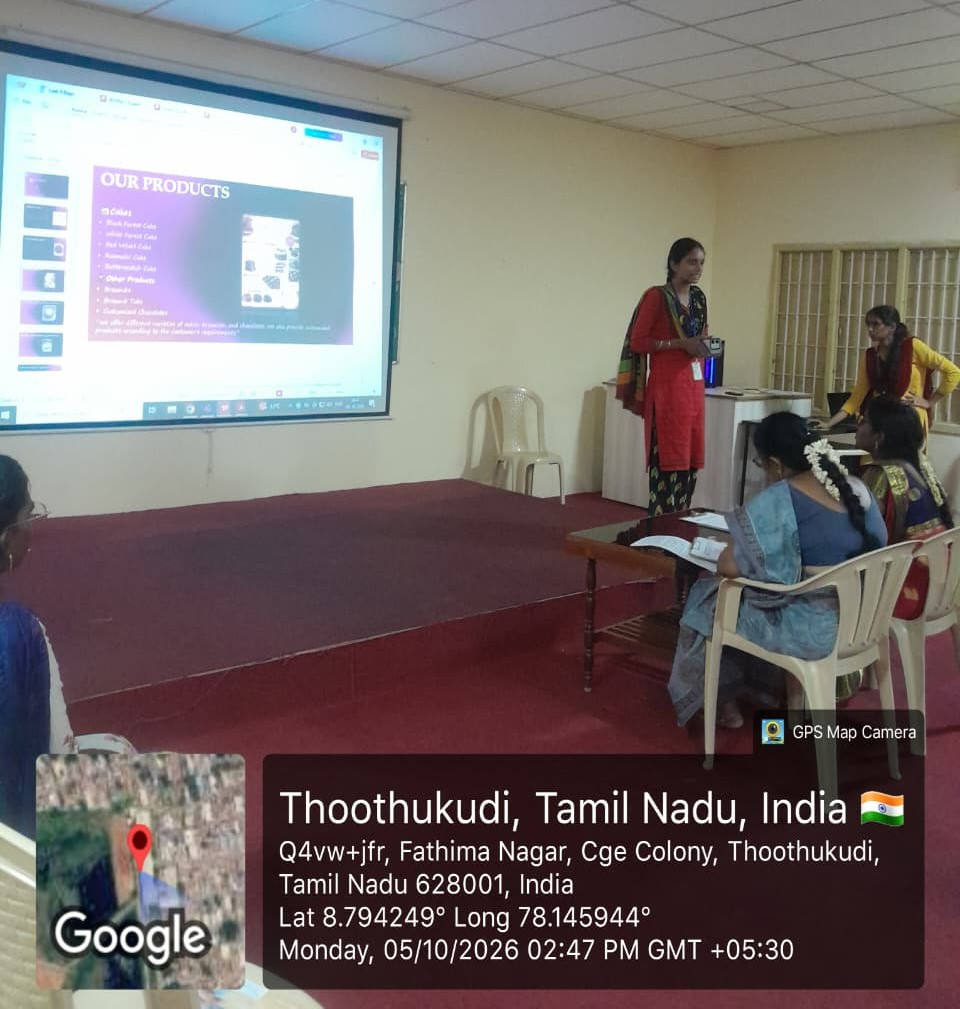
Cakes and Brownies Startup
The second student presented a startup idea based on cakes and brownies.
The presentation approached bakery products from an entrepreneurial perspective and explored the possibility of developing the idea as a business venture.
Moreover, the concept encouraged discussion about product innovation, customer preferences, market opportunities and business planning.
The presentation demonstrated how a familiar product category can become the foundation for a student-led startup when supported by creativity and a clear business approach.
Customized Gifts with Eco-Friendly Packaging
The third student presented a customized gifts startup with a focus on eco-friendly packaging materials.
The idea combined personalization with environmental responsibility.
Furthermore, the concept explored how customized products can meet individual customer preferences while reducing dependence on less sustainable packaging options.
The presentation highlighted how entrepreneurship can combine creativity, customer needs and environmentally responsible choices.
Innovative Chocolate Manufacturing
The fourth student proposed an innovative chocolate manufacturing concept for a small business.
The presentation explored the possibility of developing chocolate products through a small-scale entrepreneurial model.
Moreover, the idea encouraged discussion about production, market positioning, customer demand and business operations.
The concept demonstrated how food-based entrepreneurship can provide opportunities for students interested in starting and developing small businesses.
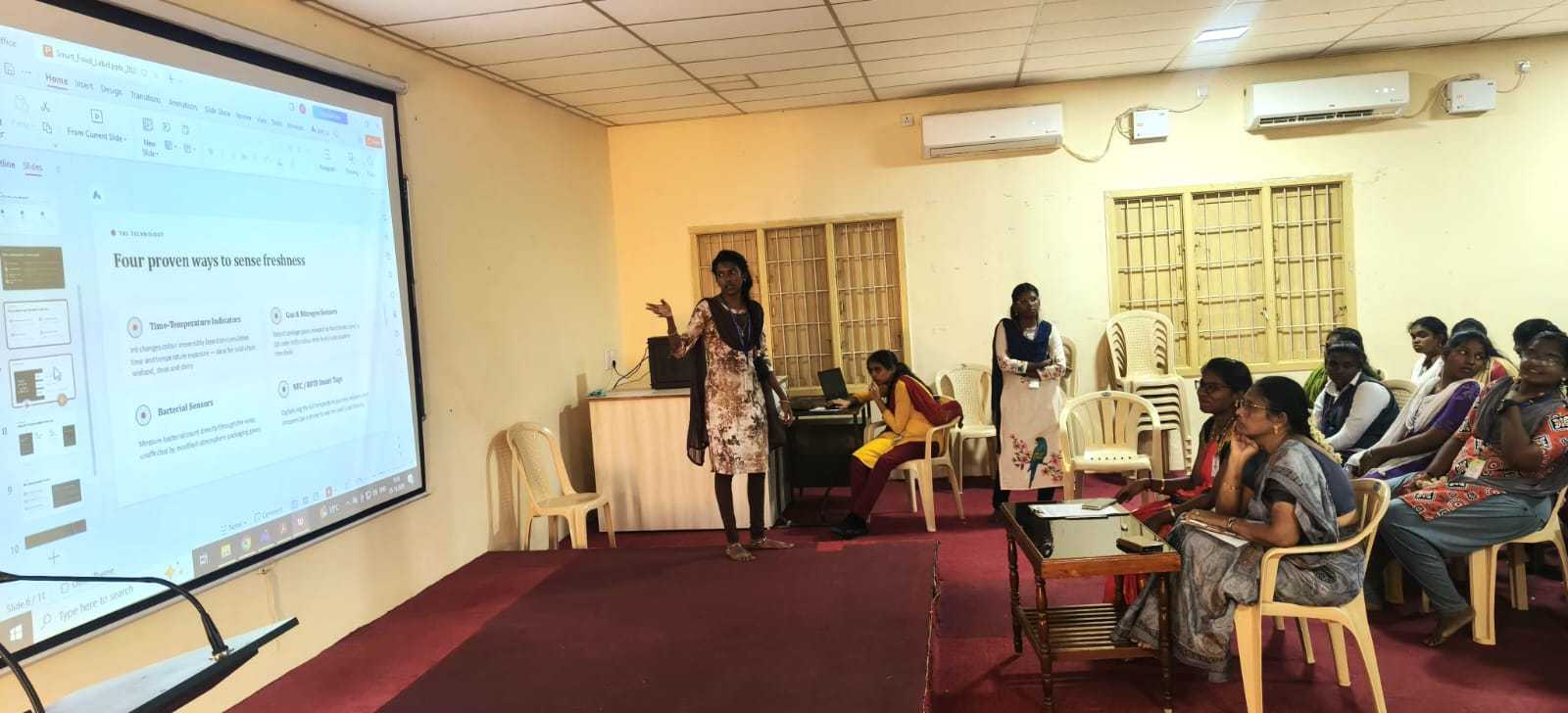
Sustainable Food Detective Labelling Concept
The fifth student presented a sustainable “Food Detective” labelling startup concept.
The idea focused on food-related labelling from a sustainability perspective.
Furthermore, the presentation allowed the student to discuss how the concept could develop into a practical startup while considering its target users and business model.
The idea added a sustainability-oriented dimension to the range of startup concepts presented during the programme.
Specialized Baby Photography Startup
The sixth student presented a specialized photography startup with a focus on baby photography.
The concept explored a focused photography service designed around a specific customer segment.
Moreover, the presentation highlighted how specialization can help a creative service develop a distinct identity in the market.
The idea demonstrated that entrepreneurship can also emerge from creative skills, service innovation and identifying a specific customer need.
Question and Answer Session
Each startup presentation was followed by a focused Question and Answer session.
Faculty evaluators interacted with the presenters and examined different aspects of their proposed businesses.
The discussions focused particularly on:
- Market strategy
- Funding requirements
- Operational roadmaps
- Practical implementation
Furthermore, the evaluators provided constructive feedback that helped students identify areas where their ideas could improve.
The interaction turned the programme into a practical learning experience rather than simply a presentation event.
Understanding Market Potential
The programme encouraged students to think carefully about the market for their proposed products or services.
A good startup idea requires more than creativity. Therefore, the discussions encouraged presenters to consider who their potential customers are and how their products or services could address customer needs.
Moreover, the evaluation process helped students understand the importance of examining demand before developing a business concept further.
This approach strengthened their understanding of practical entrepreneurship.
Business Model and Feasibility
Another important part of the programme involved examining the feasibility and business model of each startup concept.
Students received feedback that encouraged them to think about how their ideas could move from concept to implementation.
Furthermore, discussions about funding requirements and operational roadmaps introduced students to practical aspects of starting a business.
This guidance helped them understand that entrepreneurship requires both creative ideas and systematic planning.
Encouraging Scalable Startup Ideas
Scalability formed one of the evaluation criteria for the presentations.
Students were encouraged to think about whether their startup concepts could develop and expand over time.
Moreover, the programme helped them understand that a business idea may need a clear plan for growth as it reaches more customers or enters new markets.
This perspective encouraged the presenters to look beyond the initial stage of their ideas and consider their longer-term possibilities.
Top Three Ideas Recommended for Further Support
After evaluating the six presentations, the panel appreciated the practical orientation of the proposed startup ideas.
The evaluators identified three top-performing ideas and recommended them for further incubation support and seed funding guidance under the ED Cell.
This recommendation provided an opportunity for the selected ideas to move towards the next stage of development.
At the same time, the ED Cell committed to conducting follow-up mentoring sessions for all six student presenters.
Thus, the programme supported both recognition of promising concepts and continued guidance for every participant.
Developing Entrepreneurial Skills
The Startup Idea Presentation provided students with practical exposure to the process of presenting and defending a business idea.
Through their pitches, students practised explaining their concepts clearly and responding to questions from evaluators.
Moreover, the programme encouraged them to examine their ideas from the perspectives of customers, feasibility, funding, operations and growth.
Such practical exposure can help students develop greater confidence in presenting their entrepreneurial ideas.
Programme Outcomes
The programme provided the following outcomes:
- Six students presented innovative startup concepts
- Students gained practical experience in pitching business ideas
- Presenters learned to examine their target market potential
- Students developed awareness about technical and practical feasibility
- The programme strengthened understanding of business models
- Students gained awareness about scalability and business growth
- Faculty evaluators provided constructive feedback
- Students gained insights into market strategy and funding requirements
- The discussions introduced students to operational planning
- Three top-performing ideas received recommendations for further incubation support and seed funding guidance
- All six presenters will receive follow-up mentoring support from the ED Cell
- The programme encouraged innovation and entrepreneurial thinking among students
Overall, the programme strengthened students’ understanding of innovation, business planning, pitching, market evaluation and entrepreneurship.
Conclusion of the Startup Idea Presentation
The Startup Idea Presentation organized by the Entrepreneurship Development Cell of Kamaraj Women’s College provided six student presenters with a valuable platform to transform their innovative concepts into structured business proposals.
The ideas covered diverse areas including AI-based women’s safety, cakes and brownies, customized gifts with eco-friendly packaging, chocolate manufacturing, sustainable food labelling and specialized baby photography.
Furthermore, the Question and Answer sessions gave students constructive guidance on market strategy, funding requirements, operational planning, feasibility and scalability.
The recommendation of three top-performing ideas for further incubation support and seed funding guidance marked an important outcome of the programme. At the same time, the commitment to provide follow-up mentoring to all six presenters ensured continued encouragement for every participant.
The programme concluded with a Vote of Thanks.
Overall, the session successfully encouraged students to think creatively, develop practical business ideas and explore entrepreneurship with greater confidence and clarity.