
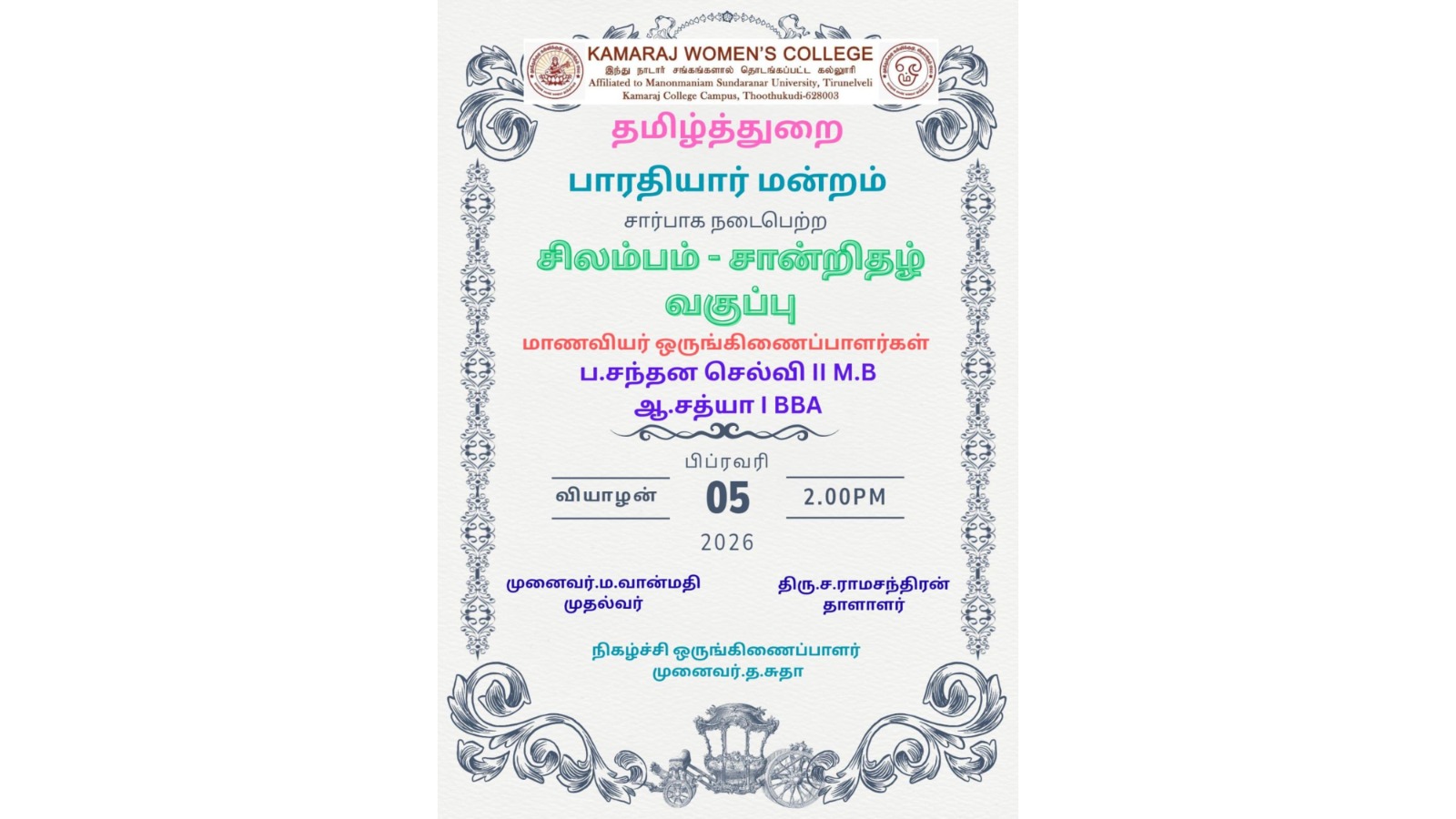
Empowering Silambam Training Programme at KWC
Introduction
At Kamaraj Women’s College, education extends beyond academic learning to include skill-based and value-oriented training that empowers students for real-life challenges. In line with this vision, the college conducted a Silambam Training Programme under the guidance of the Principal, Dr. M. Vanmathi. The programme was organized with the objective of enhancing women’s safety, self-confidence, and physical preparedness in society.
Moreover, the training was conducted by the Department of Tamil Bharathiyar Mandram, which consistently promotes Tamil heritage and traditional practices. Through this initiative, the institution reinforced its commitment to holistic education and women empowerment.
Objective of the Silambam Training Programme
The Silambam Training Programme was organized with a strong social and educational purpose. The primary objectives of the programme were to:
- Enhance women’s safety and self-protection skills
- Develop physical strength and mental resilience
- Promote self-confidence and self-belief among students
- Preserve and promote Tamil traditional martial arts
- Prepare students to face unexpected and risky situations courageously
Therefore, the programme aimed to empower students both physically and mentally.
Silambam: A Traditional Martial Art with Modern Relevance
Silambam is one of the ancient martial arts of the Tamils, deeply rooted in Tamil culture and history. Importantly, Silambam is not merely a weapon-based practice. Instead, it is a disciplined art form that focuses on balance, coordination, agility, and presence of mind.
Moreover, Silambam training improves reflexes, stamina, and decision-making abilities. As a result, students gain the confidence to handle difficult situations calmly and effectively. By introducing this traditional art form, the college ensured that students connect cultural heritage with contemporary safety needs.
Resource Person and Student Trainer
The training sessions were conducted by Ms. P. Sandhana Selvi, a second-year student of the Department of Microbiology. Despite being a student herself, she demonstrated exceptional leadership, discipline, and mastery in Silambam techniques.
Furthermore, her role as a student trainer inspired fellow students. It highlighted the importance of peer learning and demonstrated how students can take leadership roles in skill development programmes. Her dedication and clarity in training were widely appreciated by participants and faculty members alike.
Training Sessions and Student Participation
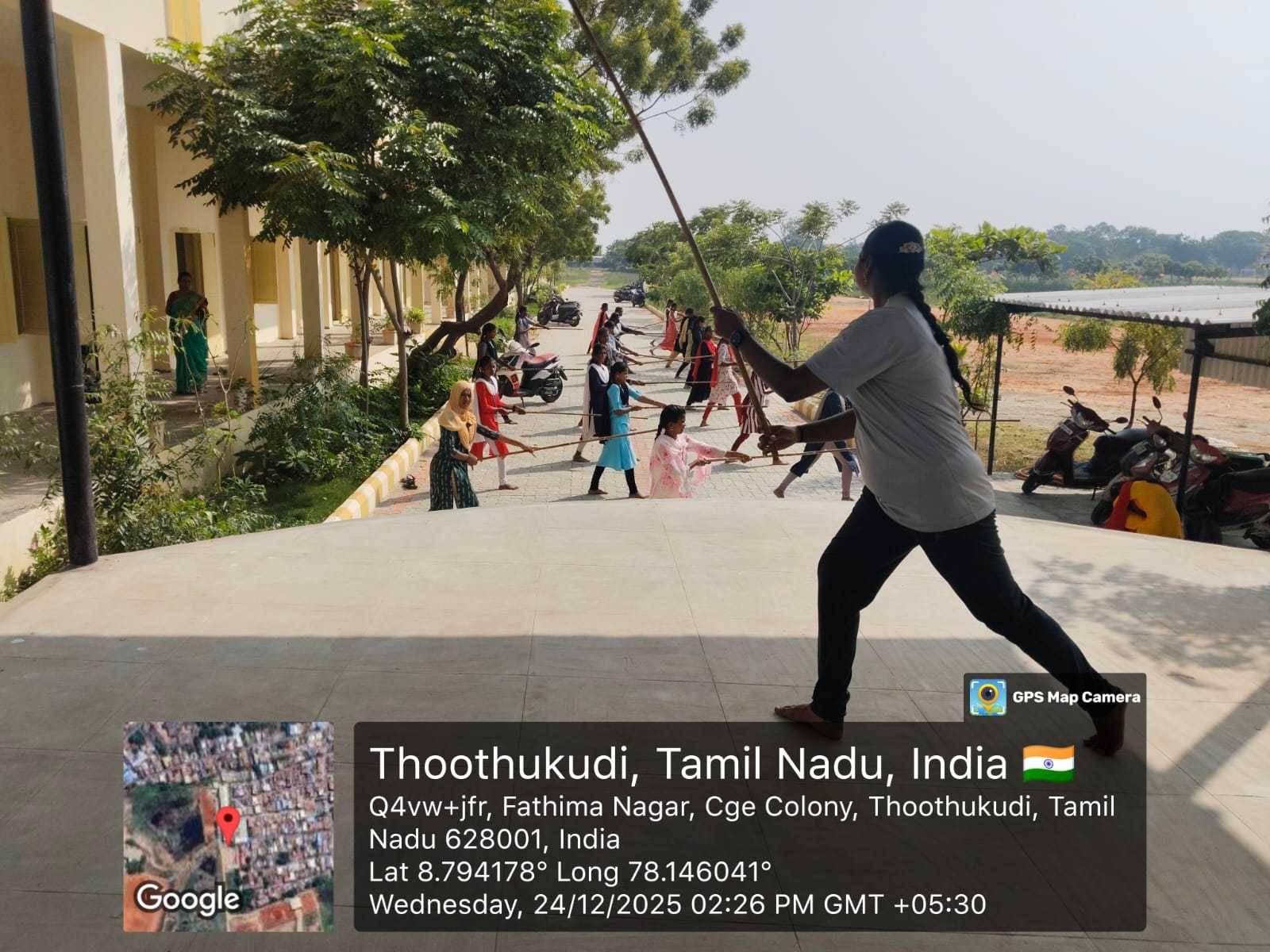
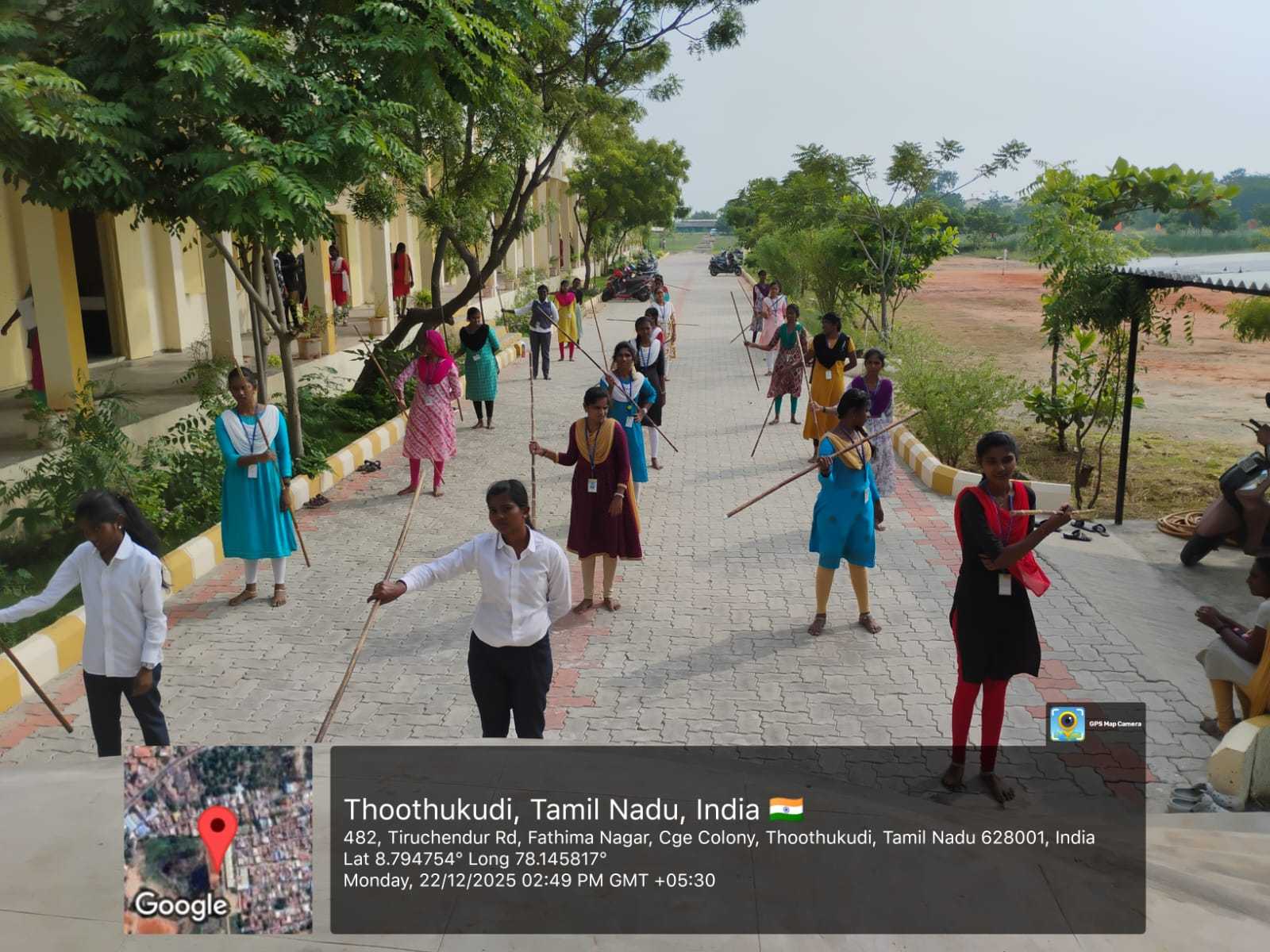
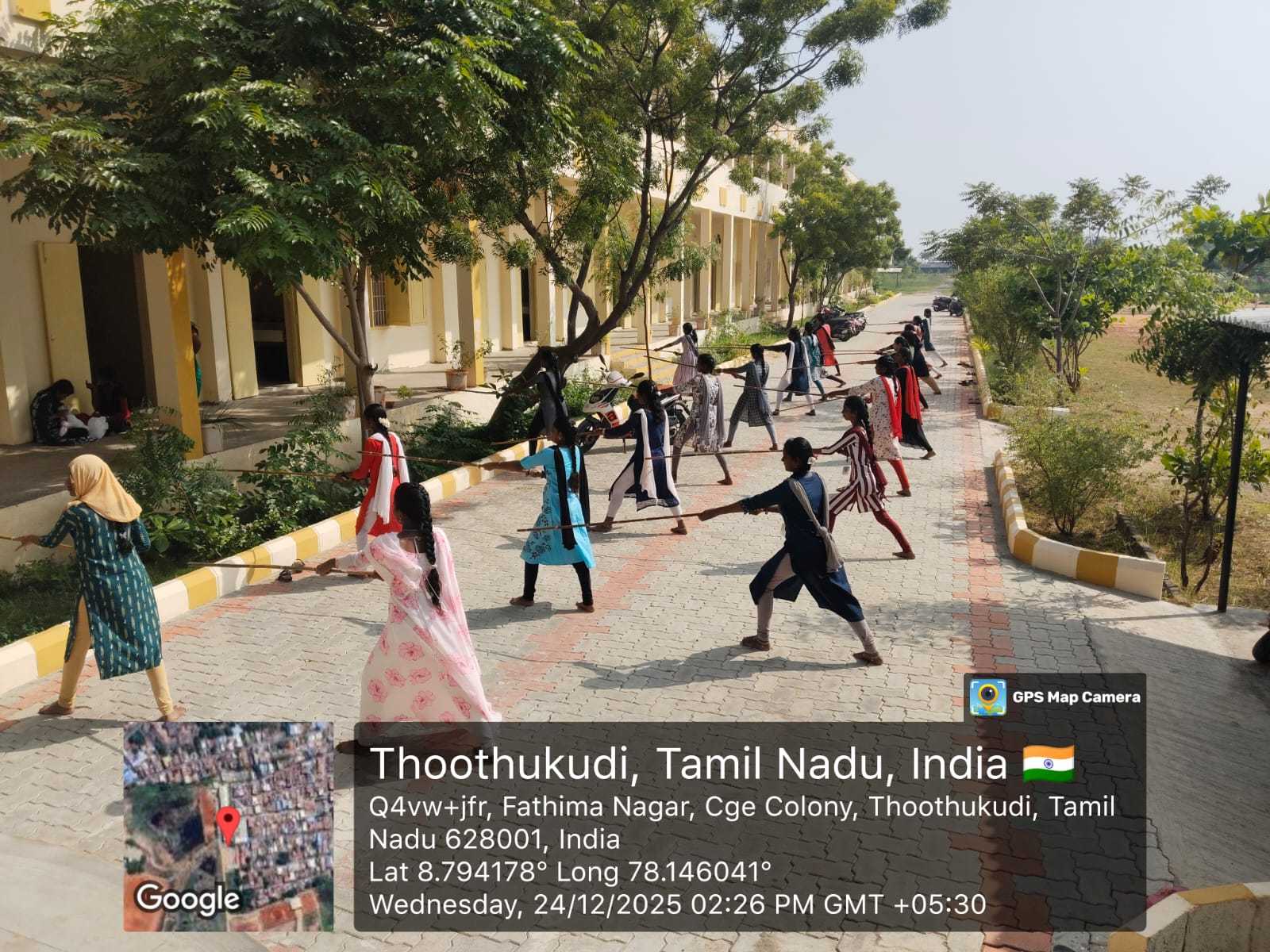
Students from various departments of the college participated enthusiastically in the Silambam Training Programme. The sessions were conducted in a structured and systematic manner, focusing on both theoretical understanding and practical execution.
The training covered:
- Basic Silambam stances and footwork
- Movement coordination and body balance
- Defensive techniques for self-protection
- Mental focus and situational awareness
As a result, students gradually developed physical agility and mental strength. In addition, the sessions created a sense of unity, discipline, and mutual encouragement among participants.
Role of the Department of Tamil Bharathiyar Mandram
The Department of Tamil Bharathiyar Mandram played a key role in organizing and coordinating the programme. The arrangements for the training were efficiently managed by the Head of the Department of Tamil, Dr. T. Sudha, along with the Assistant Professors.
Moreover, the department ensured that the programme was conducted smoothly, safely, and with proper guidance. Their efforts reflected a strong commitment to preserving Tamil traditions while addressing contemporary social needs.
Impact of the Programme on Students
The Silambam Training Programme had a significant positive impact on the participants. Through regular practice and guided training, students experienced noticeable improvement in their physical fitness and mental alertness.
The major outcomes of the programme included:
- Improved self-confidence and courage
- Enhanced ability to face challenging situations
- Greater awareness of personal safety
- Strengthened discipline and focus
- Increased appreciation for Tamil cultural heritage
Consequently, students felt more empowered, confident, and prepared to handle real-life situations.
Institutional Commitment to Women Empowerment
By organizing the Silambam Training Programme, Kamaraj Women’s College reaffirmed its commitment to women empowerment and holistic development. The institution strongly believes that education should equip students not only with academic knowledge but also with life skills that ensure safety, confidence, and independence.
Such initiatives align with the institution’s mission of nurturing strong, self-reliant, and socially responsible women.
Conclusion
In conclusion, the Silambam Training Programme conducted by the Department of Tamil Bharathiyar Mandram at Kamaraj Women’s College was highly meaningful and impactful. Through dedicated training, enthusiastic participation, and effective coordination, the programme successfully empowered students with confidence, self-discipline, and self-defense skills.
Ultimately, the programme not only preserved a valuable traditional art form but also strengthened women’s safety and mental resilience. The college continues to promote such initiatives to ensure the all-round development of its students.
🔗 Useful Links
Internal Link:
Kamaraj Women’s College – Official Website
External Link:
Tamil Nadu Culture Department