
Sericulture Industrial Visit Gives Fashion Students Practical Exposure
Report on Sericulture Industrial Visit
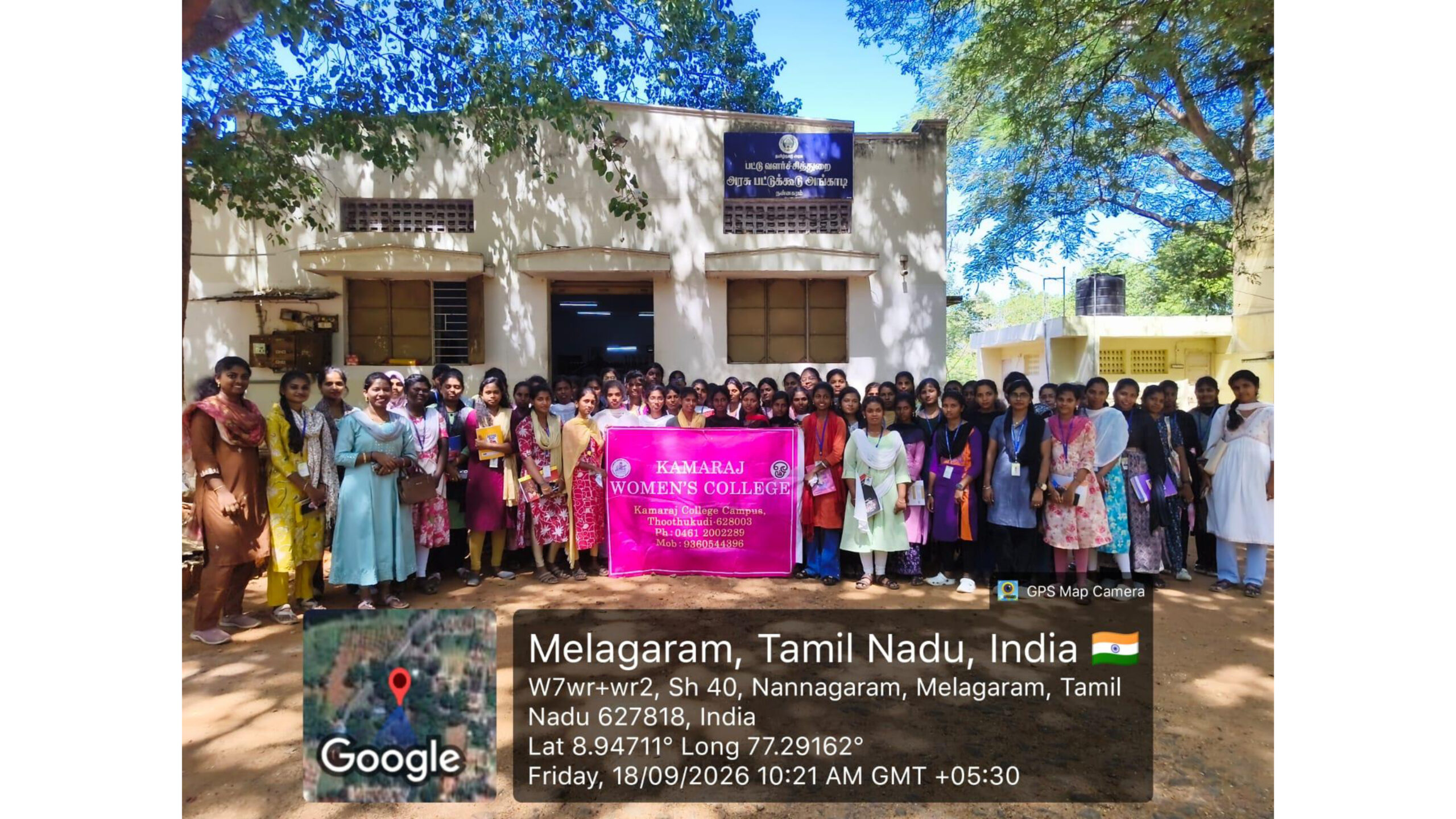
The Department of Fashion Technology, Kamaraj Women’s College, Thoothukudi, organized a Sericulture Industrial Visit to the Department of Sericulture, Tenkasi, on 18 September 2026. A total of 65 students and 4 faculty members participated in the visit.
The visit aimed to provide students with practical exposure to sericulture and silk production. Moreover, it helped them understand the connection between silk production, textile manufacturing and the fashion industry.
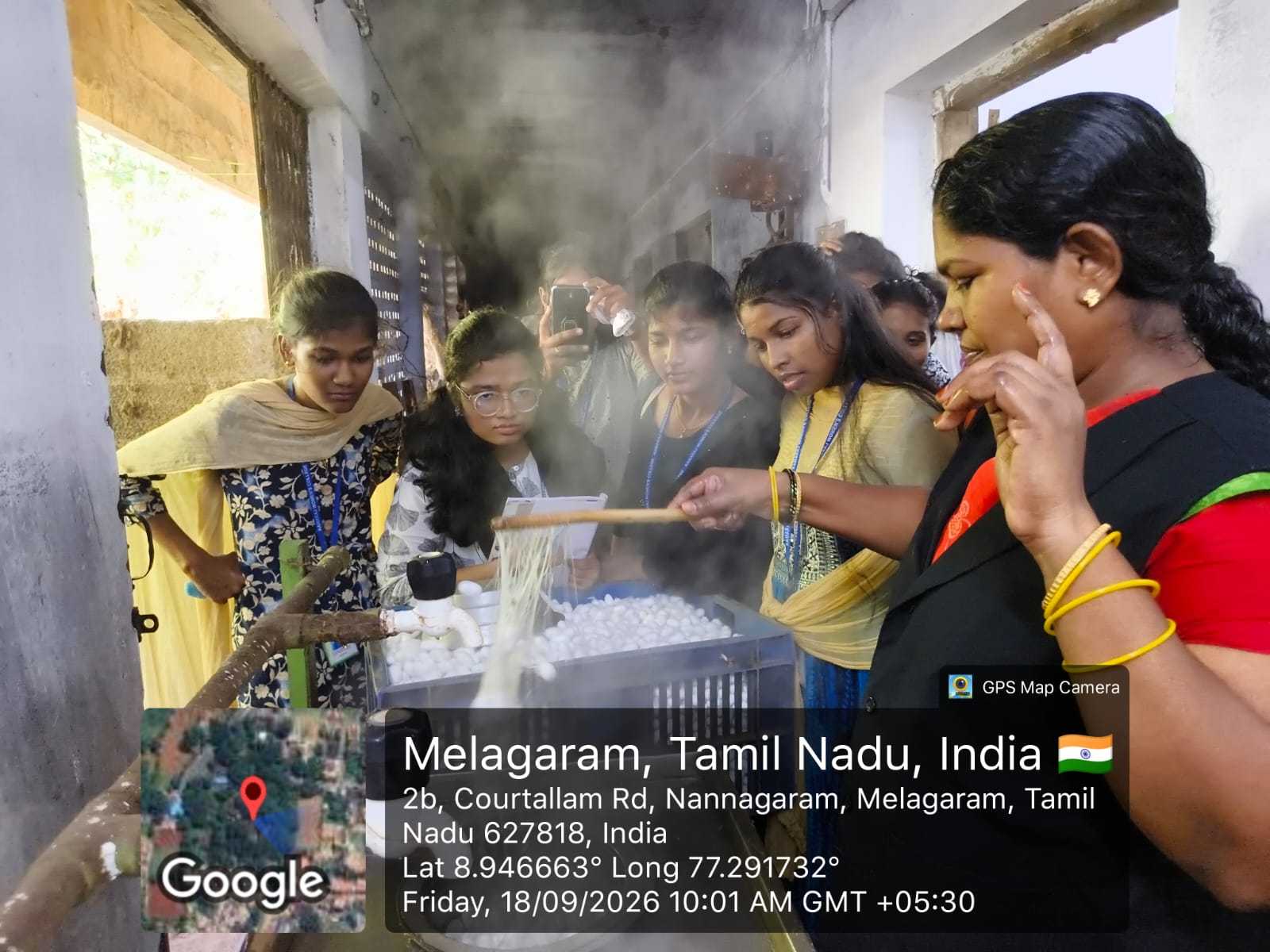
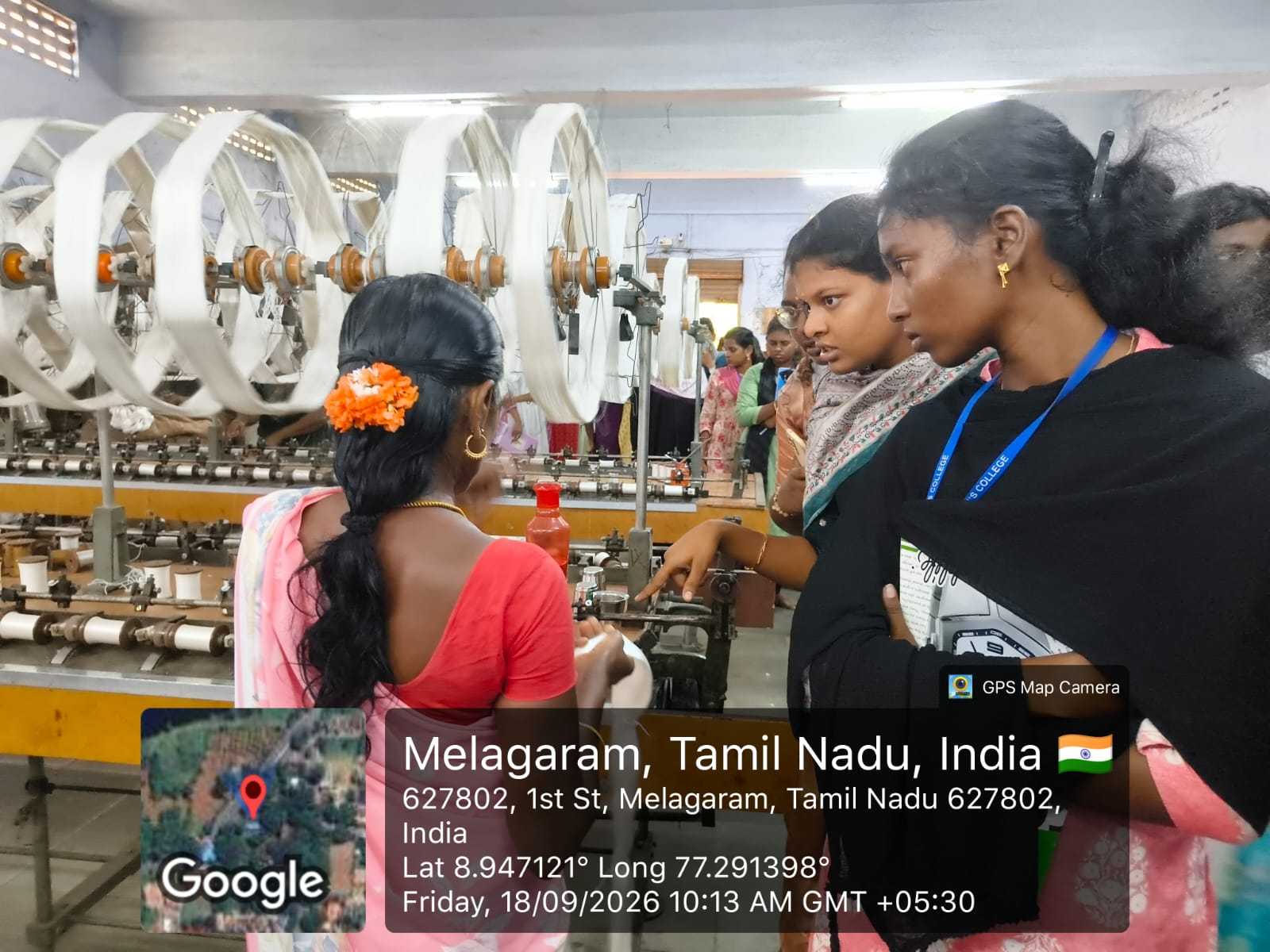
The students explored different stages of silk production and interacted with officials during the visit. As a result, they could connect their classroom knowledge of fibres, yarns, fabrics and textile production with practical applications.
Objectives of the Sericulture Industrial Visit
The visit focused on the following objectives:
- Provide practical exposure to sericulture
- Introduce students to the different stages of silk production
- Explain the importance of silkworm rearing
- Help students understand silk as a natural textile fibre
- Connect sericulture with textile and fashion applications
- Create awareness about quality control in silk production
- Help students relate classroom concepts to practical processes
- Introduce professional practices in the sericulture sector
- Create awareness about career and entrepreneurial opportunities
Thus, the visit combined practical learning, textile knowledge and industry exposure.
Visit to the Department of Sericulture, Tenkasi
The students visited the Department of Sericulture, Tenkasi, located at the office of the Assistant Director of Sericulture, Post Box No. 7, Melagaram, Nanganallur (Post), Tenkasi – 627 811.
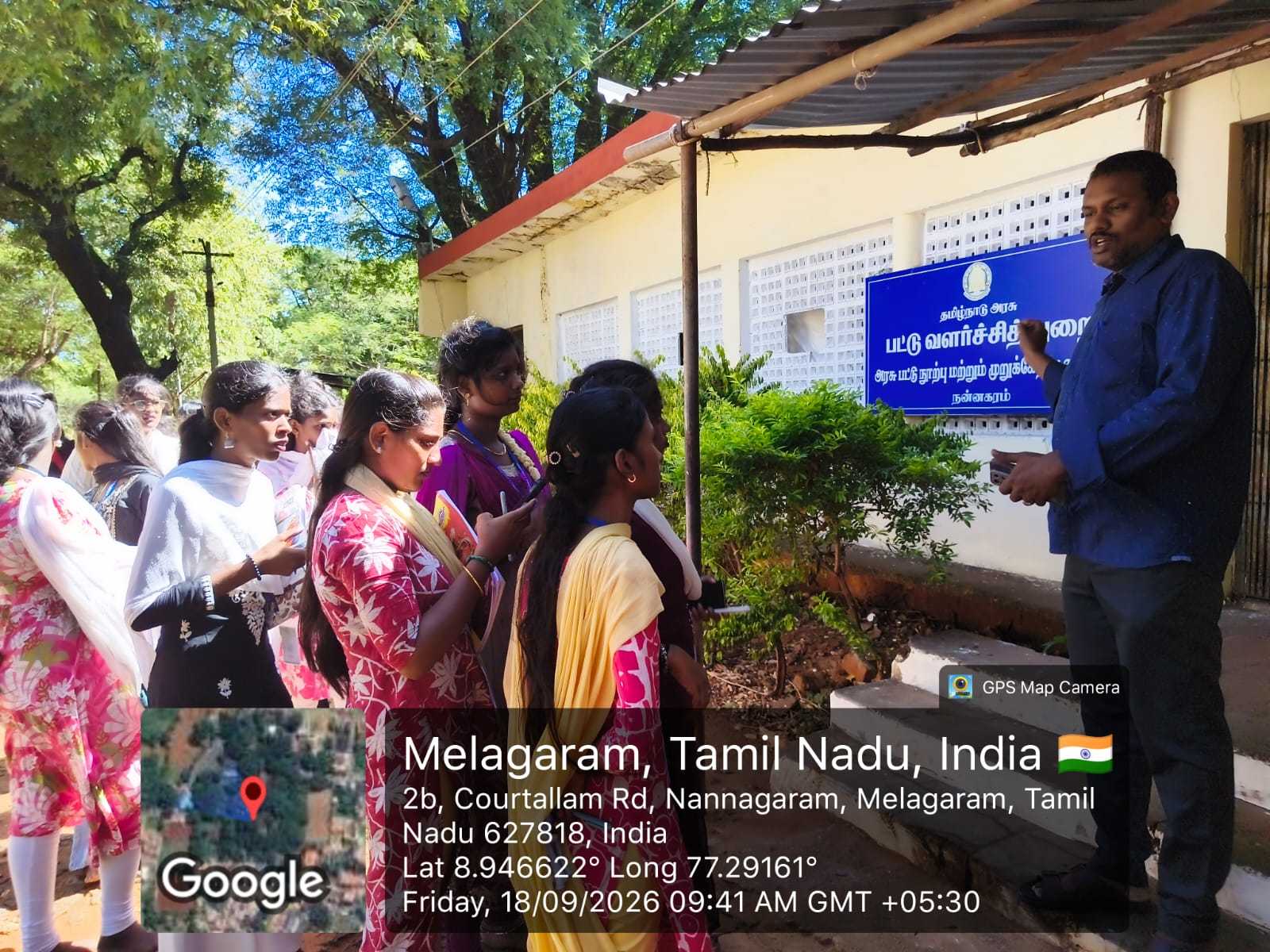
Officials introduced the students to various activities connected with sericulture and silk production. They also explained the importance of sericulture as a source of livelihood and its contribution to the textile sector.
Furthermore, the visit helped students understand how the production of a natural fibre begins long before it reaches textile and fashion applications.
Understanding the Silk Production Process
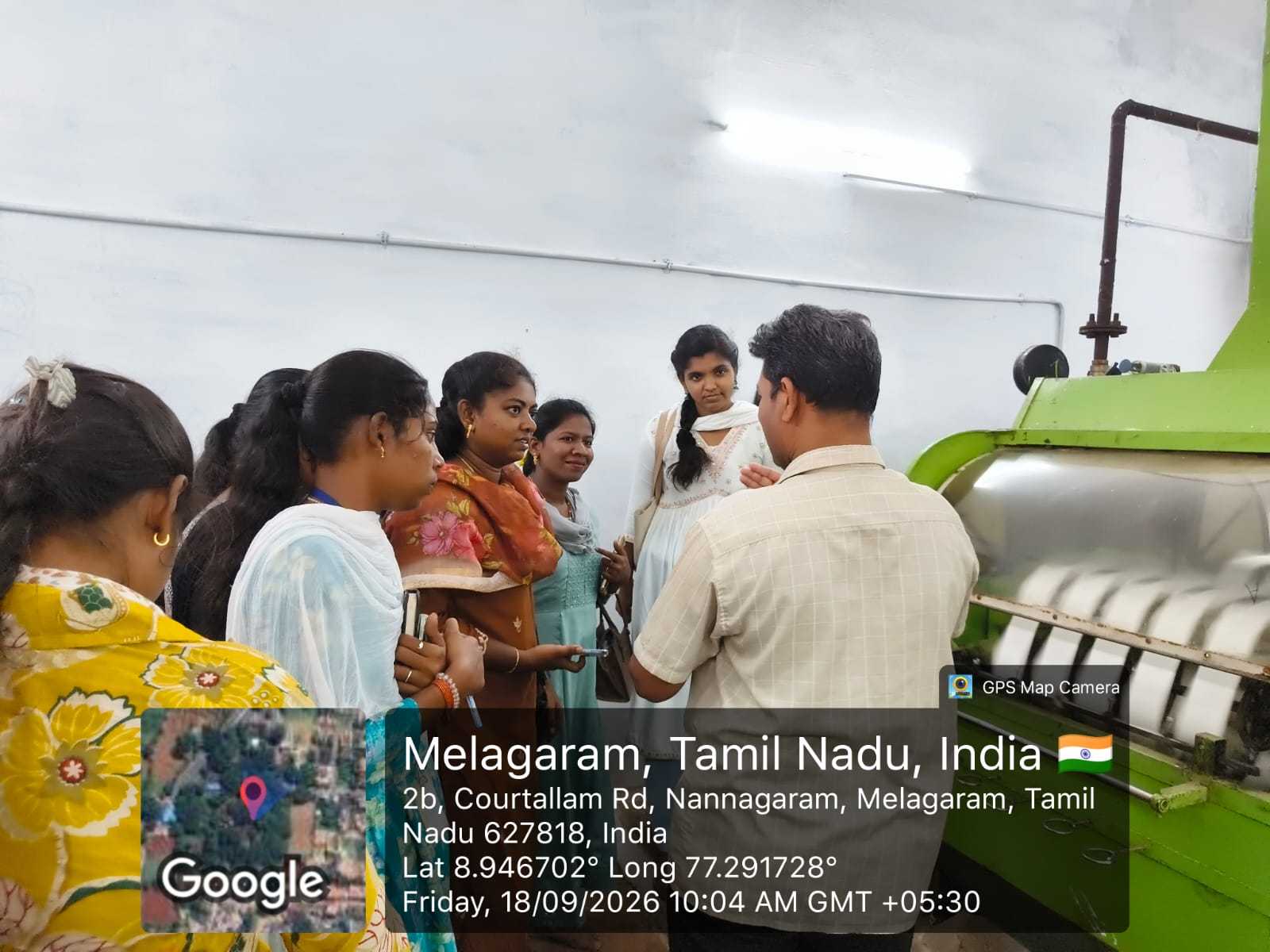
The officials explained the basic stages involved in silk production.
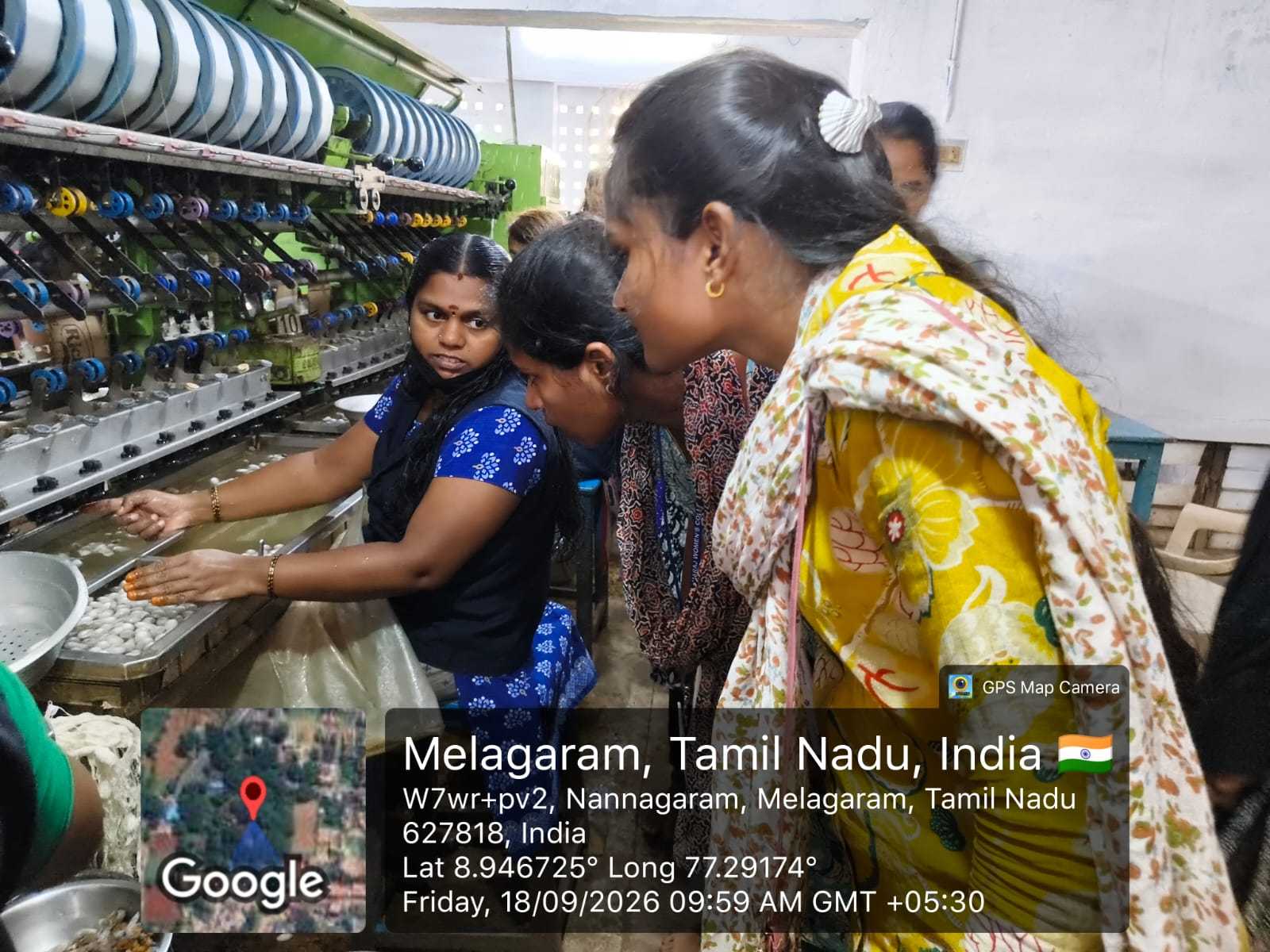
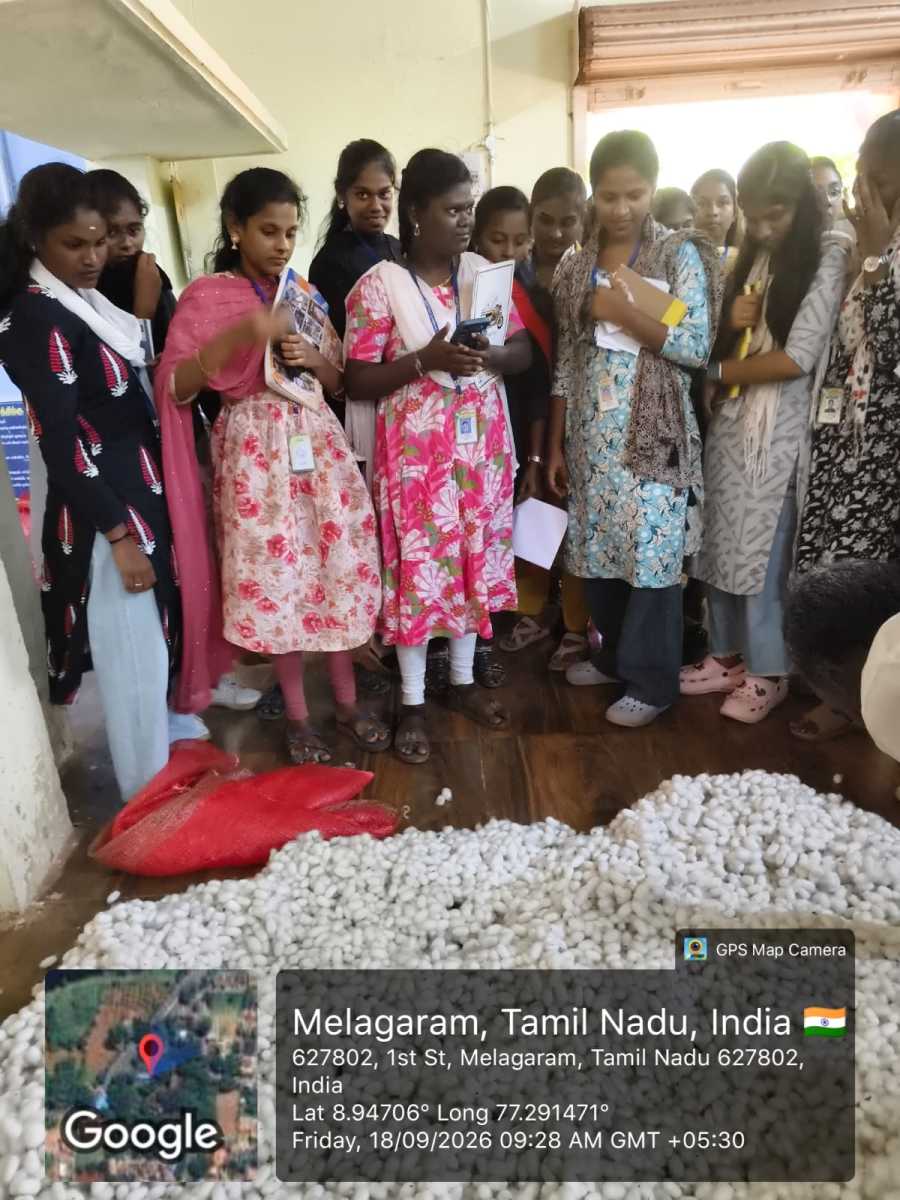
Students learned about the process beginning with mulberry cultivation and silkworm rearing. They also gained knowledge about cocoon production and subsequent silk processing.
This exposure helped students understand the journey of silk from its biological source towards its use as a textile fibre.
Moreover, observing and learning about these stages helped them connect theoretical knowledge with practical processes.
Silkworm Rearing Practices
The Sericulture Industrial Visit gave students an orientation on important silkworm rearing practices.
The officials explained aspects such as:
- Maintenance of suitable rearing conditions
- Feeding of silkworms
- Cocoon formation
- Cocoon harvesting
Students gained a better understanding of the care and systematic practices involved in the production process.
In addition, the session helped them appreciate the importance of scientific practices in obtaining good-quality silk.
Silk as a Natural Textile Fibre
The visit gave special attention to silk as a natural textile fibre.
Students learned about its characteristics, quality, applications and importance in the fashion and apparel industry. Furthermore, they understood why silk has an important place among textile fibres.
The discussion helped students connect the properties of silk with its applications in premium garments, traditional wear, fashion accessories and other textile products.
Therefore, the visit added practical value to their study of fibres and textile materials.
Connecting Sericulture with Fashion Technology
The programme helped students understand the relationship between sericulture, textile production and fashion technology.
Their classroom studies introduce them to fibres, yarns, fabrics and textile processes. During the visit, they gained an opportunity to understand how silk begins at its source and moves towards textile applications.
Moreover, the exposure helped students appreciate the importance of material knowledge in fashion and apparel education.
Thus, the visit created a meaningful link between biological production, textile processing and fashion applications.
Quality and Production Practices
Students also learned about professional practices associated with the sericulture sector.
The officials highlighted the importance of cleanliness, proper handling, quality control, scientific practices and systematic production methods.
These practices play an important role in maintaining the quality of silk production.
Furthermore, the discussion helped students understand that quality begins at the early stages of material production and continues throughout the textile process.
Interactive Session with Officials
An interactive session formed an important part of the visit.
Students raised questions related to silk production, cocoon quality, silk fibre characteristics, career opportunities and the relationship between sericulture and the textile industry.
The officials responded to their questions and shared useful information.
Moreover, the interaction gave students an opportunity to clarify their subject-related doubts directly with officials working in the field.
As a result, the visit became more engaging and informative.
Career and Entrepreneurship Awareness
The visit also created awareness about opportunities connected with the silk, sericulture and textile sectors.
Students gained a broader understanding of the professional environment associated with sericulture. In addition, the programme encouraged them to explore possible career and entrepreneurial opportunities related to textiles and silk.
This exposure helped students look beyond their academic curriculum and understand the wider opportunities connected with their field.
Learning Beyond the Classroom
The Sericulture Industrial Visit gave students valuable exposure beyond classroom learning.
Instead of studying silk only as a textile fibre, students explored the processes that take place before silk reaches the textile and fashion sectors.
Moreover, they could connect theoretical concepts with practical knowledge gained from officials.
Therefore, the visit strengthened their observation skills, practical knowledge and understanding of natural textile fibres.
Learning Outcomes
After the visit, the students were able to:
- Understand the basic concepts and importance of sericulture
- Gain practical knowledge about silk production
- Understand the different stages involved in silk production
- Identify the importance and characteristics of silk as a natural fibre
- Relate sericulture practices to textile and fashion applications
- Understand the importance of quality control in silk production
- Gain awareness about career opportunities in the silk and textile sectors
- Explore entrepreneurial possibilities related to sericulture and textiles
- Develop practical knowledge beyond classroom learning
- Interact with officials and clarify subject-related doubts
- Understand professional practices in the sericulture sector
- Appreciate the role of natural fibres in the textile and fashion industry
As a result, the visit successfully strengthened students’ understanding of sericulture, silk production, natural fibres and fashion applications.
Participation of Students and Faculty
A total of 65 students participated in the visit along with 4 faculty members from the Department of Fashion Technology.
Students actively observed the activities and interacted with the officials. Moreover, the faculty members supported the students throughout the visit and helped connect the practical exposure with their academic learning.
The active participation of students made the programme a useful learning experience.
Conclusion of the Sericulture Industrial Visit
The Sericulture Industrial Visit to the Department of Sericulture, Tenkasi, provided the students of Fashion Technology with an informative and valuable learning experience.
The visit helped them understand mulberry cultivation, silkworm rearing, cocoon production, silk processing, quality practices and textile applications. Moreover, it connected their theoretical knowledge of fibres and textiles with practical exposure to silk production.
Students also gained awareness about the importance of silk in the fashion industry and explored career and entrepreneurial opportunities connected with the sector.
The students and faculty members expressed their gratitude to the officials of the Department of Sericulture, Tenkasi, for their valuable guidance, information and cooperation.
Overall, the visit successfully strengthened the students’ practical knowledge of silk, sericulture and its significance in the textile and fashion industry.