
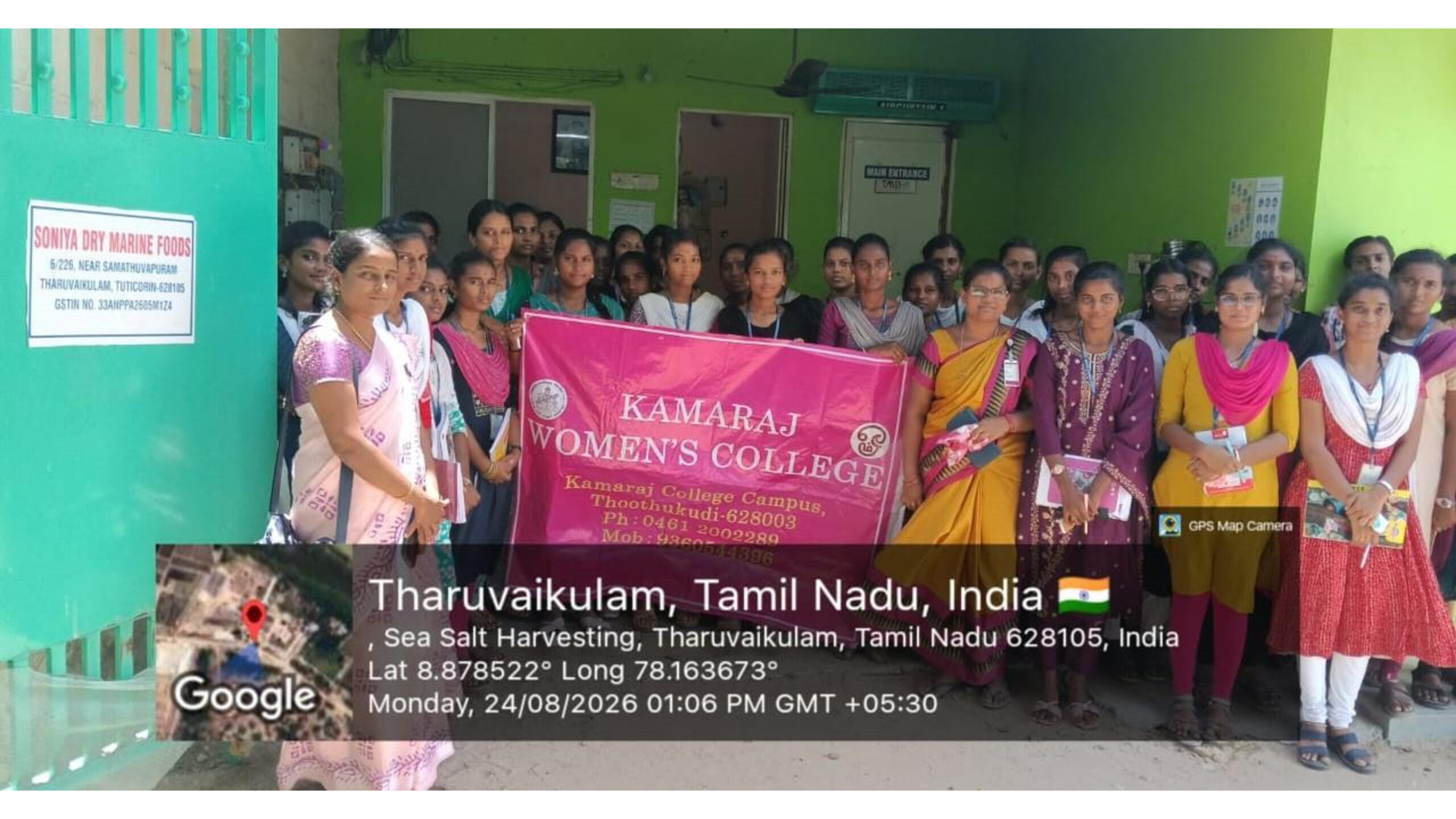
Seafood Industrial Visit Gives KWC Students Valuable Industry Exposure
Report on Industrial Visit to Seafood Processing Units
The Department of Microbiology, Kamaraj Women’s College, Thoothukudi, organized a Seafood Industrial Visit for the students of III B.Sc. Microbiology on 24 August 2026 to Surya Sea Food Exports and Soniya Dry Marine Foods, Tharuvaikulam.
The visit aimed to provide students with practical exposure to the seafood processing industry. In addition, it helped them understand how industries apply microbiological principles in food processing, preservation, hygiene, quality control and food safety.
Objectives of the Industrial Visit
The Seafood Industrial Visit focused on the following objectives:
- Provide practical exposure to seafood processing
- Understand the role of microbiology in food industries
- Learn different seafood preservation techniques
- Understand microbial contamination and its prevention
- Learn the importance of hygiene and sanitation
- Understand cold-chain management and temperature control
- Explore microbiological quality-control practices
- Connect classroom concepts with industrial applications
- Create awareness about career opportunities in food industries
Thus, the visit offered students an opportunity to observe how their theoretical knowledge applies to real-world food processing operations.
Visit to Surya Sea Food Exports
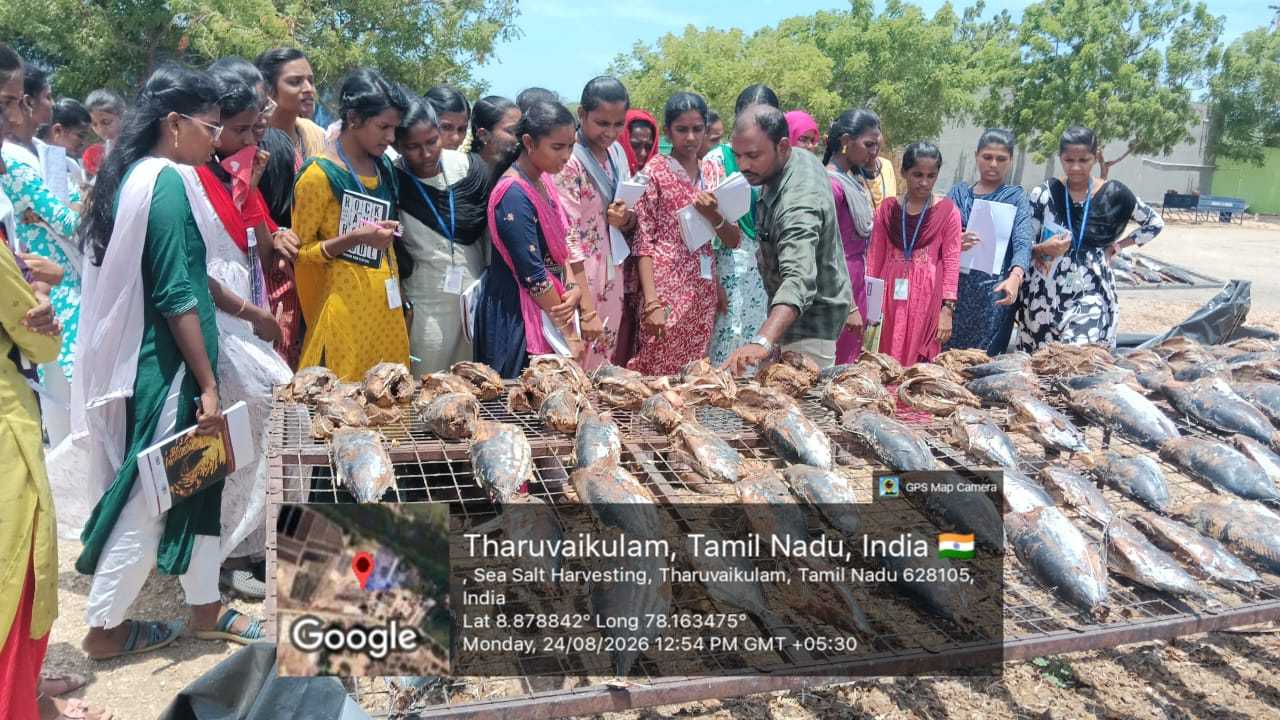
The students first visited Surya Sea Food Exports, where industry personnel introduced them to the various stages involved in handling and processing seafood products.
Students observed the procedures followed during receiving, cleaning, sorting, processing, packing and storage. Moreover, the staff explained why seafood processing units must maintain strict hygiene and sanitation throughout these stages.
The visit enabled students to understand that careful handling at every stage plays an important role in maintaining the safety, freshness and quality of marine food products.
Cold Chain and Seafood Preservation
A major learning component at Surya Sea Food Exports involved cold-chain management.
The industry personnel explained how proper temperature control helps preserve seafood freshness and restrict microbial growth. Since marine products can deteriorate quickly under unsuitable conditions, maintaining the required temperature throughout processing and storage remains essential.
Furthermore, students learned how refrigeration and appropriate storage practices can reduce spoilage and help maintain product quality.
Microbiological Quality Control
The students also gained practical knowledge about microbiological quality control in the seafood industry.
The staff explained possible sources of microbial contamination during the handling and processing of seafood. They also discussed how industries can reduce these risks through:
- Good hygienic practices
- Regular sanitation
- Proper temperature control
- Safe handling procedures
- Appropriate packaging
- Suitable storage conditions
As a result, students could directly connect concepts from Food Microbiology and Quality Control with actual industry practices.
Visit to Soniya Dry Marine Foods
The second part of the industrial visit took place at Soniya Dry Marine Foods, Tharuvaikulam.
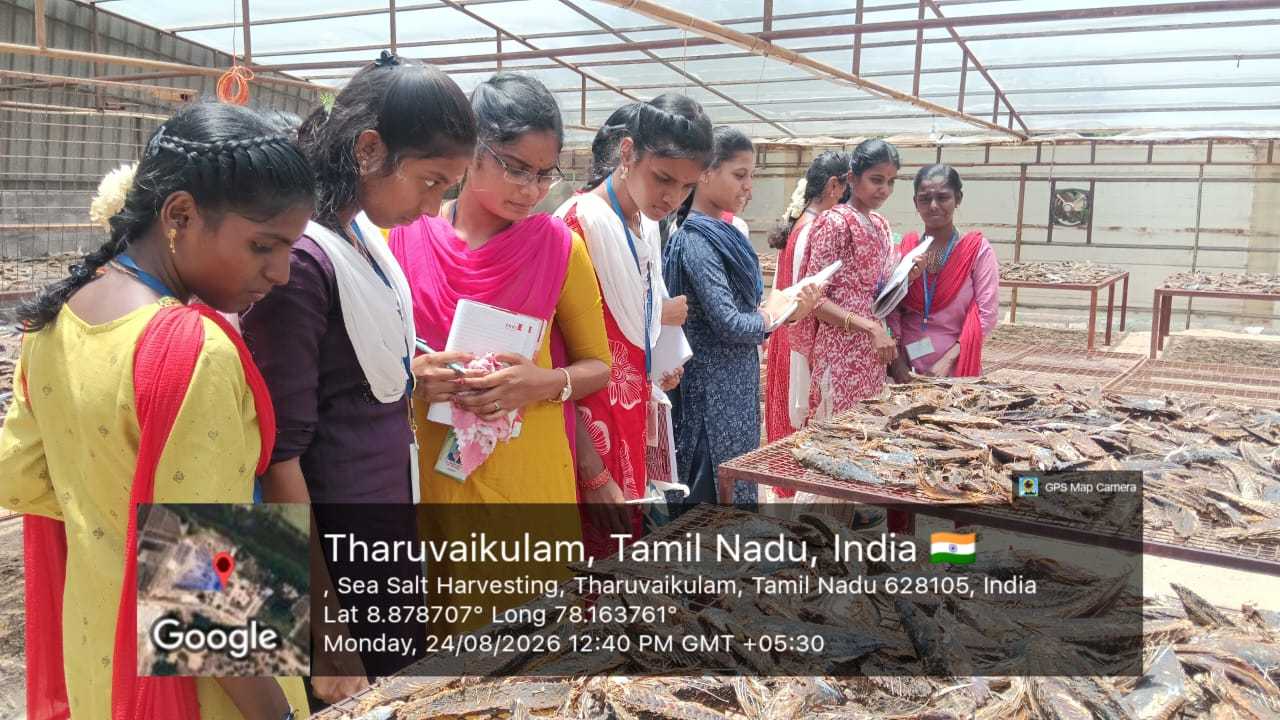
Here, students observed traditional and commercial methods used in the preparation and preservation of dried marine products. The industry personnel explained the various stages involved in cleaning, salting, drying, handling and storage.
This exposure helped students understand how drying serves as an effective food preservation technique.
Role of Drying in Food Preservation
During the visit, students learned how moisture removal helps extend the shelf life of marine food products.
The staff explained that reducing moisture creates conditions that restrict the growth of many microorganisms. Therefore, proper drying plays an important role in preserving fish and other marine products for longer periods.
In addition, students learned about several factors that can affect the quality and shelf life of dried marine products, including:
- Moisture content
- Environmental conditions
- Personal and processing hygiene
- Handling practices
- Storage conditions
- Microbial contamination
The session gave students a clearer understanding of the scientific principles behind traditional food preservation methods.
Prevention of Food Contamination
The industrial visit also highlighted the need to prevent contamination during seafood processing and storage.
Students learned about the risks associated with bacteria, fungi, insects and other sources of contamination. Moreover, industry personnel explained how proper sanitation, hygienic handling and suitable storage conditions can reduce these risks.
The discussion reinforced the importance of microbiological monitoring in maintaining the quality and safety of seafood products.
Interaction with Industry Personnel
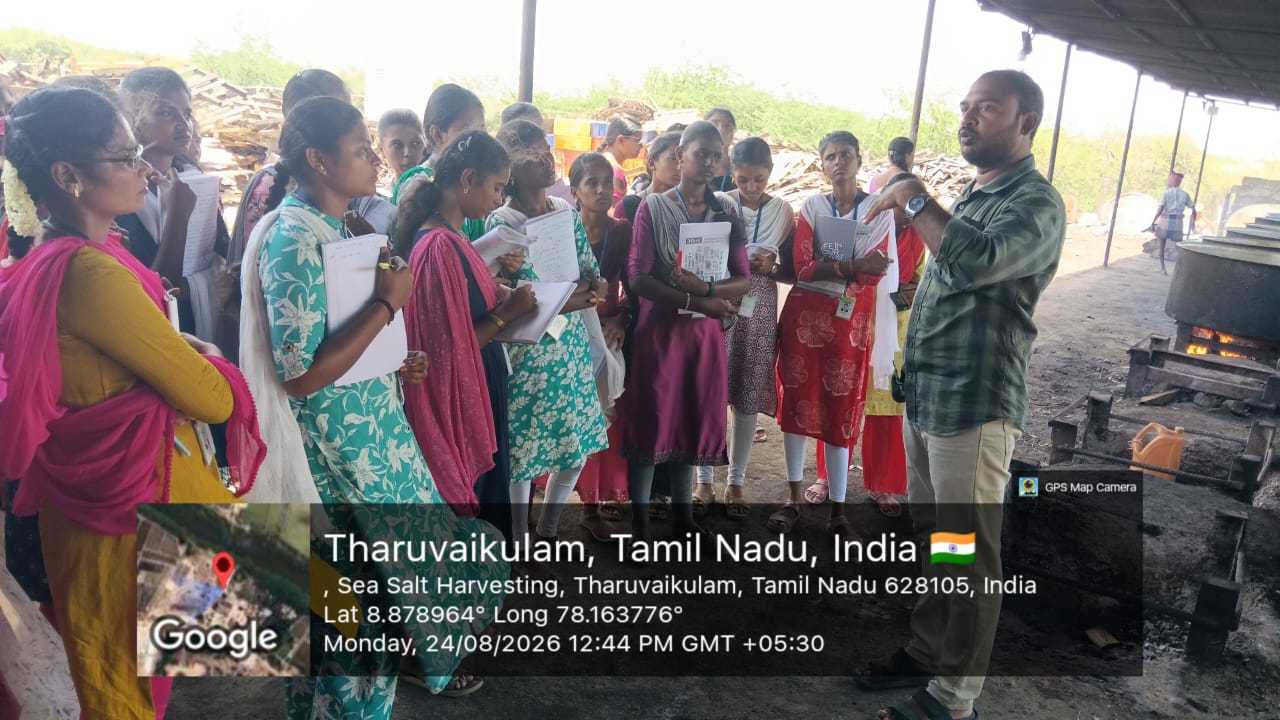
Students actively interacted with the personnel at both industrial units and clarified their doubts regarding seafood processing, preservation, packaging, storage and quality assessment.
The industry experts also highlighted the importance of maintaining cleanliness, following food-safety practices and implementing appropriate quality-control measures.
Consequently, the interaction gave students practical insights that extended beyond textbook learning.
Connecting Microbiology with Industrial Practices
One of the major benefits of the visit was the opportunity to connect classroom learning with industrial applications.
Students could relate their knowledge from subjects such as:
- Food Microbiology
- Industrial Microbiology
- Food Preservation
- Microbial Contamination
- Quality Control
- Food Safety
Furthermore, they observed how industries control microbial growth through refrigeration, drying, sanitation, hygienic handling and proper storage.
This practical exposure strengthened their understanding of the role microbiologists can play in maintaining food quality and safety.
Career Awareness for Microbiology Students
The visit also created awareness about potential career opportunities for microbiology graduates.
Students gained a better understanding of employment possibilities in:
- Food processing industries
- Seafood processing units
- Quality-control laboratories
- Food-safety sectors
- Microbiological testing laboratories
- Food preservation and packaging units
Therefore, the industrial exposure helped students understand how their academic qualifications can lead to different career pathways in the food sector.
Programme Outcomes
The Seafood Industrial Visit provided several valuable learning outcomes. Students were able to:
- Understand the major stages of seafood processing
- Learn practical seafood preservation methods
- Recognise the importance of cold-chain management
- Understand microbial contamination and control
- Learn the role of drying in extending shelf life
- Understand the importance of hygiene and sanitation
- Gain awareness about microbiological quality control
- Connect theoretical concepts with industrial practices
- Explore career opportunities related to food microbiology
Thus, the visit successfully strengthened both the academic and practical understanding of the students.
Conclusion
Overall, the industrial visit to Surya Sea Food Exports and Soniya Dry Marine Foods, Tharuvaikulam, proved to be a highly informative and educational experience for the III B.Sc. Microbiology students.
The visit provided valuable practical exposure to seafood processing, preservation, cold-chain management, drying techniques, hygiene, microbial quality control and food safety. Most importantly, students could observe the real-world application of concepts they had studied in the classroom.
The Department of Microbiology expressed its sincere appreciation to the management and staff of Surya Sea Food Exports and Soniya Dry Marine Foods for providing valuable guidance and practical exposure to the students.
The industrial visit successfully bridged the gap between theoretical learning and industrial application while enhancing students’ practical knowledge and awareness of career opportunities in the seafood and food-processing sectors.