
Reselling Workshop Builds Entrepreneurial Skills at KWC
Report on Reselling Workshop
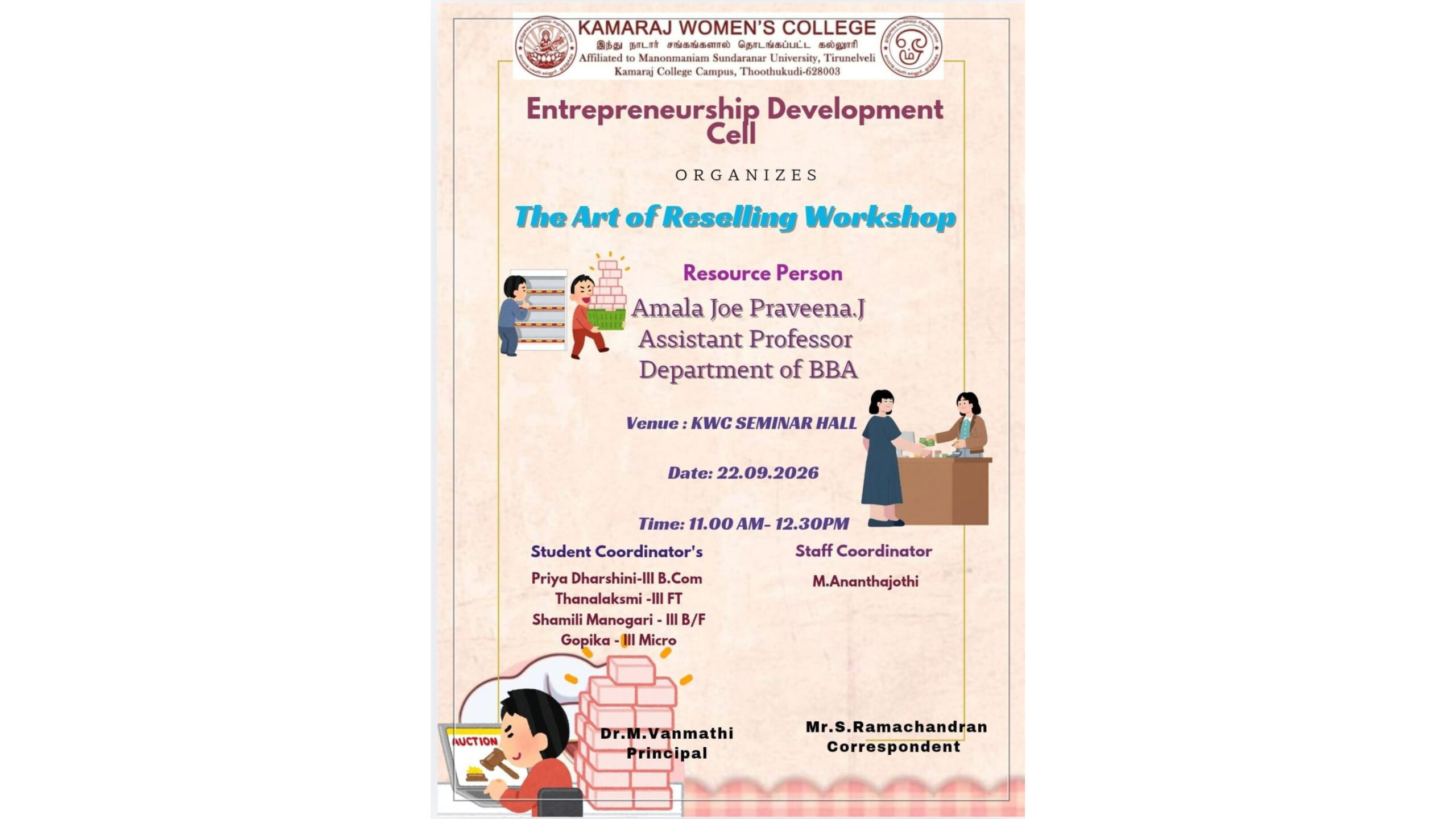
A Reselling Workshop at Kamaraj Women’s College provided 45 selected students with practical knowledge of building and managing a modern reselling business. The programme focused on product sourcing, pricing, sales channels, customer management and practical business strategies.
Mrs. Amala Joe Praveena J. served as the Resource Person and guided the students through the Profitable Reselling Funnel. Moreover, the workshop included a practical group activity that encouraged students to apply their learning through a mock pricing exercise.
Objectives of the Reselling Workshop
The workshop aimed to:
- Introduce students to the fundamentals of reselling
- Develop basic entrepreneurial skills
- Explain practical methods of product sourcing
- Introduce pricing and profit calculation
- Create awareness about sales channels
- Explain the importance of customer management
- Introduce students to basic Customer Relationship Management
- Encourage practical thinking through a pricing activity
- Promote confidence in exploring small business opportunities
Thus, the programme combined business knowledge, practical learning and entrepreneurial thinking.
Inaugural Session
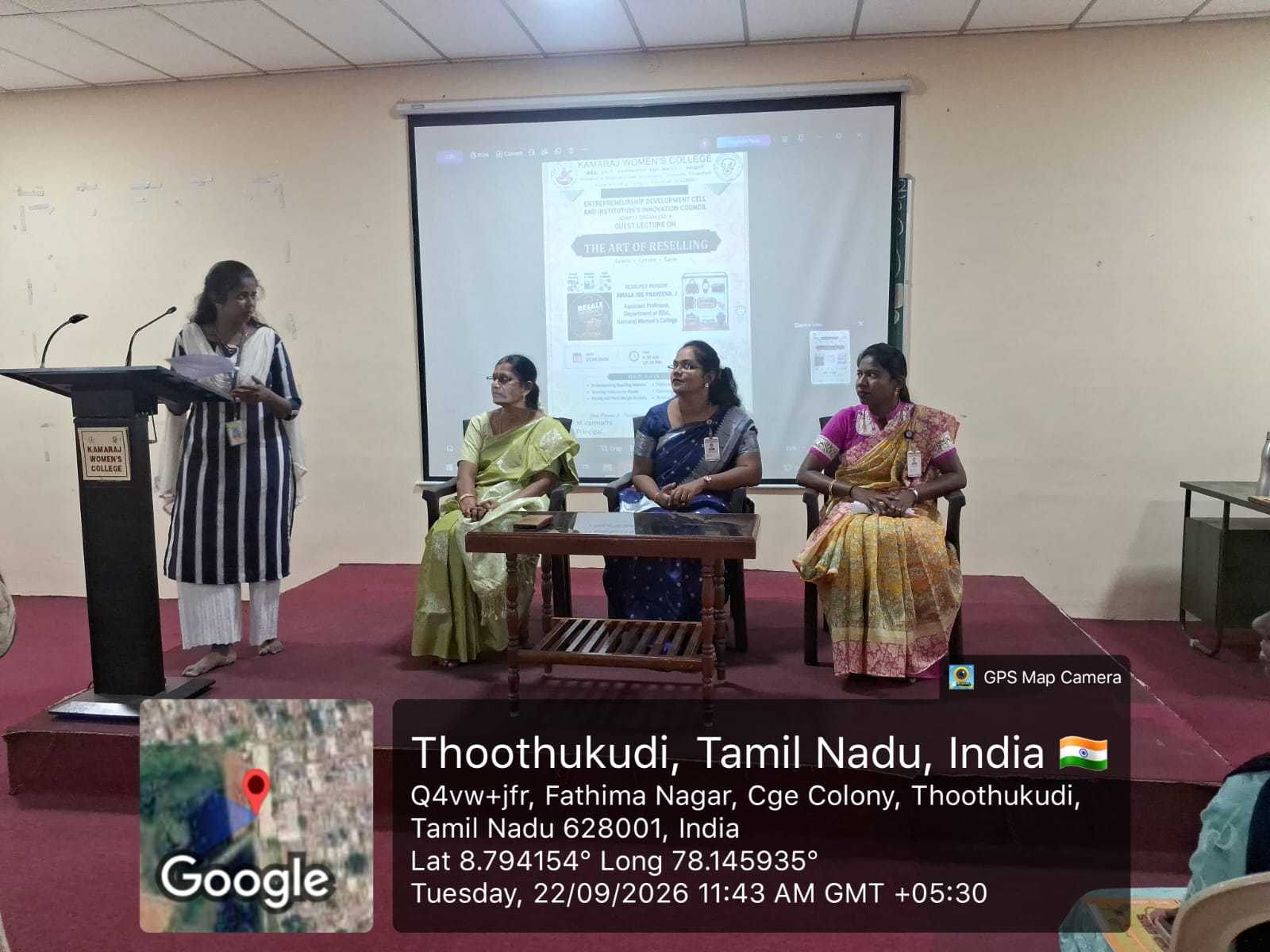
The workshop commenced on time with the Tamil Thai Vazhthu.
Following the inaugural session, the programme moved into the core training. The Resource Person introduced students to the basic dynamics of a modern reselling business.
Furthermore, the session encouraged participants to understand how careful sourcing, pricing and customer management work together in a reselling model.
Understanding the Profitable Reselling Funnel
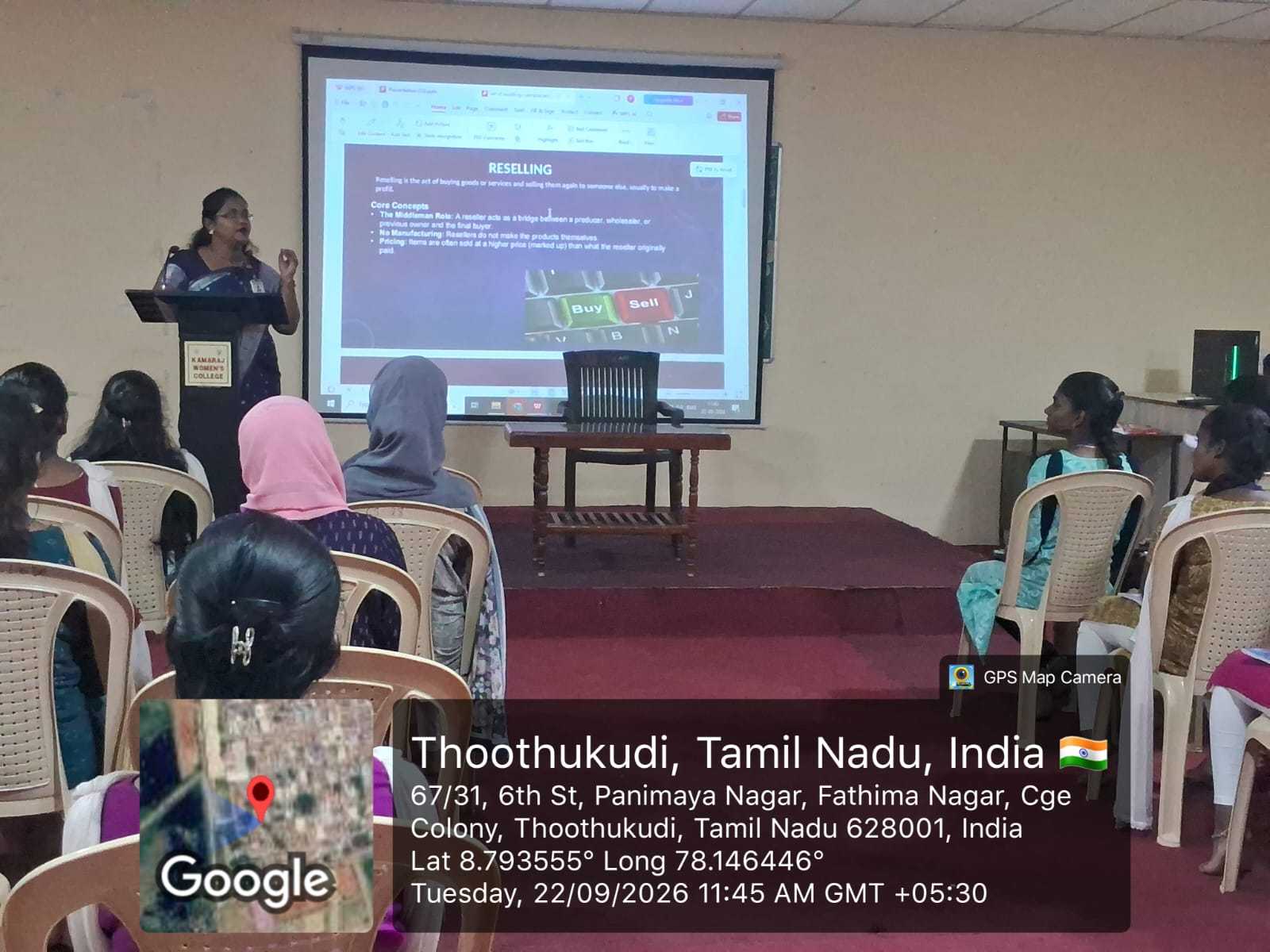
Mrs. Amala Joe Praveena J. guided the 45 participants through the Profitable Reselling Funnel.
She structured the training around three important areas:
- Product Sourcing
- Valuation and Pricing
- Sales Channels and Customer Management
This structured approach helped students understand the different stages involved in taking a product from sourcing to sale.
Moreover, the session connected basic business concepts with practical reselling activities.
Product Sourcing
The first module focused on product sourcing.
Students learned practical methods to identify, verify and procure quality products from wholesalers. The Resource Person also discussed how students could approach sourcing while working with limited initial capital.
Furthermore, the session highlighted the importance of selecting suitable products and reliable sources.
As a result, students gained a clearer understanding of how product selection and sourcing form the foundation of a reselling business.
Valuation and Pricing
The second module covered valuation and pricing.
The Resource Person explained how students could consider target profit margins, operational overheads and competitive pricing while deciding the selling price of a product.
Moreover, the session helped students understand that pricing requires more than simply adding a profit amount to the purchase cost.
Students learned to consider different business expenses while developing a pricing strategy. Therefore, the module gave them useful exposure to the financial side of a reselling business.
Sales Channels and Customer Management
The third module introduced students to sales channels and customer management.
The Resource Person discussed the use of digital platforms such as WhatsApp Business and Instagram as possible channels for reaching customers. In addition, she explained the value of offline networks in supporting sales.
The session also introduced students to the importance of Customer Relationship Management (CRM).
Students learned that maintaining good communication and managing customer relationships form important parts of a business.
Digital and Offline Selling
The Reselling Workshop helped students understand how businesses can use both digital and offline channels.
Digital platforms can provide opportunities to display products and communicate with potential customers. At the same time, offline networks can support direct interaction and local business connections.
Therefore, the workshop encouraged students to understand different approaches to reaching customers rather than depending on a single sales channel.
Interactive Mock Pricing Activity
The workshop included an engaging practical activity for the 45 student participants.
The students formed smaller brainstorming groups and worked on a mock pricing strategy for assigned products.
They applied concepts from the earlier sessions while discussing suitable pricing approaches. Moreover, the group activity encouraged them to think about costs, profit margins and market considerations.
This exercise helped students move from theoretical understanding to practical application.
Guidance and Doubt Clarification
The Resource Person actively reviewed the strategies prepared by the student groups.
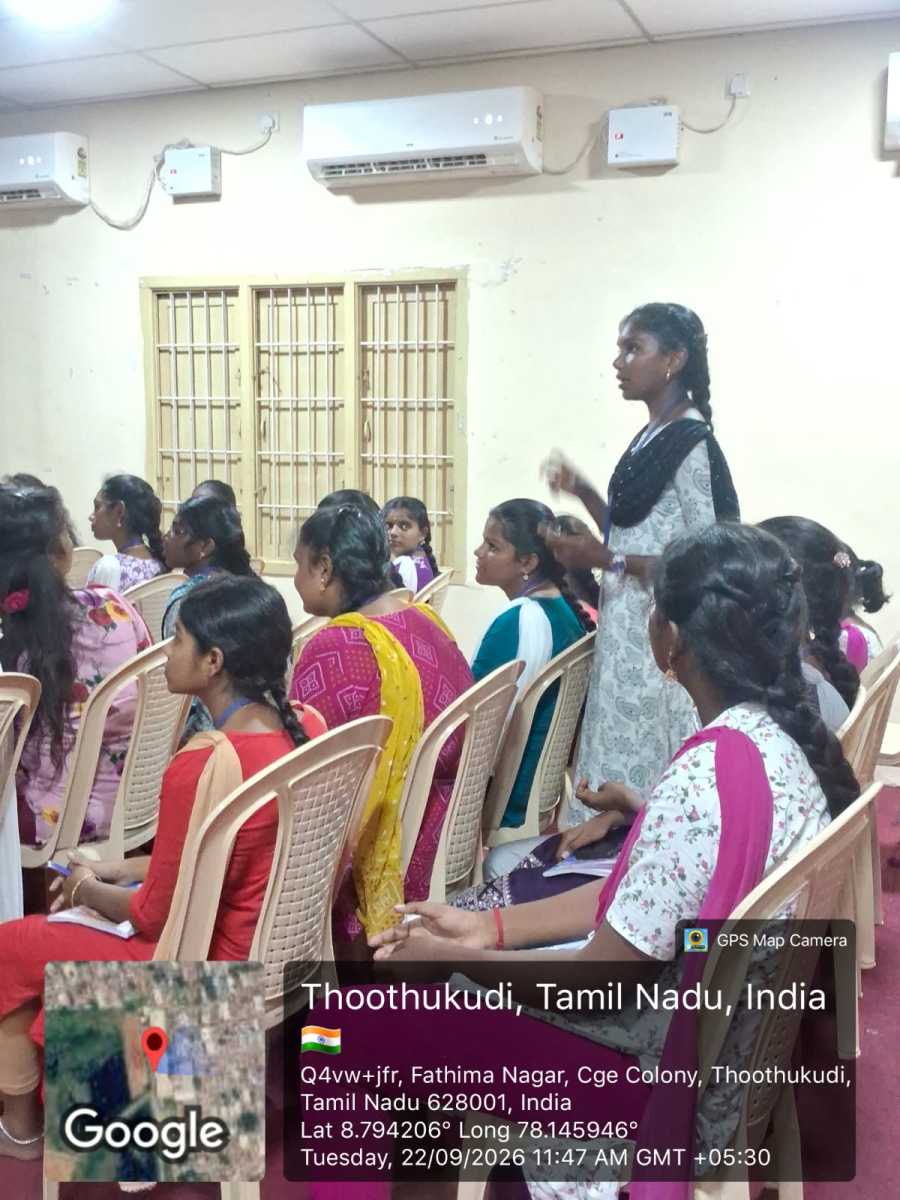
She provided feedback on their ideas and clarified individual doubts. Students also raised questions about supply chain barriers and digital payments.
Furthermore, the interaction gave participants an opportunity to discuss practical concerns related to reselling.
The direct guidance made the workshop more interactive and helped students gain a clearer understanding of real-world business situations.
Learn, Create, Earn
The workshop carried forward the meaningful motto “Learn, Create, Earn.”
The programme first encouraged students to learn the fundamentals of sourcing, pricing and selling. It then encouraged them to create practical business strategies through the group activity.
Finally, the discussion introduced them to how these skills can support income-generating and entrepreneurial opportunities.
Thus, the motto effectively reflected the practical learning approach of the programme.
Encouraging Entrepreneurial Thinking
The Reselling Workshop encouraged students to view entrepreneurship from a practical perspective.
Instead of focusing only on business theory, the programme introduced them to decisions involved in sourcing products, calculating prices, selecting sales channels and managing customers.
Moreover, the practical activity encouraged teamwork, discussion and problem-solving.
As a result, students gained greater awareness of the skills involved in starting and managing a small reselling activity.
Student Feedback
During the valedictory session, student representatives shared positive feedback about the workshop.
They explained that the programme had broadened their understanding of financial independence and entrepreneurial opportunities. In addition, they appreciated the practical approach of the training and the message behind “Learn, Create, Earn.”
Their feedback reflected the usefulness of combining technical business concepts with practical activities.
Programme Outcomes
The Reselling Workshop provided the following learning outcomes:
- Students understood the basic structure of a reselling business
- They learned practical approaches to product sourcing
- Participants gained knowledge about valuation and pricing
- Students understood the role of profit margins and operational costs
- They gained awareness about digital and offline sales channels
- Students learned the importance of customer management and CRM
- The mock activity developed practical pricing skills
- Group discussions encouraged teamwork and problem-solving
- Students gained awareness about supply chain and digital payment considerations
- The programme encouraged entrepreneurial thinking and financial awareness
Conclusion
The Reselling Workshop provided the 45 participating students with valuable practical exposure to the fundamentals of a modern reselling business.
Mrs. Amala Joe Praveena J. guided the participants through product sourcing, valuation, pricing, sales channels and customer management. Moreover, the mock pricing activity gave students an opportunity to apply these concepts through teamwork and discussion.
The valedictory session included student feedback and a formal Vote of Thanks. Finally, the programme concluded with the National Anthem.
Overall, the workshop successfully reflected the motto “Learn, Create, Earn” and encouraged students to explore entrepreneurship with greater knowledge, practical understanding and confidence.