
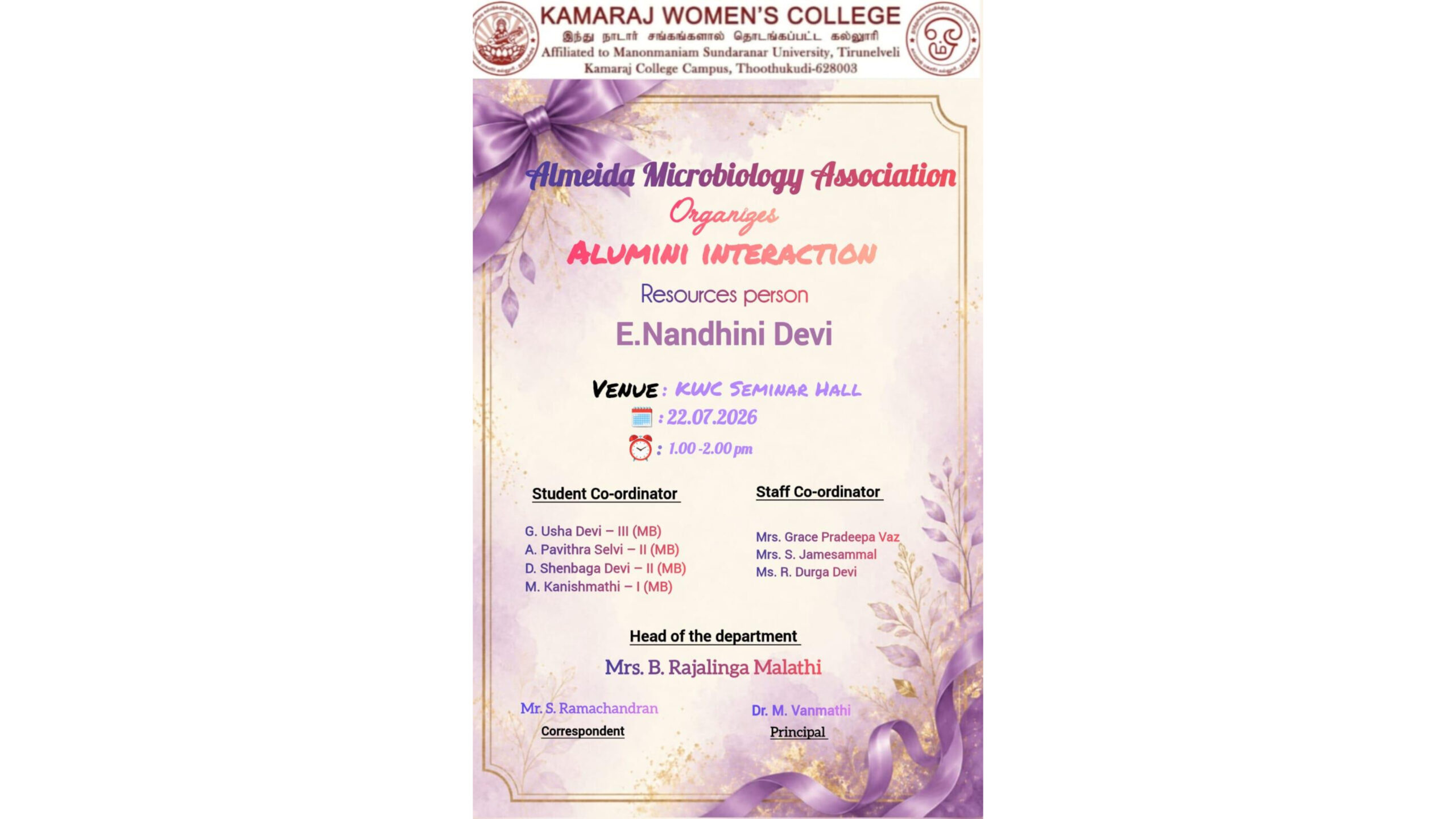
Microbiology Alumni Interaction Programme Guides Students
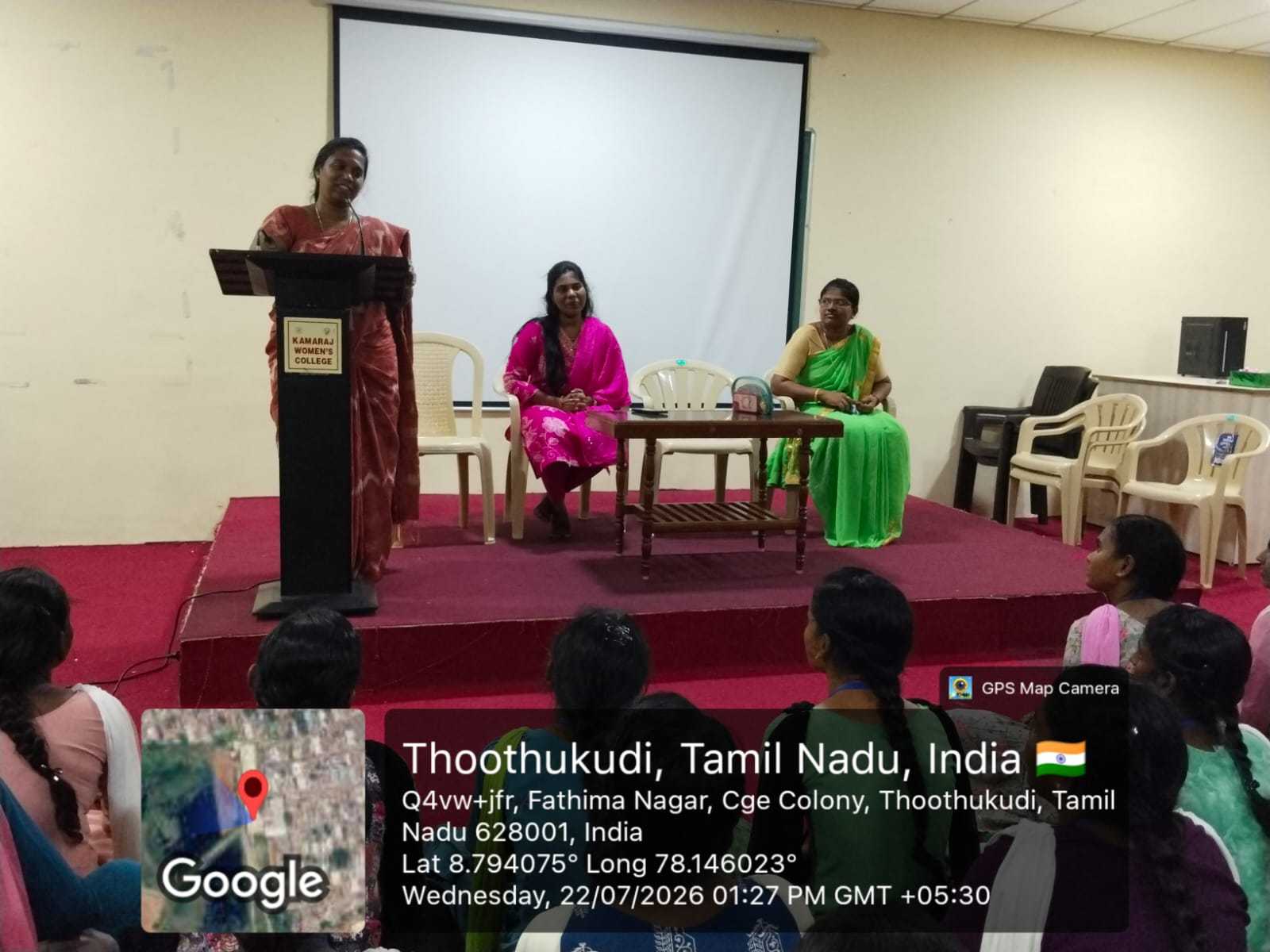
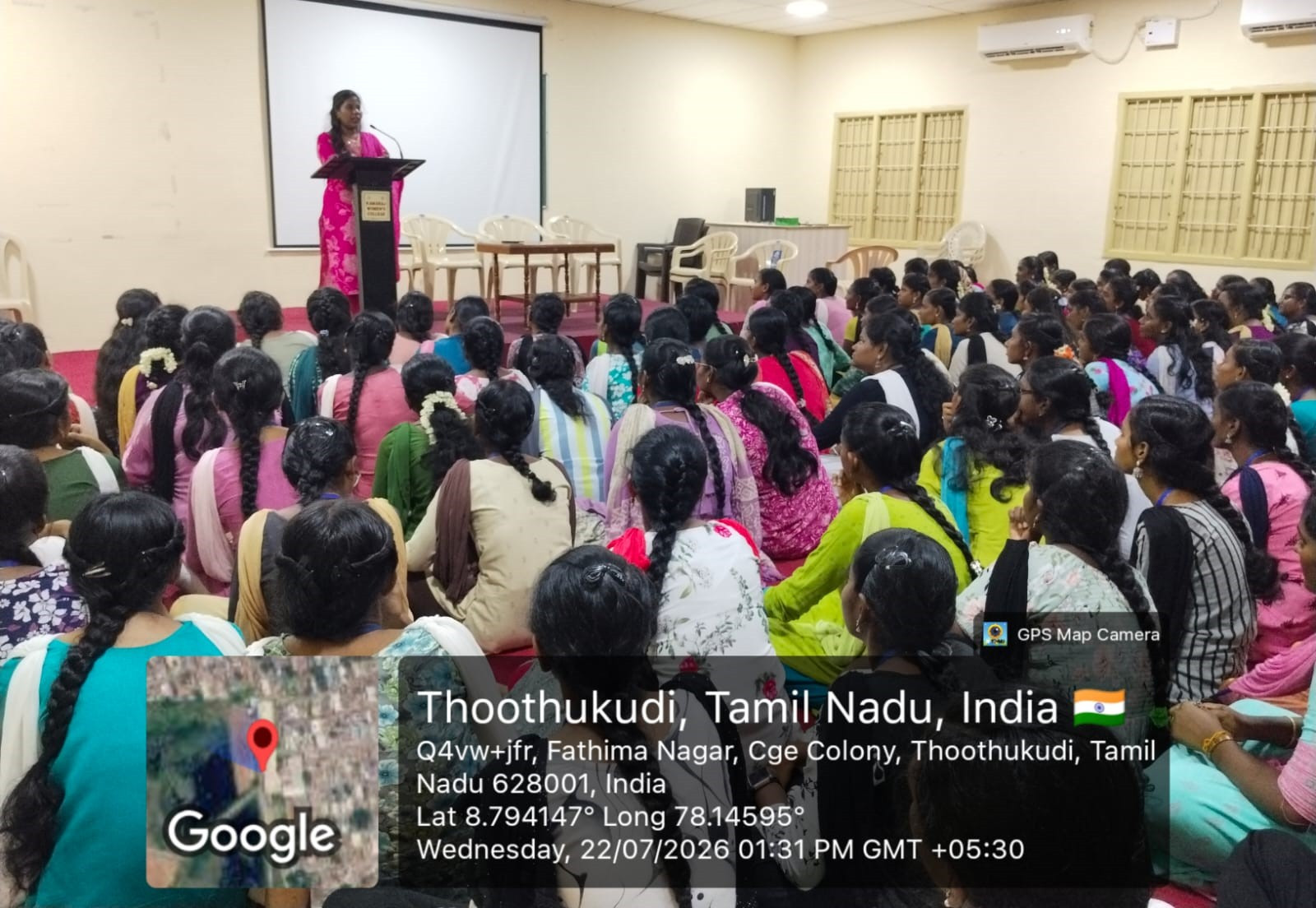
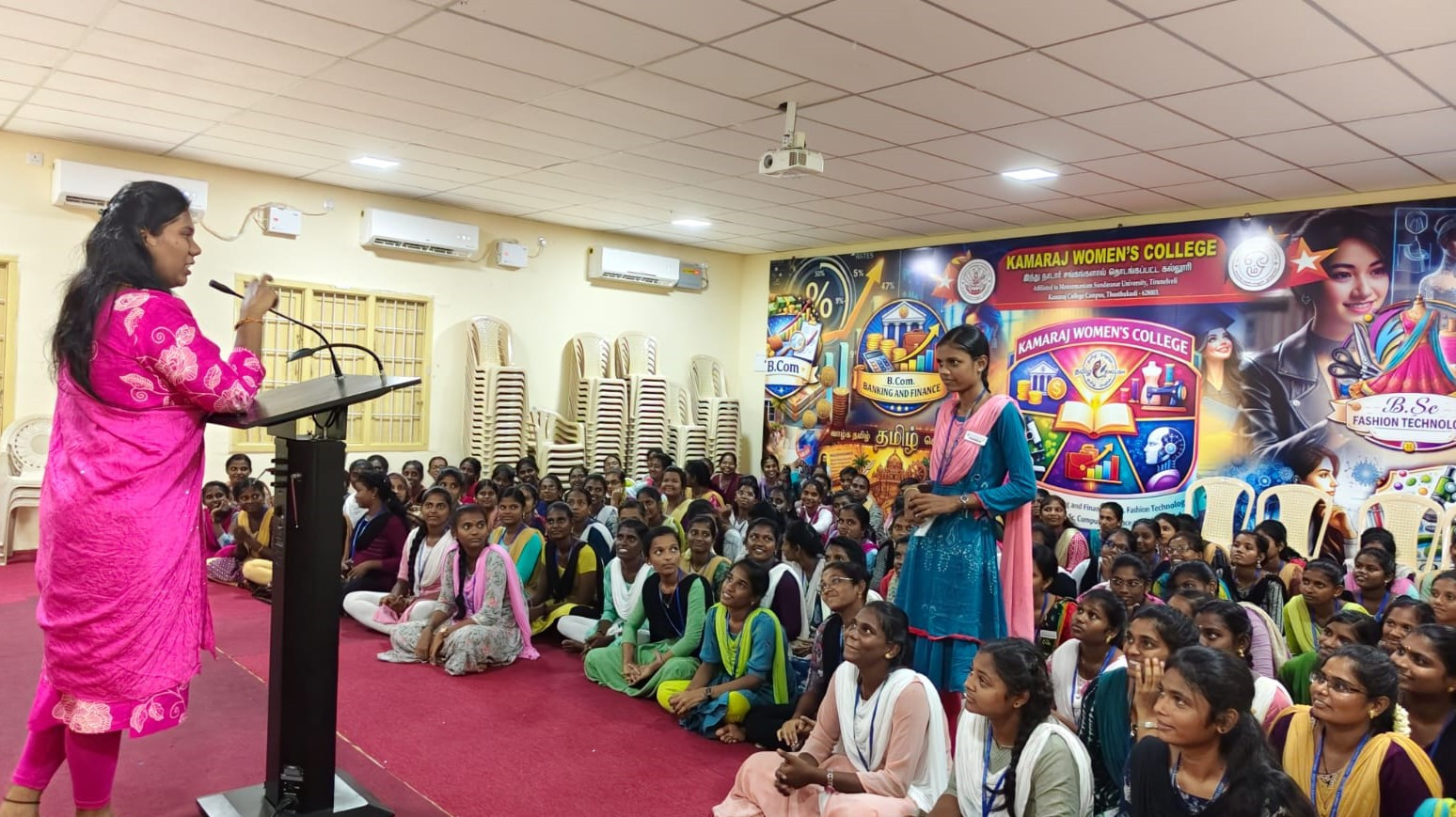
Report on Microbiology Alumni Interaction Programme
The Almeida Microbiology Association of the Department of Microbiology, Kamaraj Women’s College, Thoothukudi, organized a Microbiology Alumni Interaction Programme on 22 July 2026 from 1.00 p.m. to 2.00 p.m. at the KWC Seminar Hall.
The programme was conducted to strengthen the relationship between the alumni, students, and the department. It also aimed to provide career guidance and inspire students through the academic and professional experiences of a successful alumna.
The interaction created a valuable platform for students to understand career opportunities, higher education options, professional expectations, and essential skills required in the field of microbiology. Moreover, the programme helped students gain confidence and develop a clearer vision of their future.
Objectives of the Programme
The Microbiology Alumni Interaction Programme was organized with several academic and professional objectives.
- Strengthen the relationship between alumni and students
- Provide guidance on career opportunities in microbiology
- Create awareness about higher education options
- Develop professional confidence among students
- Highlight the importance of practical and technical skills
- Encourage continuous learning and career planning
- Promote interaction between alumni and the department
Therefore, the programme supported the academic development and career readiness of the students.
Welcome and Introduction
The programme commenced with a warm welcome delivered by the student coordinator. The resource person, faculty members, alumni, and students were cordially greeted.
During the introductory session, the importance of alumni interaction in supporting students’ academic and professional growth was highlighted. The gathering was informed that alumni can offer practical guidance based on their experiences in higher education, employment, and professional life.
The welcome session created a friendly atmosphere and encouraged students to participate actively in the programme.
Resource Person
The resource person for the programme was Ms. E. Nandhini Devi, an esteemed alumna of the Department of Microbiology.
She shared her inspiring journey from college life to her professional career. She also recalled her memorable experiences as a student of the department and expressed her happiness at returning to her alma mater.
Her personal account helped the students understand how academic learning, practical exposure, confidence, and perseverance contribute to professional growth.
Career Opportunities in Microbiology
During the session, the resource person explained the wide range of career opportunities available for microbiology graduates.
She discussed employment prospects in:
- Healthcare institutions
- Pharmaceutical industries
- Biotechnology companies
- Food and dairy industries
- Environmental laboratories
- Research organizations
- Quality control laboratories
- Diagnostic centres
She explained that microbiology is a rapidly developing field with growing applications in medicine, agriculture, biotechnology, food safety, environmental science, and industrial production.
Furthermore, she emphasized that students with strong practical knowledge and technical abilities can explore diverse career paths.
Importance of Practical and Professional Skills
The resource person encouraged students to strengthen their laboratory techniques and scientific understanding.
She highlighted the importance of developing:
- Laboratory skills
- Technical knowledge
- Scientific observation
- Communication skills
- Presentation abilities
- Problem-solving skills
- Professional confidence
She advised students to use every opportunity available within and outside the college to improve their practical knowledge.
According to her, academic marks are important. However, students must also develop employability skills, workplace discipline, and the ability to communicate scientific information clearly.
Value of Experiential Learning
The session highlighted the role of experiential learning in preparing students for higher studies and employment.
The resource person encouraged students to participate in:
- Seminars
- Workshops
- Conferences
- Internships
- Industrial visits
- Research projects
- Skill development programmes
Such activities help students understand how theoretical knowledge is applied in laboratories, industries, hospitals, and research centres.
In addition, practical exposure enables students to identify their areas of interest and make informed decisions about their careers.
Guidance on Higher Education
The resource person motivated students to pursue higher education and professional certification programmes based on their interests and career goals.
She explained that advanced study can help students specialize in areas such as:
- Medical microbiology
- Industrial microbiology
- Food microbiology
- Environmental microbiology
- Biotechnology
- Molecular biology
- Clinical research
She advised students to carefully study the eligibility criteria, course structure, institutional facilities, and career prospects before selecting a higher education programme.
Career Preparation Tips
The students received useful guidance on preparing themselves for employment and professional opportunities.
The resource person shared practical tips on:
- Preparing for competitive examinations
- Writing effective resumes
- Attending job interviews confidently
- Improving communication skills
- Developing workplace professionalism
- Building subject knowledge continuously
- Staying updated with scientific developments
She emphasized that continuous learning is essential in science because new technologies, discoveries, and methods are introduced regularly.
Therefore, students were encouraged to develop the habit of reading scientific articles, attending academic programmes, and learning new laboratory techniques.
Interactive Session
A lively interactive session followed the resource person’s address.
Students actively asked questions related to:
- Higher education
- Career planning
- Industrial expectations
- Research opportunities
- Entrepreneurship
- Skill development
- Employment prospects
The resource person answered each question patiently and supported her explanations with practical examples from her academic and professional experiences.
As a result, the students gained better clarity about possible career paths and the preparation required to achieve their goals.
Student Participation
The students participated enthusiastically throughout the programme. They listened attentively, shared their views, and sought guidance regarding their future plans.
The interaction helped them:
- Understand the scope of microbiology
- Identify suitable career options
- Gain confidence in career planning
- Recognize the value of technical skills
- Prepare for academic and professional challenges
- Connect with an experienced alumna
Moreover, the programme strengthened the bond between the alumna, students, faculty members, and the department.
Programme Outcomes
The Microbiology Alumni Interaction Programme successfully achieved its objectives.
The programme enabled students to:
- Gain awareness about career opportunities in microbiology
- Understand the importance of higher education
- Develop practical and professional skills
- Improve confidence and career readiness
- Recognize the value of internships and research exposure
- Learn from the experiences of a successful alumna
- Plan their academic and professional future effectively
Consequently, the students became more motivated to work towards academic excellence and professional success.
Conclusion
The programme concluded with a heartfelt Vote of Thanks delivered by a student representative.
Sincere gratitude was expressed to Ms. E. Nandhini Devi for sharing her valuable experiences and providing practical career guidance. Appreciation was also extended to the faculty members, student coordinators, volunteers, and participants for their support and active involvement.
Overall, the Microbiology Alumni Interaction Programme was informative, motivational, and beneficial. It successfully connected the alumna with the present students, enhanced career awareness, and inspired participants to pursue academic and professional excellence with confidence and determination.