
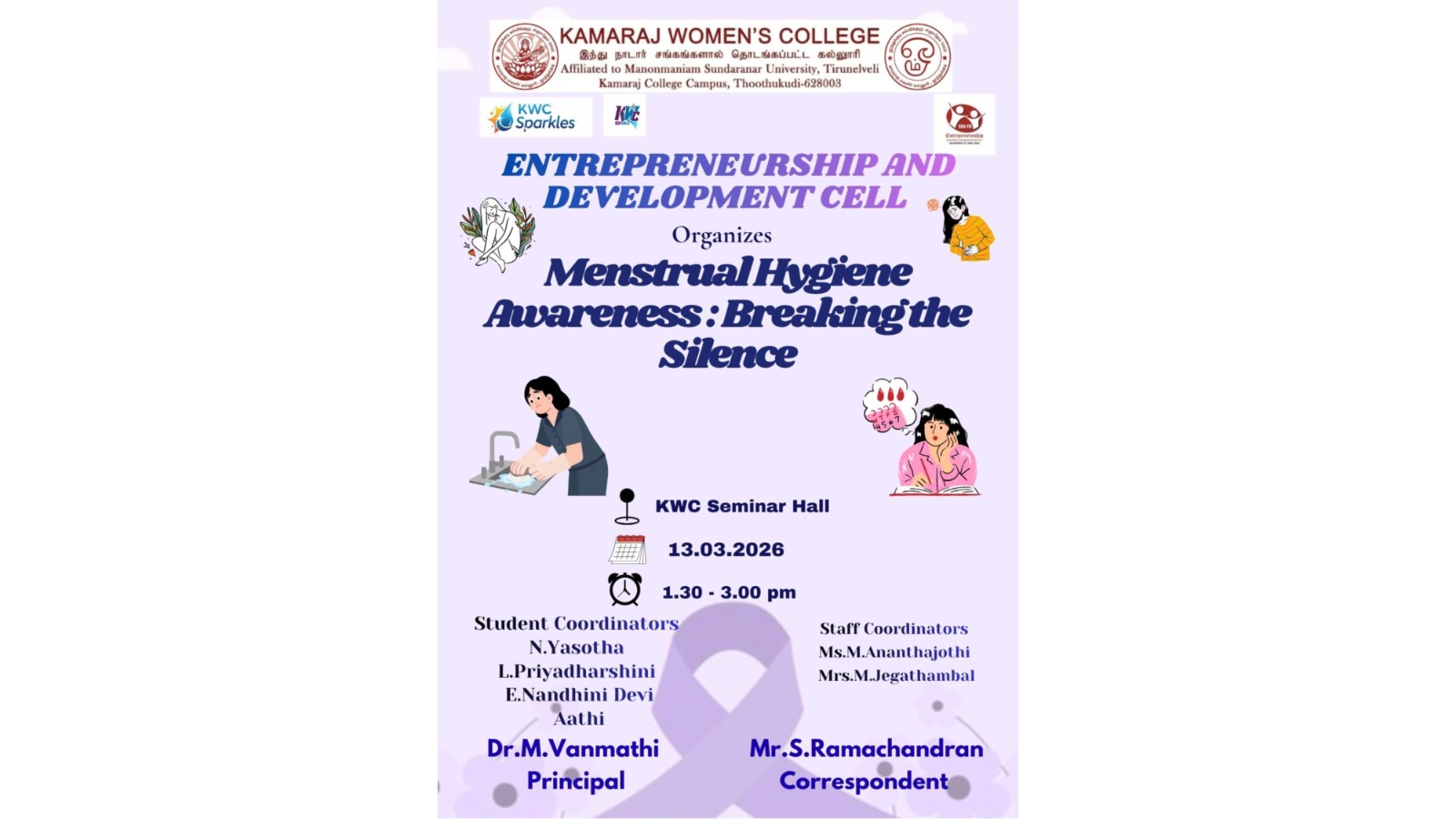
7 Inspiring Highlights of Menstrual Health Awareness
Entrepreneurship and Development Cell Organized Awareness Programme on Menstrual Health
The Entrepreneurship and Development Cell (EDC) organized an awareness programme on menstrual health to educate students on hygiene, health, and social awareness. The programme began at 10:00 a.m. and created a meaningful platform for students to learn about an important yet often neglected topic. A total of 84 students participated in the session and benefited from the informative discussions, practical guidance, and open interaction.
The programme reflected the EDC’s broader commitment to student development. It focused not only on entrepreneurship and innovation, but also on the social and health well-being of young women. In many communities, menstrual health still remains surrounded by silence, shame, and misinformation. Therefore, the programme aimed to break such barriers and provide students with scientific knowledge, practical advice, and confidence to discuss menstrual health without fear or hesitation.
At the same time, the session connected health awareness with entrepreneurial thinking. It introduced students to the idea that social challenges can also become opportunities for innovation and service. Thus, the programme stood out as both an educational and socially relevant initiative.
Introduction and Welcome Address
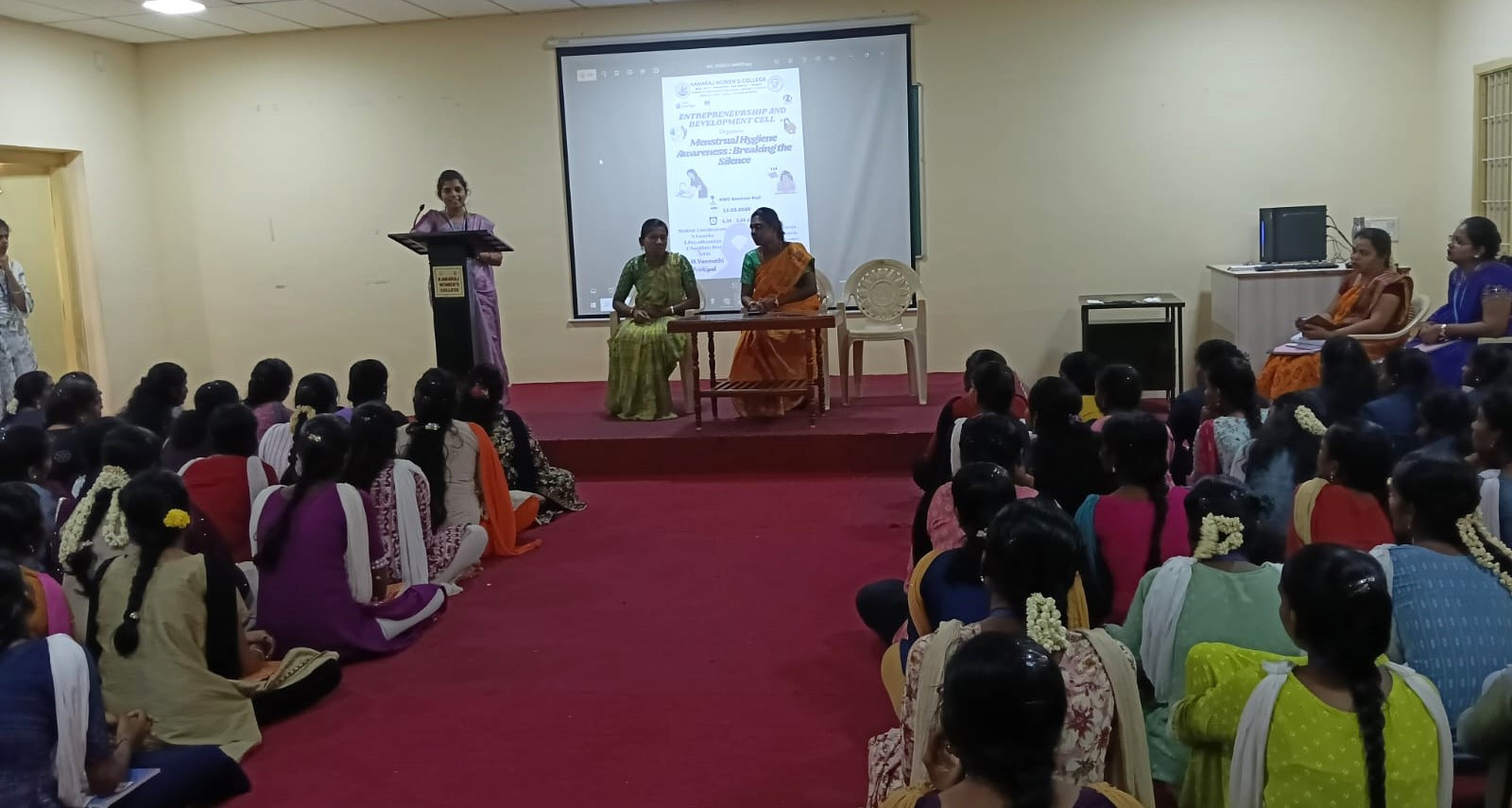
The programme commenced with a formal welcome address. During the opening remarks, the EDC Coordinator highlighted the importance of creating awareness among students about menstrual health. The coordinator explained that the Cell works not only to promote business ideas and entrepreneurial skills, but also to support the overall growth and well-being of students.
Furthermore, the objective of the programme was clearly presented. The session intended to remove long-standing social taboos and give students reliable knowledge about menstrual health. By setting this tone at the beginning, the organisers made the students feel comfortable and prepared them for an open and useful discussion.
Keynote Session: Breaking the Silence
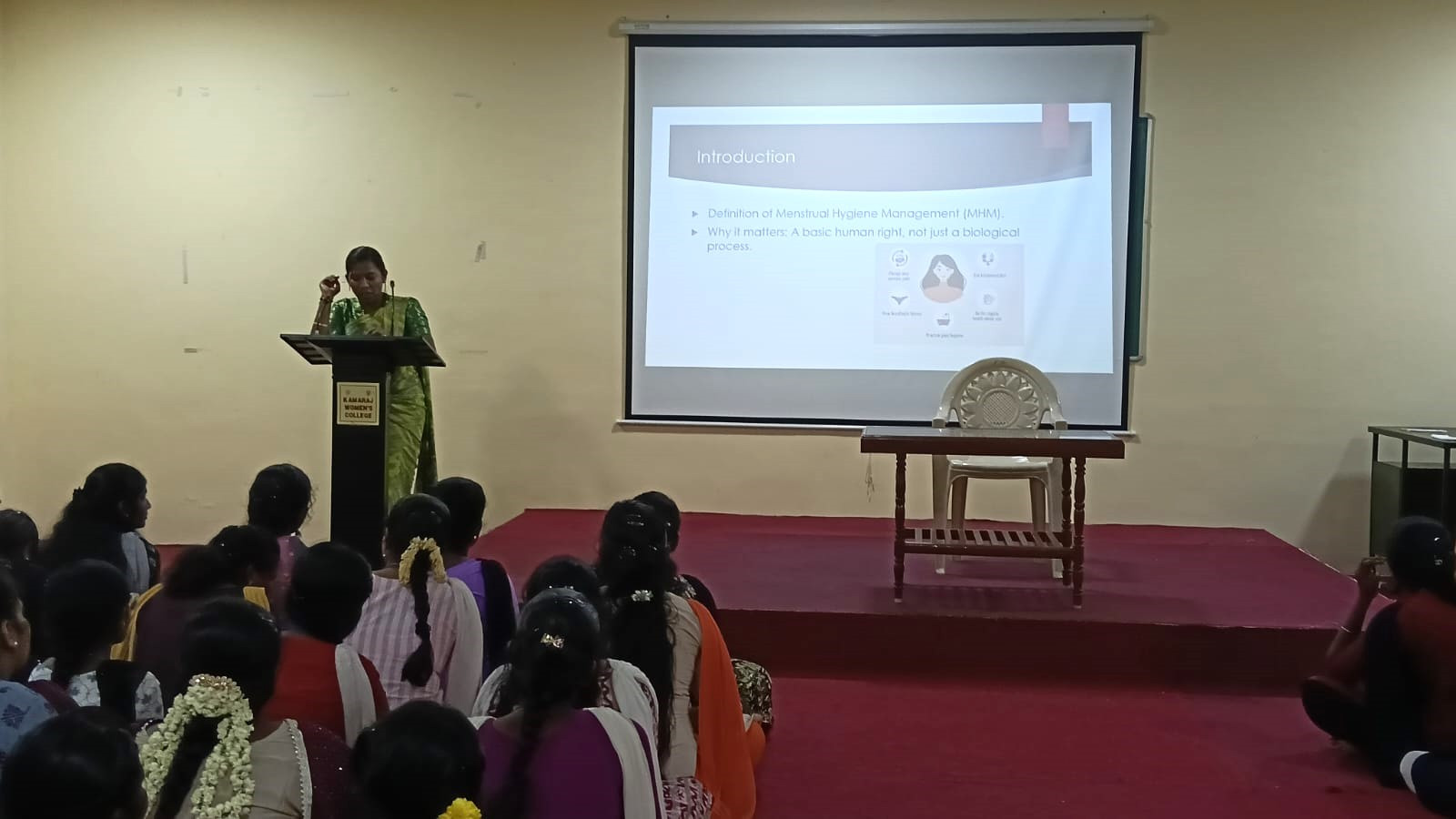
The main session focused on menstrual literacy. It addressed the need to speak openly about menstruation and understand it as a natural biological process. The speaker explained that silence and stigma often lead to fear, confusion, and poor hygiene practices. Therefore, students were encouraged to replace shame with awareness and confidence.
One important part of the session explained the biological facts of the menstrual cycle. The speaker described the process in a simple and scientific way so that students could understand menstruation without myths or fear. This explanation helped normalize the topic and reduce the discomfort often associated with it.
In addition, the session included a valuable myth-busting segment. Several common misconceptions were discussed and corrected. For example, the speaker addressed cultural beliefs related to food restrictions, such as avoiding pickles or curd during periods. Misunderstandings about physical activity were also discussed. Students learned that many of these beliefs have no scientific basis and should not control healthy practices.
Guidance on Hygienic Practices
Another major focus of the programme was menstrual hygiene. The speaker gave practical guidance on the proper use of menstrual products and explained why hygiene is essential for health and comfort. Students learned about the importance of selecting safe products, using them correctly, and maintaining personal cleanliness during menstruation.
The session emphasized a few important hygienic practices:
- Changing sanitary pads every 4–6 hours
- Maintaining proper hand hygiene before and after use
- Using products safely and correctly
- Preventing infections through regular cleanliness
- Following healthy menstrual care practices without fear
These suggestions were practical and easy to follow. As a result, the students received clear guidance that could support their health in everyday life. Moreover, the programme helped them understand that menstrual hygiene is not just a personal matter, but an important public health issue.
Entrepreneurial Perspectives and Sustainable Solutions
A special feature of the programme was the link made between health awareness and entrepreneurship. Since the session was organised by the EDC, the discussion also explored how menstrual health can connect with innovation and sustainable enterprise. This part of the programme gave students a fresh perspective on how real social needs can inspire meaningful business ideas.
The session highlighted the growing relevance of eco-friendly menstrual products. Students were introduced to the idea of developing biodegradable sanitary napkins using botanical waste such as hibiscus residue or coriander waste. This idea showed them that entrepreneurship can address both women’s health and environmental sustainability.
The speaker also discussed the increasing market demand for green menstruation products. Such products are skin-friendly, environmentally responsible, and socially valuable. Therefore, the programme encouraged students to think beyond traditional business models and consider socially responsible innovation.
- Biodegradable sanitary napkins using botanical waste
- Eco-friendly and skin-safe menstrual products
- Growing market demand for green menstruation
- Scope for student-led innovation and enterprise
- Combining health awareness with sustainable business ideas
This discussion was especially relevant because it connected women’s health, environmental care, and entrepreneurship in a practical way. Consequently, the session encouraged students to view social awareness as a space for innovation and leadership.
Interactive Question and Answer Session
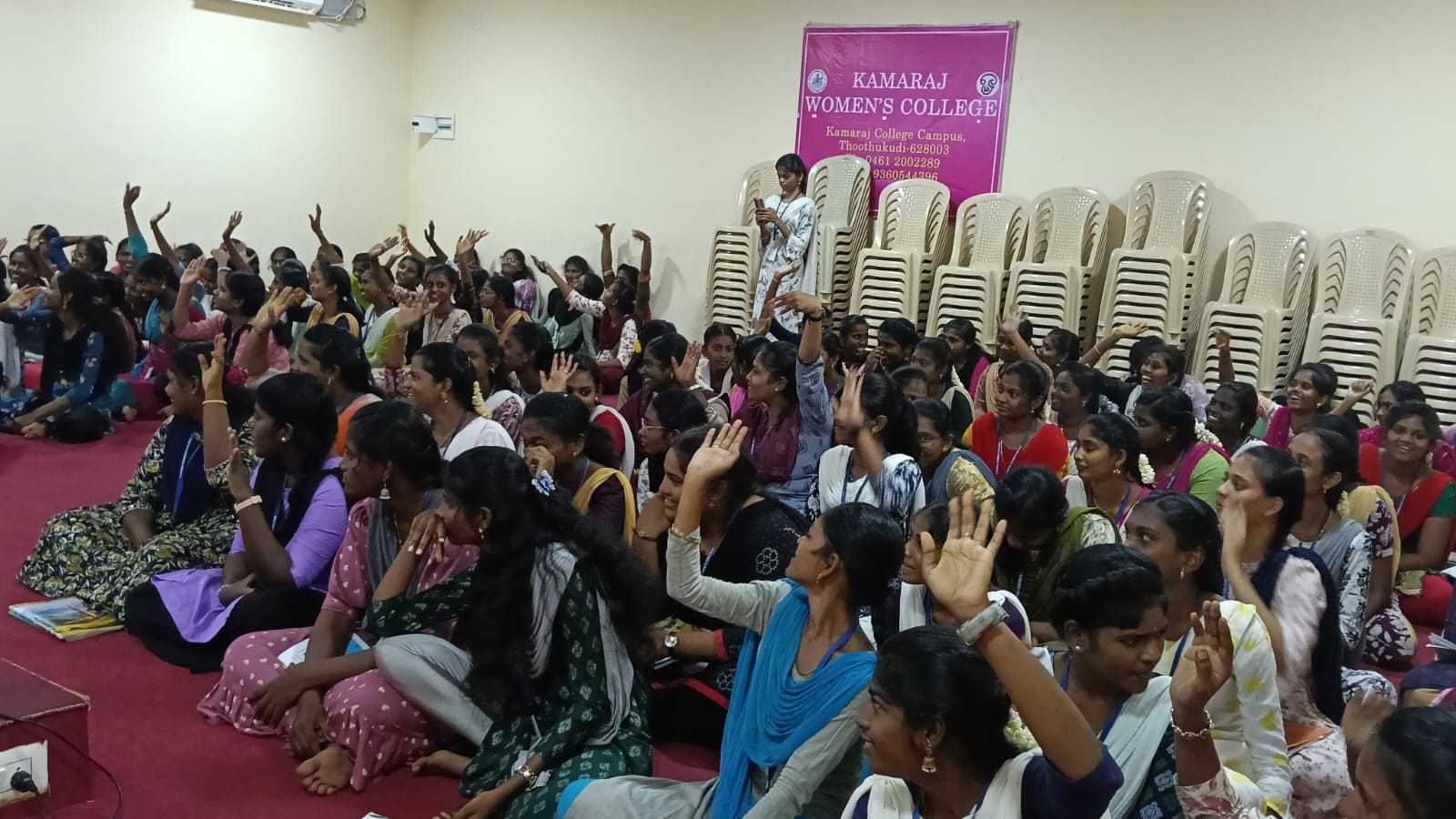
The programme became even more meaningful during the interactive Q&A and group discussion. All 84 participants actively engaged in the open forum. They raised thoughtful questions, shared concerns, and discussed issues related to menstrual health in an honest and respectful setting.
Students asked questions on several important themes. Many wanted to know how to manage menstrual cramps through nutrition. The discussion included the role of iron-rich foods such as jaggery and spinach in supporting health during menstruation. Others asked about effective waste disposal methods in institutional spaces and how colleges can improve hygiene management.
Another important issue discussed was period poverty and its psychological impact. Students reflected on how lack of access to menstrual products can affect confidence, attendance, and well-being. They also discussed how student-led initiatives might support peers in need. This part of the session added depth to the programme and made students think about menstrual health as both a personal and social concern.
Conclusion and Vote of Thanks
The session concluded with a clear summary of the key points discussed. The EDC encouraged students to become “Hygiene Ambassadors” in their homes, communities, and villages. This message gave the programme a practical and community-oriented ending. It reminded students that awareness becomes meaningful only when it is shared and practiced.
A formal Vote of Thanks was delivered at the end of the programme. Gratitude was expressed to the college management, the organizing team, and all those who supported the successful conduct of the event. The organisers appreciated the active participation of the students and their willingness to engage with the topic in a thoughtful manner.
Overall, the Menstrual Health Awareness programme organized by the Entrepreneurship and Development Cell proved highly useful and timely. It educated students on menstrual literacy, hygiene, myths, nutrition, and sustainable solutions. More importantly, it encouraged them to speak openly, think responsibly, and carry this awareness into society. Such initiatives play an important role in building informed, confident, and socially responsible young women.