
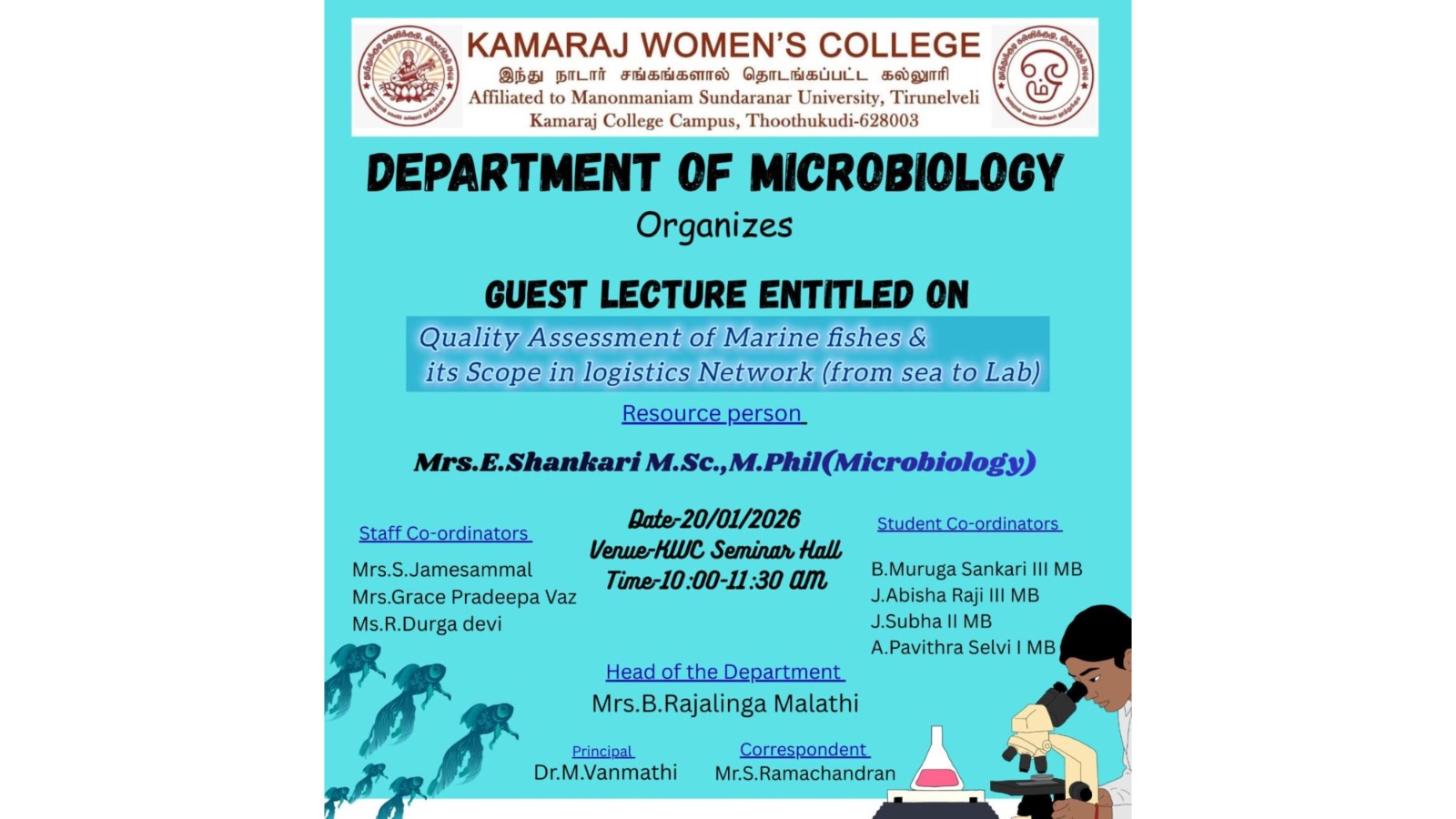
Inspiring Guest Lecture on Marine Fish Quality Assessment
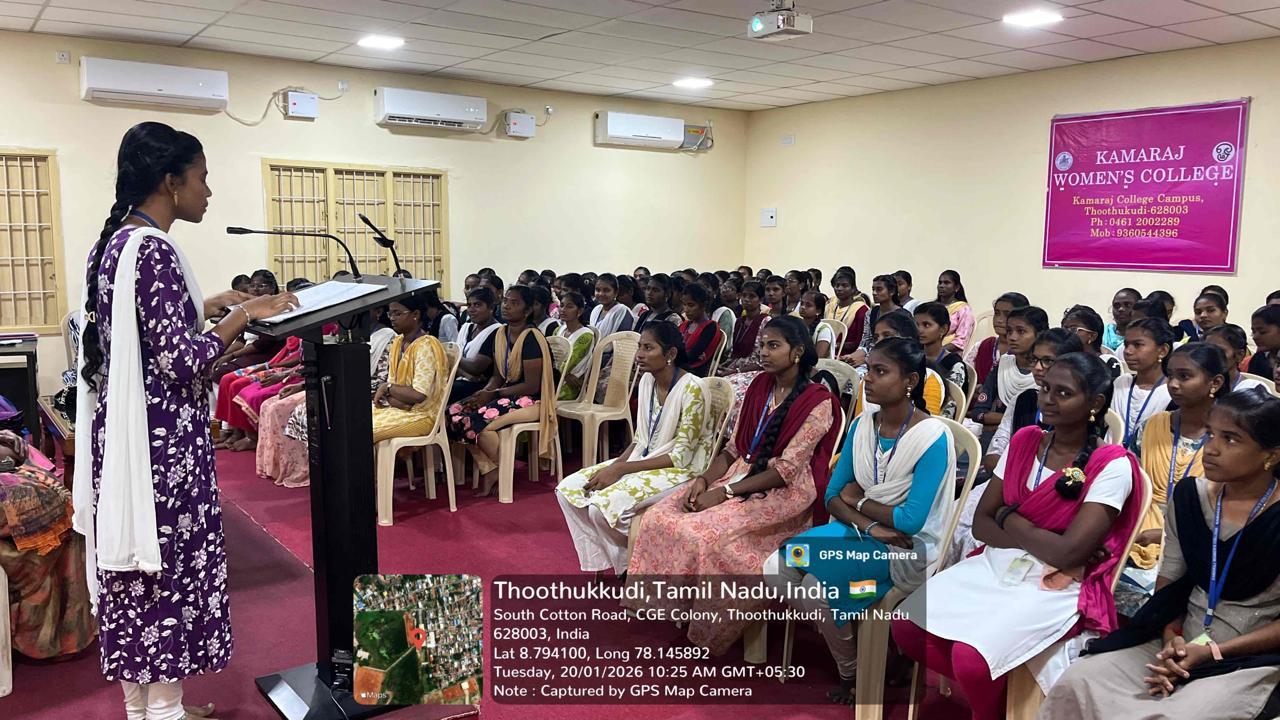
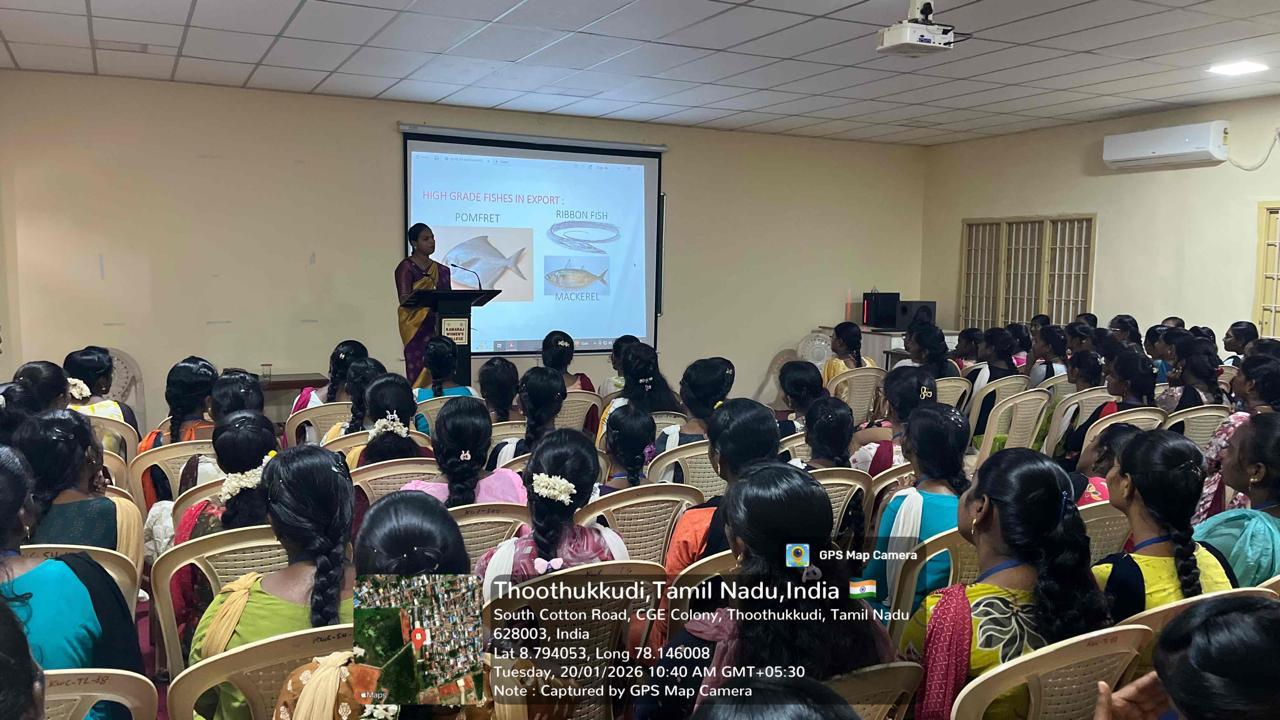
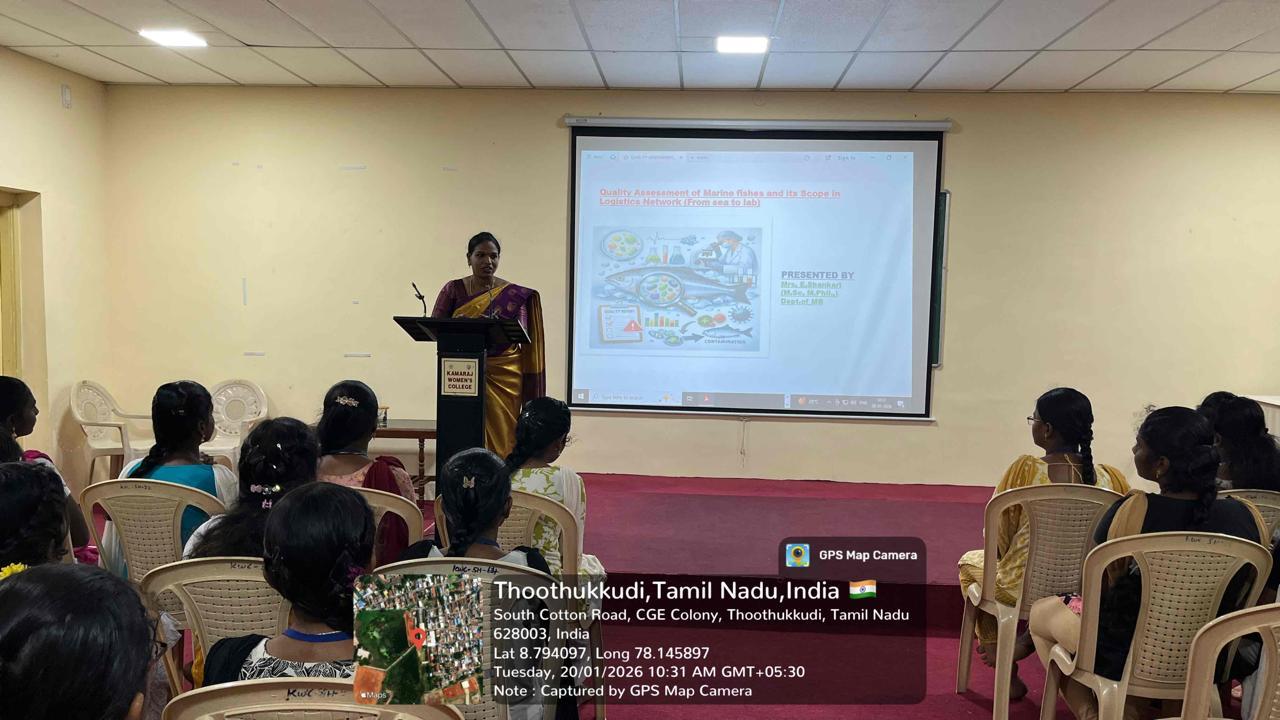
Marine Fish Quality Assessment
The Department of Microbiology, Kamaraj Women’s College, Thoothukudi, organized an informative and career-oriented guest lecture on “Marine Fish Quality Assessment & Its Scope in Logistics Network (From Sea to Lab)” on 20 January 2026 at 10.00 a.m. in the HIWC Seminar Hall.
This academic programme was designed to enhance students’ understanding of quality assurance in marine products while linking microbiological principles to real-world applications. Moreover, the session aimed to create awareness about career opportunities in fisheries, food safety, and quality control sectors. Through expert guidance, the department reinforced its commitment to academic enrichment and industry-relevant learning.
Inaugural Session and Welcome Address
The programme commenced with a prayer, invoking divine blessings for the success of the event. Subsequently, the gathering was warmly welcomed by the organizing faculty and student coordinators. Following this, the significance of the topic was introduced briefly, highlighting its relevance in the fields of microbiology, marine science, and food quality assurance.
Furthermore, the introduction emphasized the growing importance of quality assessment in ensuring food safety and public health. As a result, students were prepared to engage actively in the session and gain meaningful academic insights.
Expert Session by the Resource Person
The guest lecture was delivered by Mrs. E. Shankari, M.Sc., M.Phil. (Microbiology), who provided an insightful and comprehensive overview of Marine Fish Quality Assessment. She began by explaining the importance of maintaining quality and safety from the point of capture to laboratory analysis.
Moreover, she highlighted how improper handling can lead to microbial spoilage, economic loss, and public health risks. Through real-life examples, she connected theoretical concepts with practical industry scenarios, thereby enhancing student understanding.
Quality Assessment Parameters Explained
During the session, the resource person elaborated on various quality assessment parameters used in the evaluation of marine fishes. These included:
- Physical parameters such as appearance, texture, and freshness indicators.
- Chemical parameters including pH levels, spoilage indicators, and biochemical changes.
- Microbiological parameters involving microbial load, pathogenic organisms, and hygiene assessment.
- Sensory evaluation methods such as odor, taste, and overall acceptability.
By explaining each parameter in detail, she ensured that students gained a holistic understanding of quality assessment protocols. Additionally, she emphasized the importance of standard testing methods and regulatory compliance in ensuring consumer safety.
Logistics Network: From Sea to Laboratory
A major focus of the lecture was the logistics network involved in marine fish handling and transportation. The resource person explained the complete journey of marine fishes from the sea to laboratory analysis, stressing the importance of maintaining the cold chain at every stage.
Furthermore, she highlighted key aspects such as:
- Cold chain management to prevent microbial growth.
- Hygienic handling practices during harvesting, processing, and transportation.
- Proper storage techniques to retain freshness and quality.
- Documentation and traceability within the logistics network.
Consequently, students understood how logistics plays a critical role in preserving quality and ensuring regulatory compliance. This practical exposure significantly enriched their academic perspective.
Career Opportunities and Professional Scope
In addition to technical aspects, the resource person elaborated on the career opportunities available in marine microbiology and food quality assurance. She explained the role of microbiologists in:
- Quality control laboratories
- Fisheries and seafood processing industries
- Research organizations
- Food safety and regulatory agencies
Through this discussion, students gained clarity on professional pathways and future prospects. Moreover, the session motivated them to pursue higher studies and specialized training in related fields.
Student Coordination and Participation
The programme was effectively coordinated by the student coordinators B. Muruga Sankari (III MB), J. Abisha Raji (III MB), J. Subha (II MB), and A. Pavithra Selvi (I MB). Their organizational efforts ensured the smooth conduct of the event.
Furthermore, students actively participated throughout the session. They raised several thoughtful questions related to:
- Microbial spoilage mechanisms
- Preservation techniques
- Laboratory testing methods
- Career options in marine microbiology
The resource person patiently addressed all queries and encouraged students to explore research and industry-based career opportunities. As a result, the session became highly interactive and intellectually stimulating.
Academic Impact and Learning Outcomes
The guest lecture had a significant academic impact on the participants. Through expert guidance and real-world insights, students gained:
- Enhanced understanding of marine fish quality assessment protocols
- Awareness of logistics and cold chain management
- Clarity about career opportunities in microbiology and food safety
- Improved appreciation for applied microbiology
Thus, the session effectively bridged the gap between classroom learning and industry practices.
Conclusion
In conclusion, the guest lecture on Marine Fish Quality Assessment organized by the Department of Microbiology at Kamaraj Women’s College was academically enriching and professionally inspiring. Through detailed explanations, practical insights, and interactive discussions, the programme strengthened students’ understanding of food quality assurance and marine microbiology.
The programme concluded with a vote of thanks, expressing sincere gratitude to the resource person, staff coordinators, and student organizers for their valuable contributions. The event came to a successful close at 11.30 a.m., leaving participants motivated and academically empowered.
🔗 Useful Links
Internal Link:
Kamaraj Women’s College – Official Website
External Link:
FAO – Fisheries and Aquaculture