
International Microorganism Day Inspires Creative Learning at KWC
Report on International Microorganism Day Celebration 2026
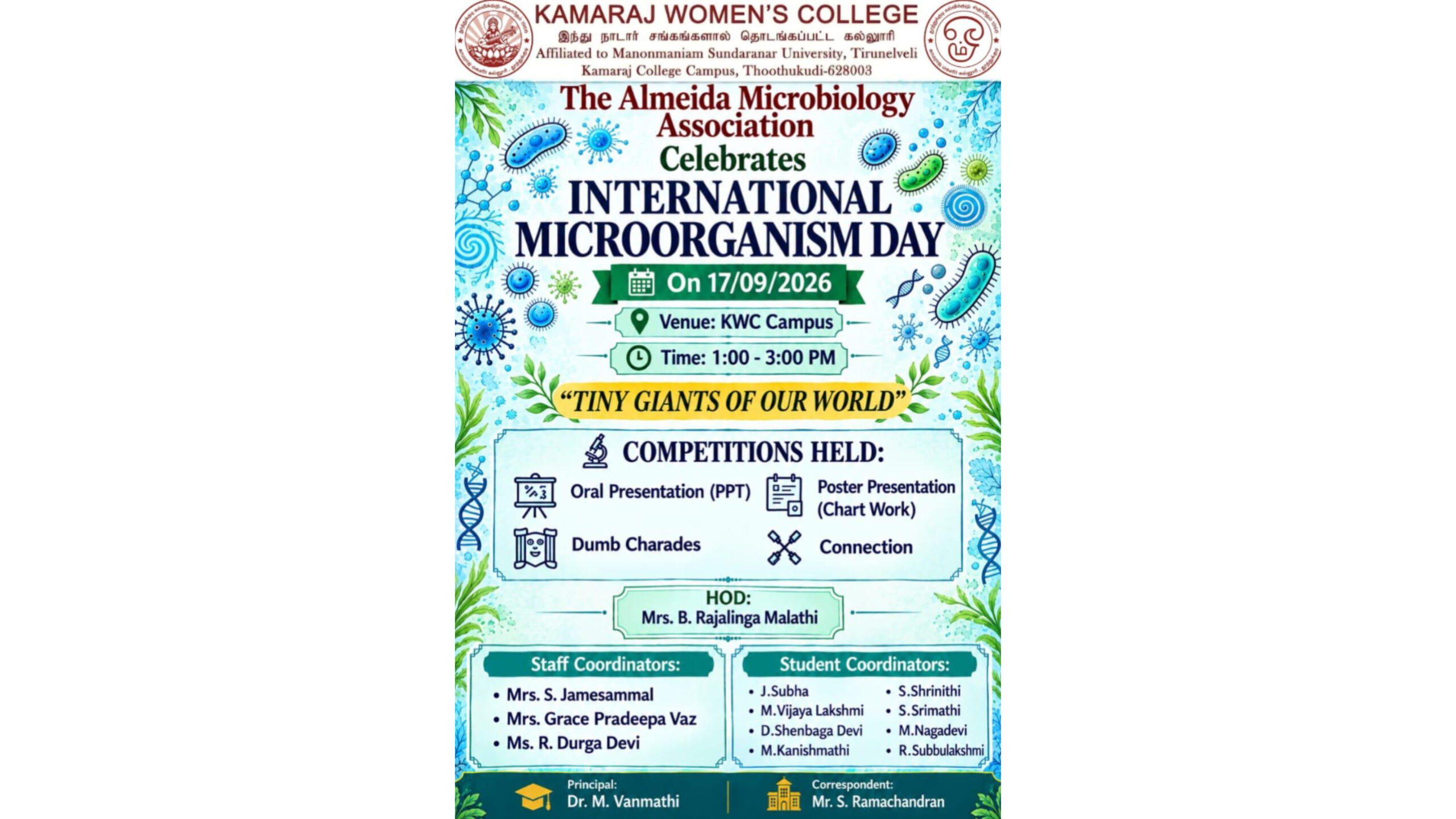
The Almeida Microbiology Association of the Department of Microbiology, Kamaraj Women’s College, Thoothukudi, celebrated International Microorganism Day on 17 September 2026 under the theme “Tiny Giants of Our World.” The programme created awareness among students about the fascinating world of microorganisms and their important roles in everyday life.
The celebration highlighted the significance of microorganisms in human health, environment, agriculture, food, biotechnology and industrial processes. Moreover, the programme encouraged students to explore microbiology beyond the classroom through creative, interactive and competitive activities.
As part of the celebration, the department conducted four competitions: Oral Presentation, Poster Presentation, Silent Charades and Connection. These activities combined scientific knowledge with creativity, communication, teamwork and active participation.
Objectives of International Microorganism Day
The programme focused on the following objectives:
- Create awareness about the fascinating world of microorganisms
- Highlight the importance of microorganisms in human life
- Explain their roles in health, environment, agriculture and food
- Create awareness about microbial applications in biotechnology and industry
- Encourage students to explore microbiology beyond the classroom
- Strengthen scientific knowledge and interest in the subject
- Develop creativity and communication skills
- Promote teamwork, logical thinking and active learning
- Provide students with a platform to demonstrate their talents
Thus, the celebration brought together science, creativity, communication and teamwork in an engaging learning environment.
Theme: Tiny Giants of Our World
The theme “Tiny Giants of Our World” highlighted how microorganisms can have a major impact despite their microscopic size.
The programme encouraged students to understand the diverse roles of microorganisms around them. For example, microorganisms contribute to ecological processes, food production, agriculture, biotechnology and several industrial applications.
At the same time, the celebration helped students understand the relationship between microorganisms and human health and disease.
Therefore, the theme encouraged students to look beyond the microscopic size of microorganisms and understand their wider significance.
Creative Competitions in Microbiology
The Department of Microbiology planned four different competitions to make the International Microorganism Day celebration educational and engaging.
The competitions included:
- Oral Presentation
- Poster Presentation
- Silent Charades
- Connection
Each competition focused on different abilities. While the presentations developed scientific knowledge and communication, Silent Charades and Connection encouraged quick thinking, memory, teamwork and subject recall.
As a result, students could explore microbiology through different forms of learning.
Oral Presentation
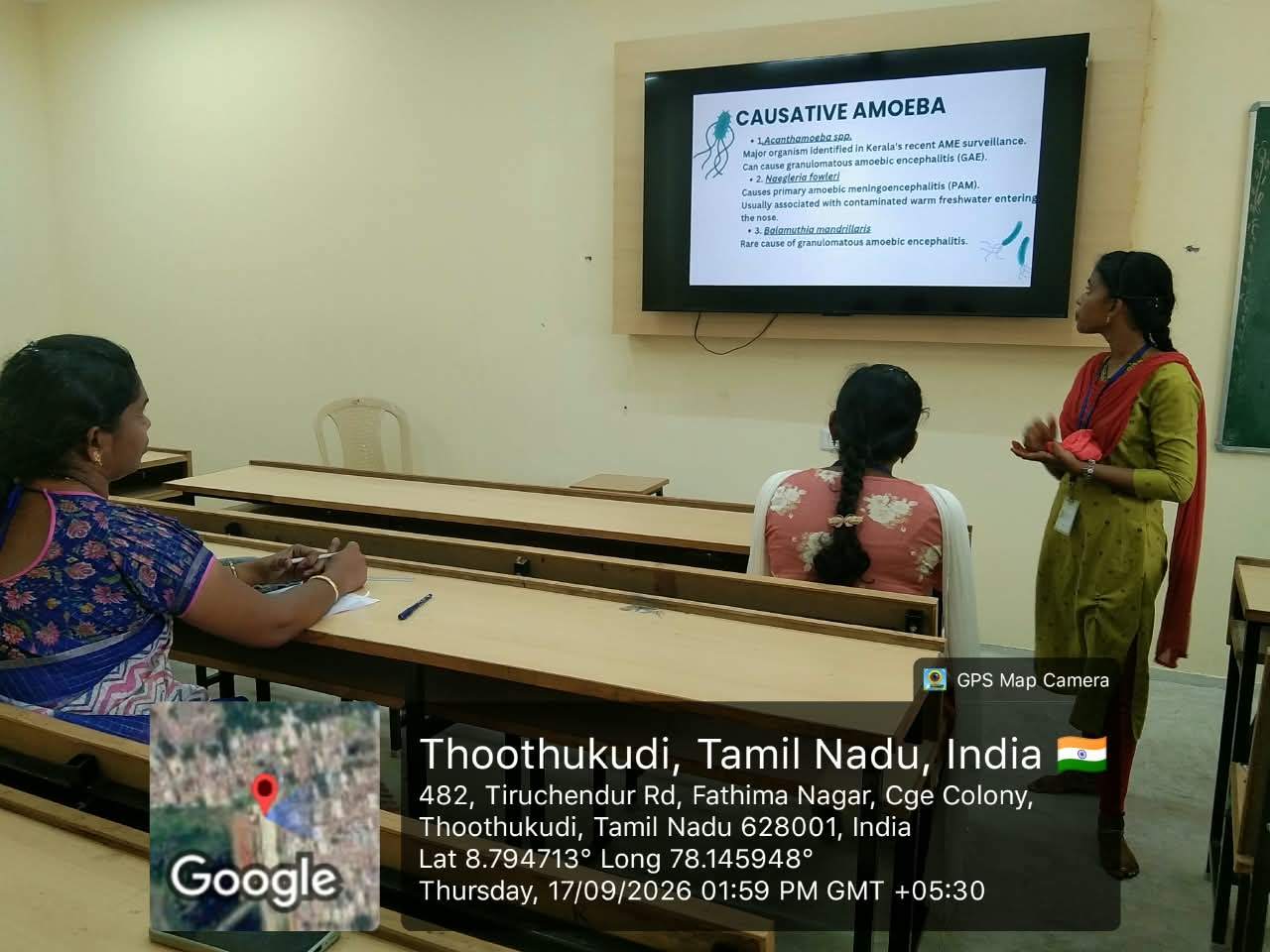
The Oral Presentation competition gave students an opportunity to present microbiology-related topics through PowerPoint presentations.
Students prepared their presentations using relevant scientific information, illustrations and examples. Moreover, they organized their content systematically and explained their selected topics clearly.
The activity strengthened students’ understanding of microorganisms and their applications. In addition, it helped them improve their presentation and communication skills.
Participants presented their topics confidently and demonstrated their ability to communicate scientific information in an organized manner.
Poster Presentation
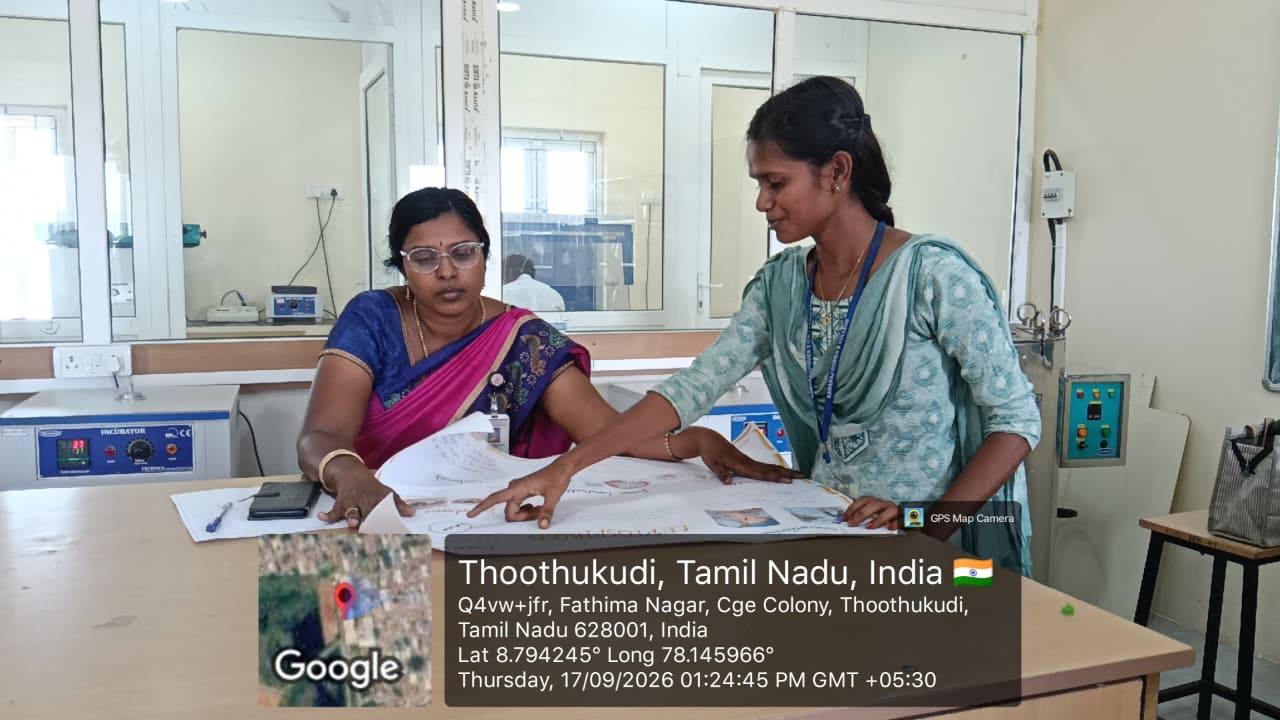
The Poster Presentation competition encouraged students to communicate microbiological concepts through attractive and informative chart work.
Students creatively presented different aspects of microorganisms, including their diversity, importance, beneficial applications and relevance to human life and the environment.
Furthermore, the activity encouraged students to combine scientific knowledge with visual creativity.
The posters reflected the students’ interest in microbiology as well as their artistic abilities. Therefore, the competition provided an effective platform for communicating scientific ideas through visual representation.
Silent Charades
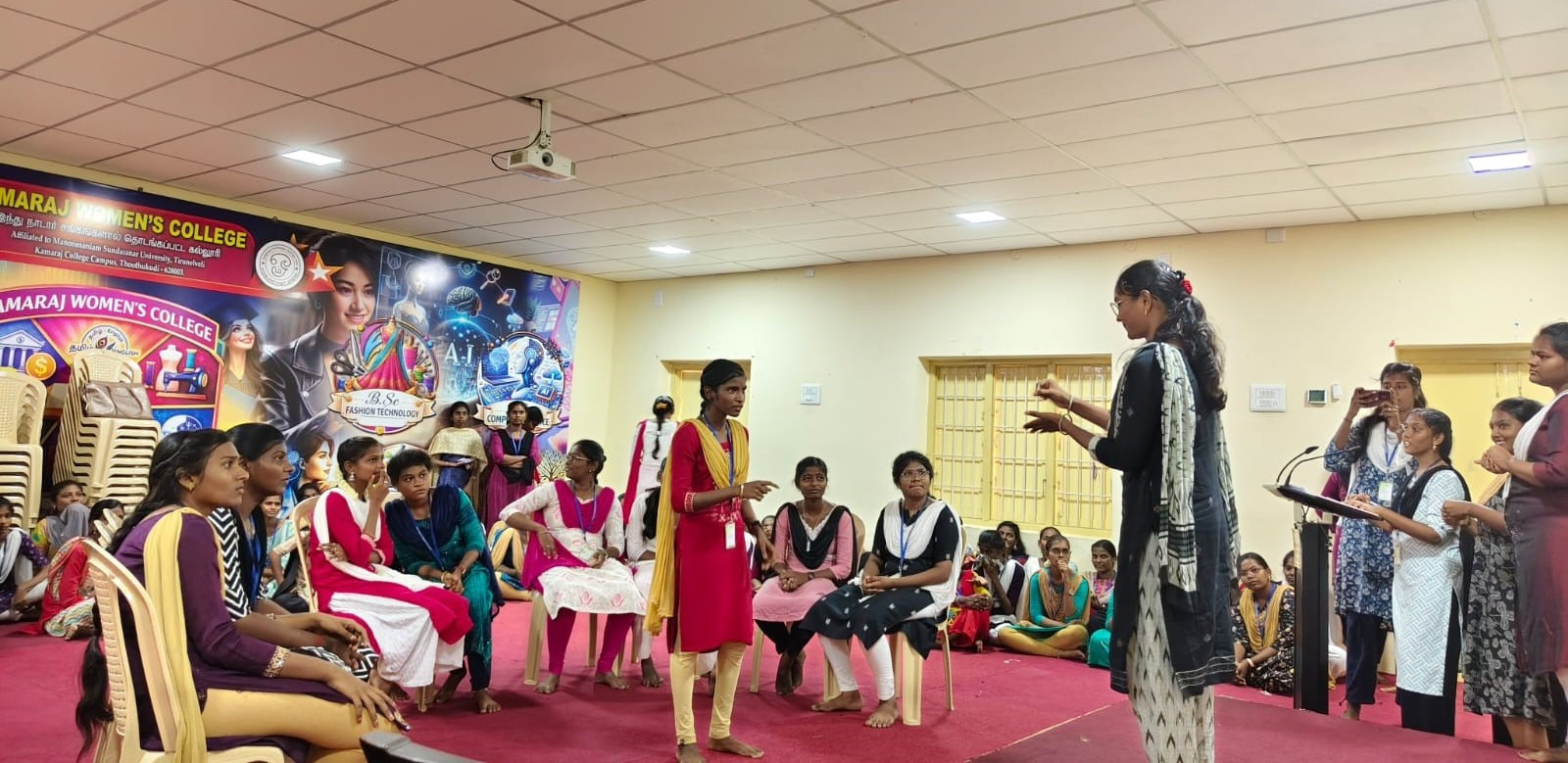
The Silent Charades competition added an entertaining and interactive element to the celebration.
Participants represented microbiology-related terms and concepts through gestures and actions without speaking. Meanwhile, other participants attempted to identify the correct terms within the given time.
The activity encouraged students to recall microbiological terminology in an enjoyable way. Moreover, it promoted teamwork, quick thinking, observation and non-verbal communication.
As a result, the competition created an energetic learning atmosphere while reinforcing subject knowledge.
Connection Competition
The Connection competition tested students’ microbiological knowledge, logical thinking, memory and ability to identify relationships between different clues.
Participants identified connections related to microorganisms and microbiological concepts. Therefore, they needed to use both subject knowledge and logical reasoning.
Furthermore, the activity encouraged students to think quickly and work together as a team.
The competition also helped reinforce important concepts that students had learned through their academic curriculum.
Scientific Knowledge Through Creative Activities
The competitions transformed microbiology learning into an active experience.
Students presented ideas, created visual content, interpreted clues, communicated through actions and worked collaboratively. Moreover, the variety of activities allowed them to use different skills while remaining connected to microbiology.
Thus, the programme showed how creative activities can complement classroom learning and encourage greater interest in scientific subjects.
Understanding the Importance of Microorganisms
The International Microorganism Day celebration helped students understand the wide-ranging importance of microorganisms.
The programme highlighted their roles in:
- Human health and disease
- Environmental processes and ecological balance
- Agriculture
- Food production
- Biotechnology
- Industrial processes
Consequently, students gained a broader understanding of how microorganisms influence both nature and human life.
Moreover, the programme encouraged them to appreciate microbiology as a field with wide scientific and practical importance.
Student Participation and Teamwork
Students participated enthusiastically in the competitions and showed strong interest throughout the programme.
The activities gave them opportunities to demonstrate their scientific knowledge, creativity, communication abilities and teamwork.
Moreover, the competitive format encouraged active participation while maintaining an enjoyable learning environment.
Students also learned from one another through observation and interaction. Therefore, the programme promoted both individual learning and peer learning.
Learning Beyond the Classroom
The celebration created an opportunity for students to explore microbiological concepts beyond regular classroom sessions.
Through presentations, posters, interactive activities and logical challenges, students applied their knowledge in different ways. Furthermore, the activities encouraged them to connect academic concepts with practical applications.
This approach made microbiology learning more interactive and memorable.
Thus, the programme successfully combined academic knowledge with experiential learning.
Programme Outcomes
The International Microorganism Day celebration provided several useful learning outcomes:
- Students developed greater awareness about microorganisms and their importance
- The programme strengthened students’ microbiological knowledge
- Oral Presentation improved scientific presentation and communication skills
- Poster Presentation encouraged scientific creativity and visual communication
- Silent Charades strengthened subject recall, teamwork and quick thinking
- Connection improved logical thinking, memory and concept association
- Students explored microbiology beyond regular classroom learning
- The activities promoted peer learning and teamwork
- Students gained confidence in communicating scientific concepts
- The programme created greater interest in microbiology
- Students understood the importance of microorganisms in health, environment, agriculture, food, biotechnology and industry
As a result, the programme successfully combined microbiological learning, creativity, communication, teamwork and healthy competition.
Conclusion of International Microorganism Day Celebration
The International Microorganism Day celebration organized by the Almeida Microbiology Association, Department of Microbiology, Kamaraj Women’s College, provided students with an informative and engaging academic experience.
The theme “Tiny Giants of Our World” helped students appreciate the enormous importance of microorganisms despite their microscopic size. Moreover, the four competitions created opportunities to explore microbiology through scientific presentations, creative expression, teamwork and logical thinking.
The enthusiastic participation of students added energy to the celebration. Furthermore, the programme strengthened their scientific knowledge, creativity, communication skills and interest in microbiology.
Overall, the celebration successfully highlighted the important contributions of microorganisms to human health, the environment, agriculture, food, biotechnology and industry while making microbiology learning creative, interactive and memorable.