
HIV Awareness Extension Activity Educates School Students
Report on HIV Awareness Extension Activity
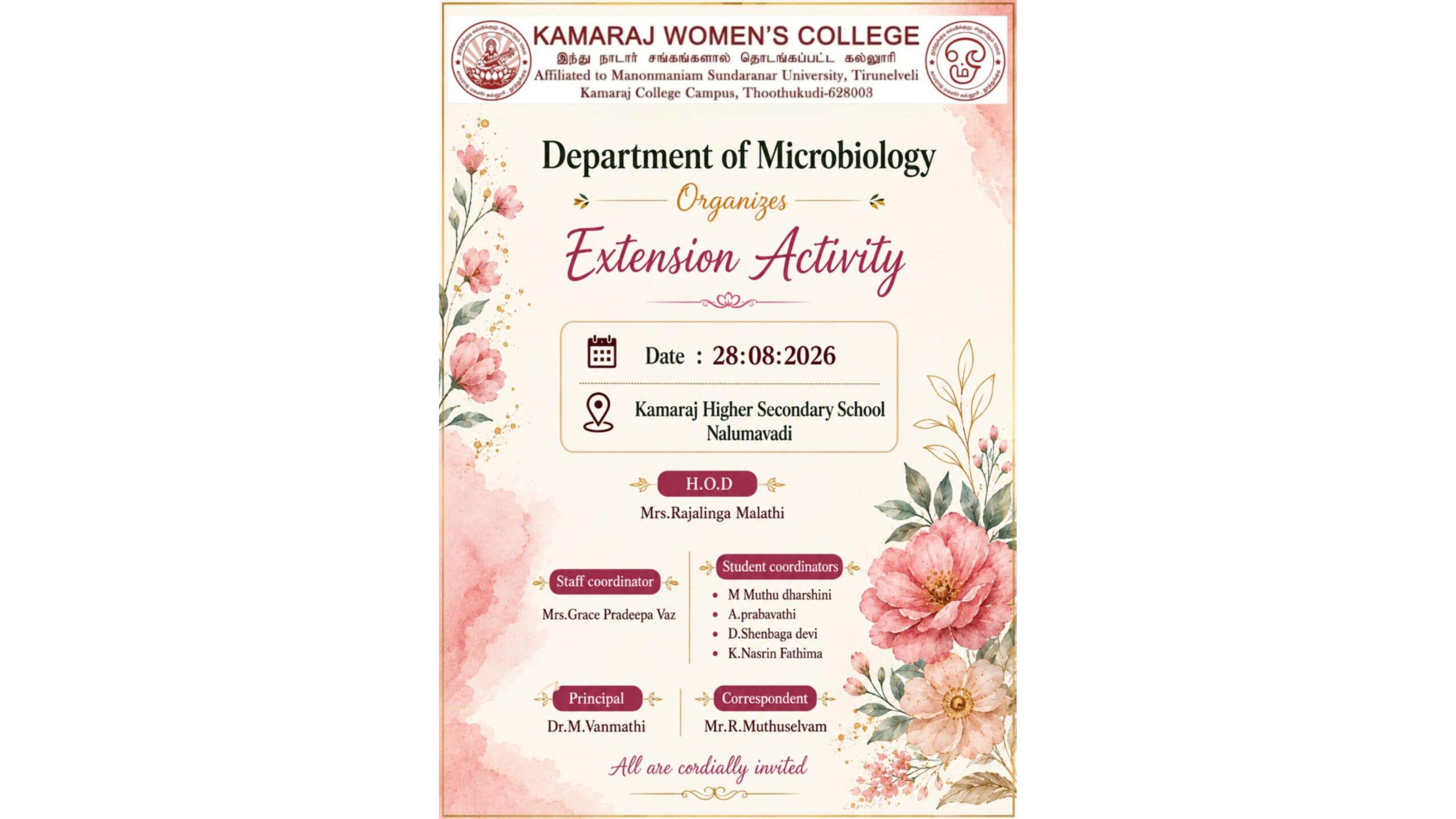
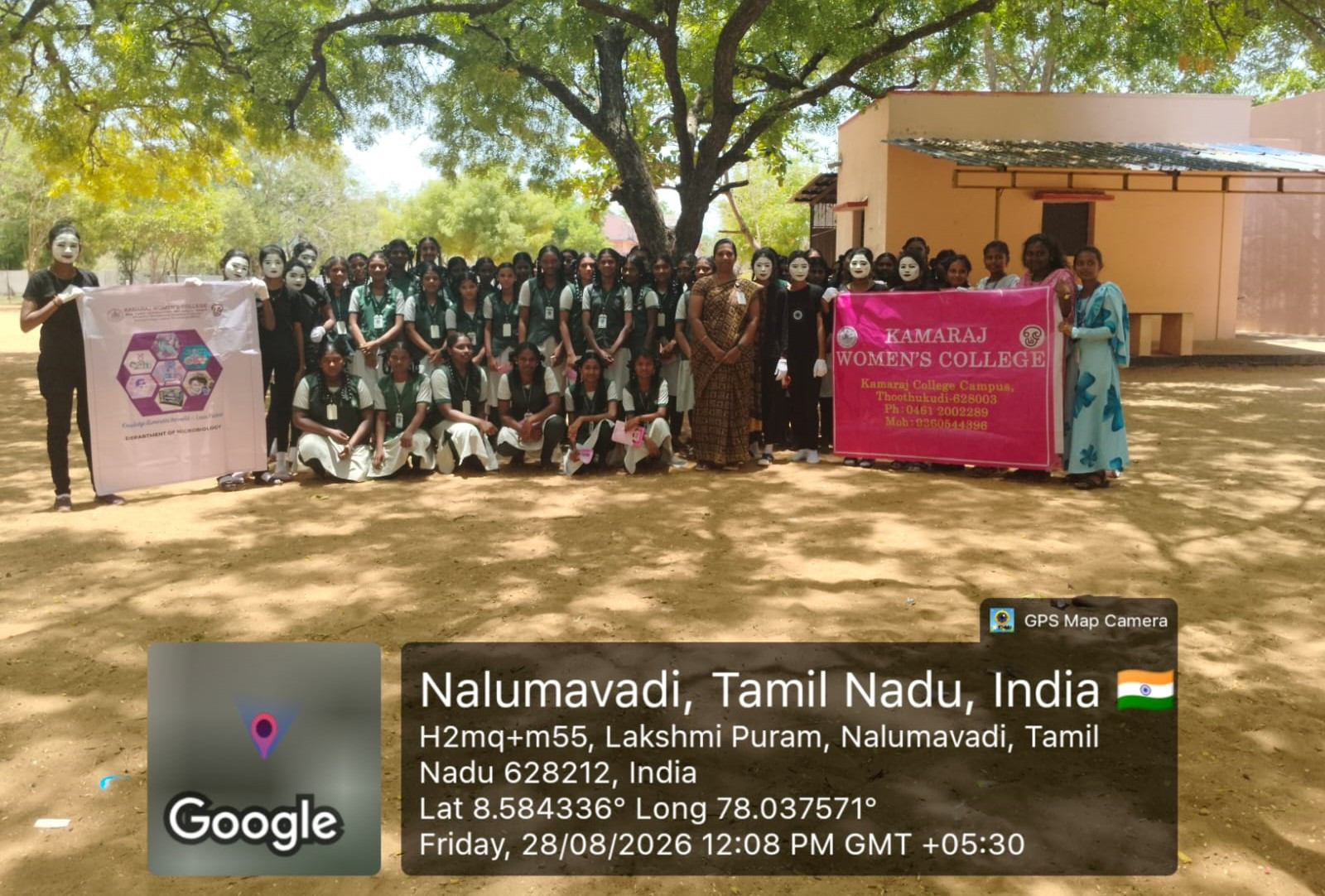
The Department of Microbiology, Kamaraj Women’s College, Thoothukudi, organized an Extension Activity on HIV Awareness at Kamaraj Higher Secondary School, Nalumavadi, on 28 August 2026.
The programme aimed to create awareness among school students about HIV/AIDS, its modes of transmission, preventive measures and the importance of eliminating misconceptions and stigma associated with HIV infection.
The awareness programme used two engaging activities, namely a Quiz Competition and a Mime Programme. These activities helped communicate important health information to the school students in a simple, interactive and memorable manner.
Objectives of the Programme
The HIV Awareness extension activity focused on the following objectives:
- Create basic awareness about HIV/AIDS among school students
- Explain the modes of HIV transmission
- Create awareness about preventive measures
- Highlight the importance of HIV testing and timely healthcare
- Correct common misconceptions about HIV infection
- Promote compassion towards people living with HIV
- Discourage stigma and discrimination
- Encourage students to make informed and responsible health choices
Thus, the programme combined health education, interactive learning and social awareness.
Creating Awareness about HIV/AIDS
The programme introduced the school students to important information about HIV/AIDS.
Students learned about HIV, how it can be transmitted and how transmission can be prevented. Moreover, the programme highlighted the importance of having accurate information rather than relying on fear, myths or misconceptions.
The awareness session also stressed that proper knowledge plays an important role in preventing HIV transmission. Therefore, students were encouraged to understand health information carefully and develop a responsible attitude towards personal and community health.
Quiz Competition on HIV Awareness
The Quiz Competition formed an important part of the extension activity.
The competition encouraged school students to test and improve their knowledge about various aspects of HIV/AIDS. Questions focused on areas such as:
- Basic facts about HIV/AIDS
- Modes of transmission
- Preventive measures
- HIV testing
- Treatment and healthcare
- Common misconceptions
- Social awareness and responsible behaviour
The interactive nature of the quiz made the learning process interesting and encouraged active participation.
Furthermore, the activity helped students recall important information and clarify their understanding of HIV prevention and awareness.
Learning Through Interactive Activities
The quiz demonstrated how interactive activities can make health education more effective.
Instead of presenting information only through a formal lecture, the programme encouraged students to participate and think about the questions. As a result, they remained actively involved in the learning process.
The activity also created an opportunity to reinforce correct information about HIV/AIDS. In addition, it encouraged students to understand the importance of informed decision-making in protecting their health.
Mime Programme on HIV Awareness
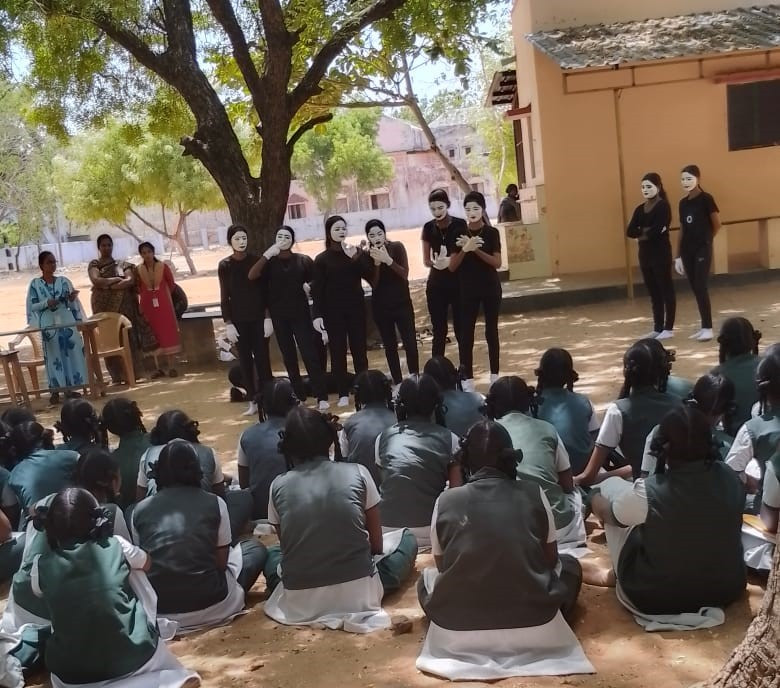
A Mime Programme was also presented as part of the awareness activity.
Through effective gestures, expressions and visual communication, the students conveyed important messages related to HIV awareness, prevention, safe practices and compassion.
The mime also highlighted the need to avoid discrimination against people living with HIV. Since the performance communicated through actions and expressions, it presented the awareness message in an engaging and easily understandable form.
Moreover, the creative presentation helped the audience remember the key messages of the programme.
Reducing Misconceptions and Stigma
An important focus of the programme was the need to address misconceptions and social stigma associated with HIV.
Lack of correct information can create unnecessary fear and may lead to discrimination against people living with HIV. Therefore, the programme encouraged students to approach the subject with knowledge, understanding and compassion.
The mime programme reinforced this message by highlighting the importance of treating people living with HIV with dignity and respect.
Consequently, the programme went beyond health awareness and promoted a more responsible and compassionate social attitude.
Importance of Prevention and Timely Healthcare
The extension activity emphasised that awareness and prevention play a major role in addressing HIV/AIDS.
Students gained knowledge about the importance of preventive measures, testing and access to appropriate healthcare. Furthermore, the programme reinforced the message that accurate information helps people make responsible choices and seek timely medical support when needed.
This approach helped students understand HIV/AIDS as both a health issue and an area where social awareness is equally important.
Learning Experience for Microbiology Students
The extension activity also provided a valuable learning experience for the Microbiology students of Kamaraj Women’s College.
By sharing their academic knowledge with school students, they gained practical experience in communicating scientific and health-related information to a wider audience.
Furthermore, their involvement helped them develop:
- Communication skills
- Teamwork
- Leadership skills
- Event coordination abilities
- Public awareness skills
- Social responsibility
Thus, the programme benefited both the school students and the participating college students.
Active Participation of School Students
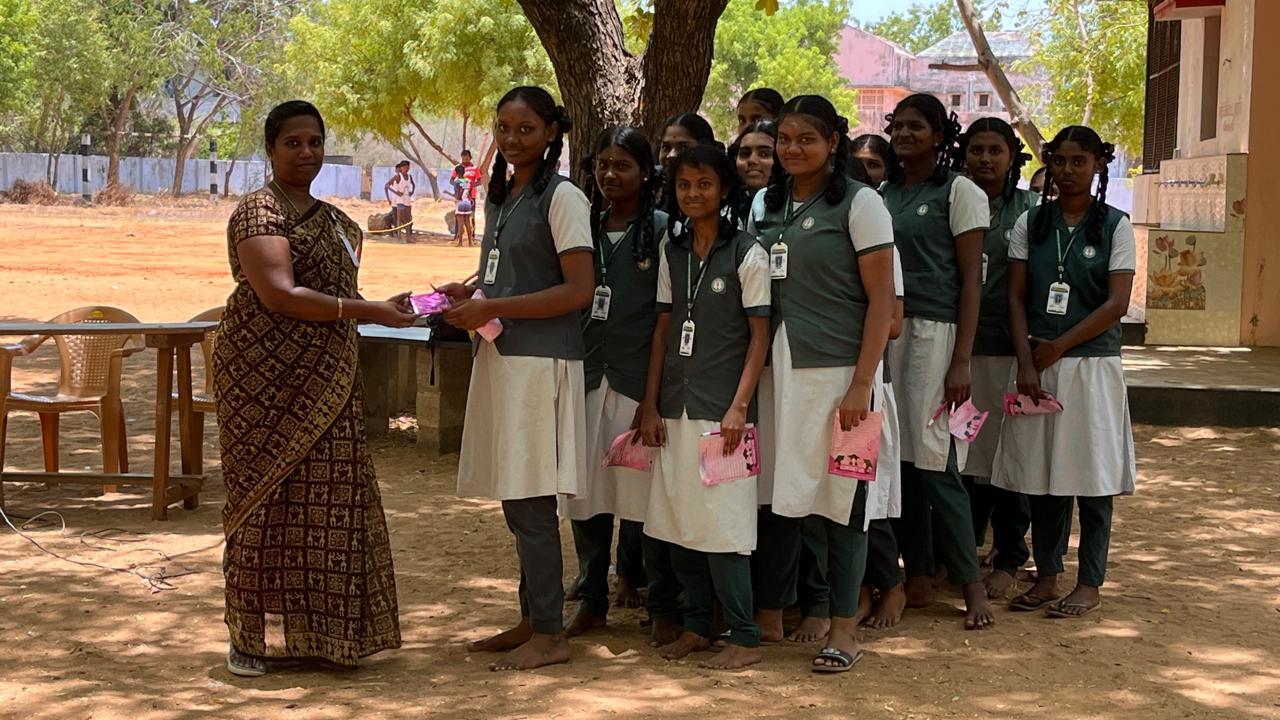
The students of Kamaraj Higher Secondary School, Nalumavadi, actively participated in the awareness activities and showed keen interest in learning about HIV/AIDS.
Their enthusiastic involvement in the quiz created an interactive learning environment. At the same time, the mime programme captured their attention and communicated important messages through creative expression.
The positive response from the students and staff contributed to the successful conduct of the extension activity.
Programme Outcomes
The HIV Awareness Extension Activity produced several meaningful learning outcomes. Through the programme, the school students were able to:
- Gain basic knowledge about HIV/AIDS
- Understand the modes of HIV transmission
- Learn about important preventive measures
- Recognise the importance of testing and timely healthcare
- Correct common misconceptions related to HIV
- Understand the importance of safe and responsible practices
- Develop compassion towards people living with HIV
- Recognise the need to avoid stigma and discrimination
Meanwhile, the participating Microbiology students strengthened their communication, teamwork, leadership and community engagement skills.
Community Outreach Through Health Education
The programme served as a meaningful extension initiative of the Department of Microbiology.
By taking health education directly to the school community, the department helped students access reliable and useful information about HIV/AIDS. Moreover, the use of a quiz and mime made the awareness activity more engaging and student-friendly.
The programme demonstrated the important role educational institutions can play in promoting health literacy, preventive awareness and social responsibility within the wider community.
Conclusion
Overall, the HIV Awareness Extension Activity at Kamaraj Higher Secondary School, Nalumavadi, proved to be an informative and meaningful community outreach programme.
The Quiz Competition encouraged students to strengthen their knowledge about HIV/AIDS, while the Mime Programme creatively communicated messages about prevention, compassion and the need to eliminate discrimination.
Most importantly, the programme reinforced the message that knowledge, prevention, compassion and timely healthcare are essential in addressing HIV/AIDS and reducing stigma.
The active participation of the school students, Microbiology students and staff contributed to the successful completion of the programme. The extension activity also reflected the commitment of the Department of Microbiology, Kamaraj Women’s College, towards promoting health awareness, community education and social responsibility.