
7 Powerful Insights from Faculty Development Programme
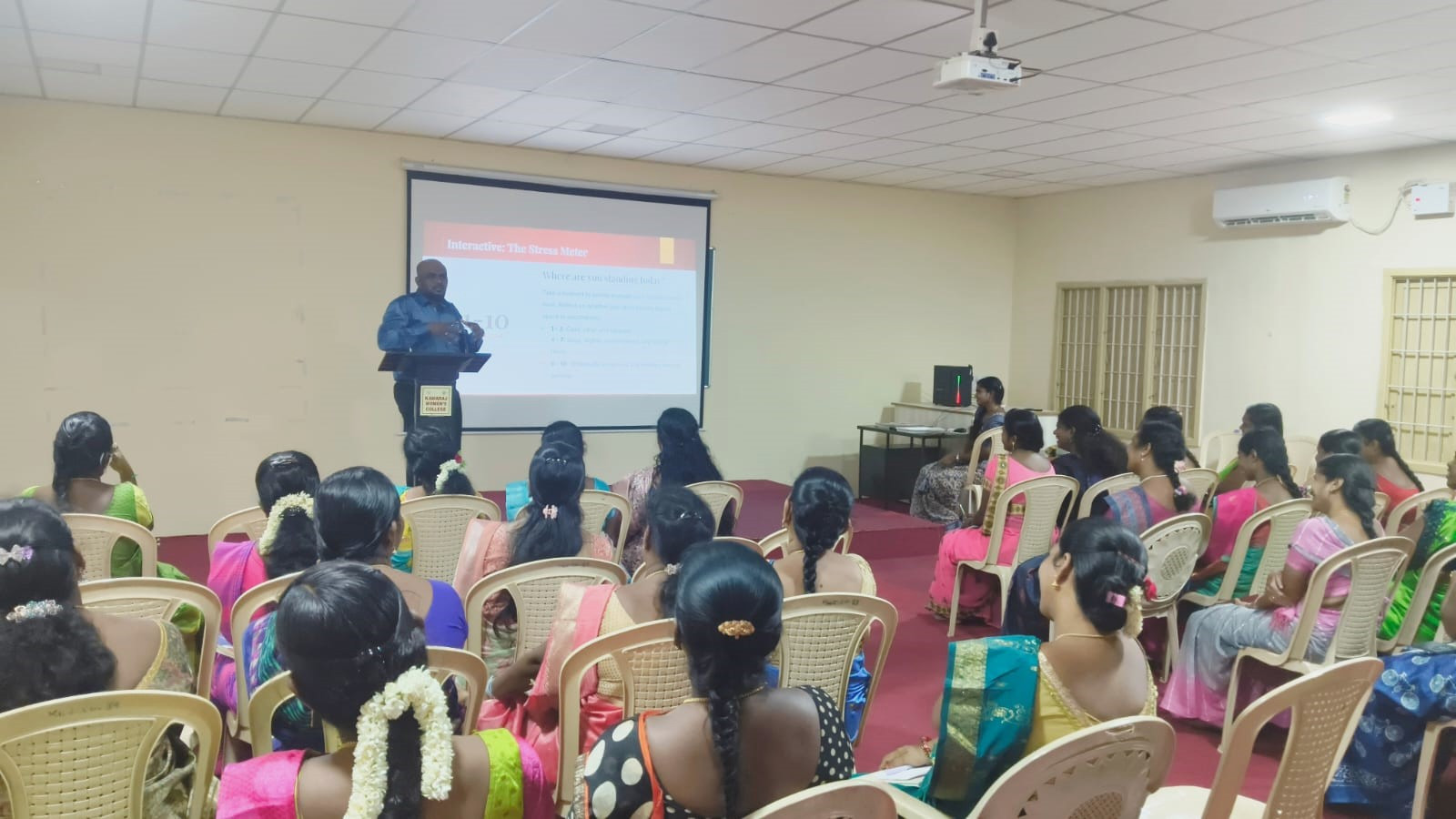
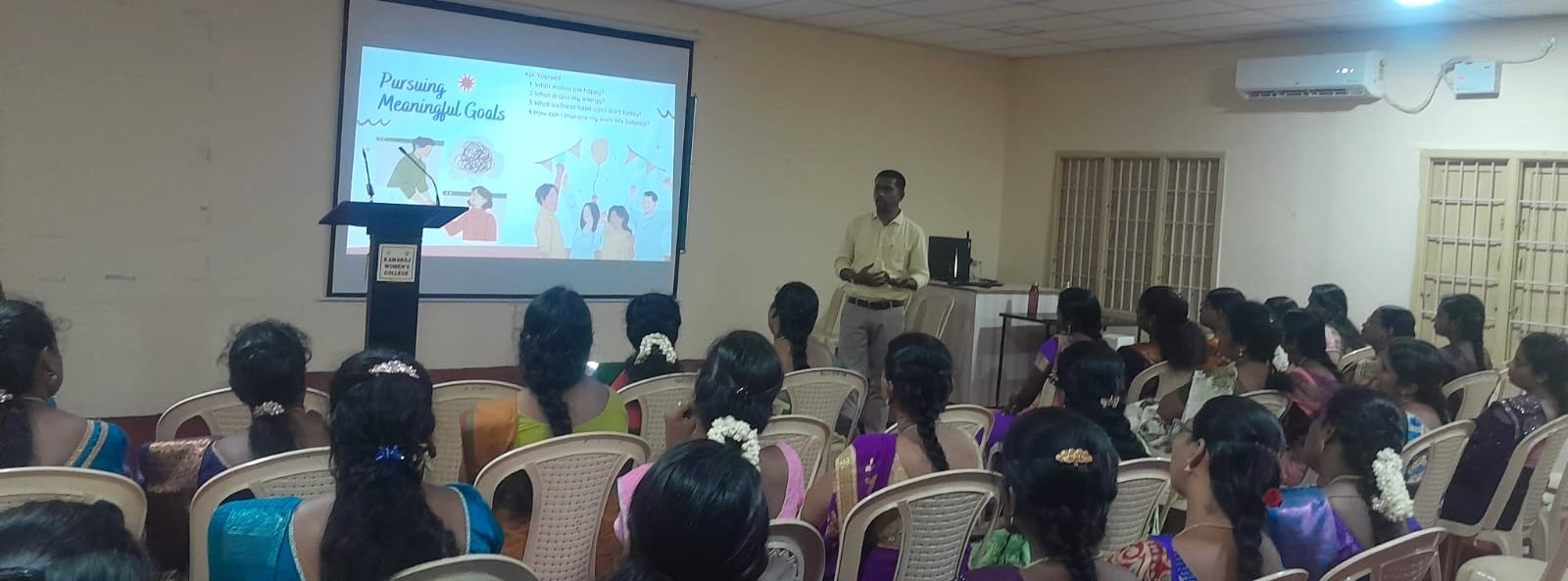
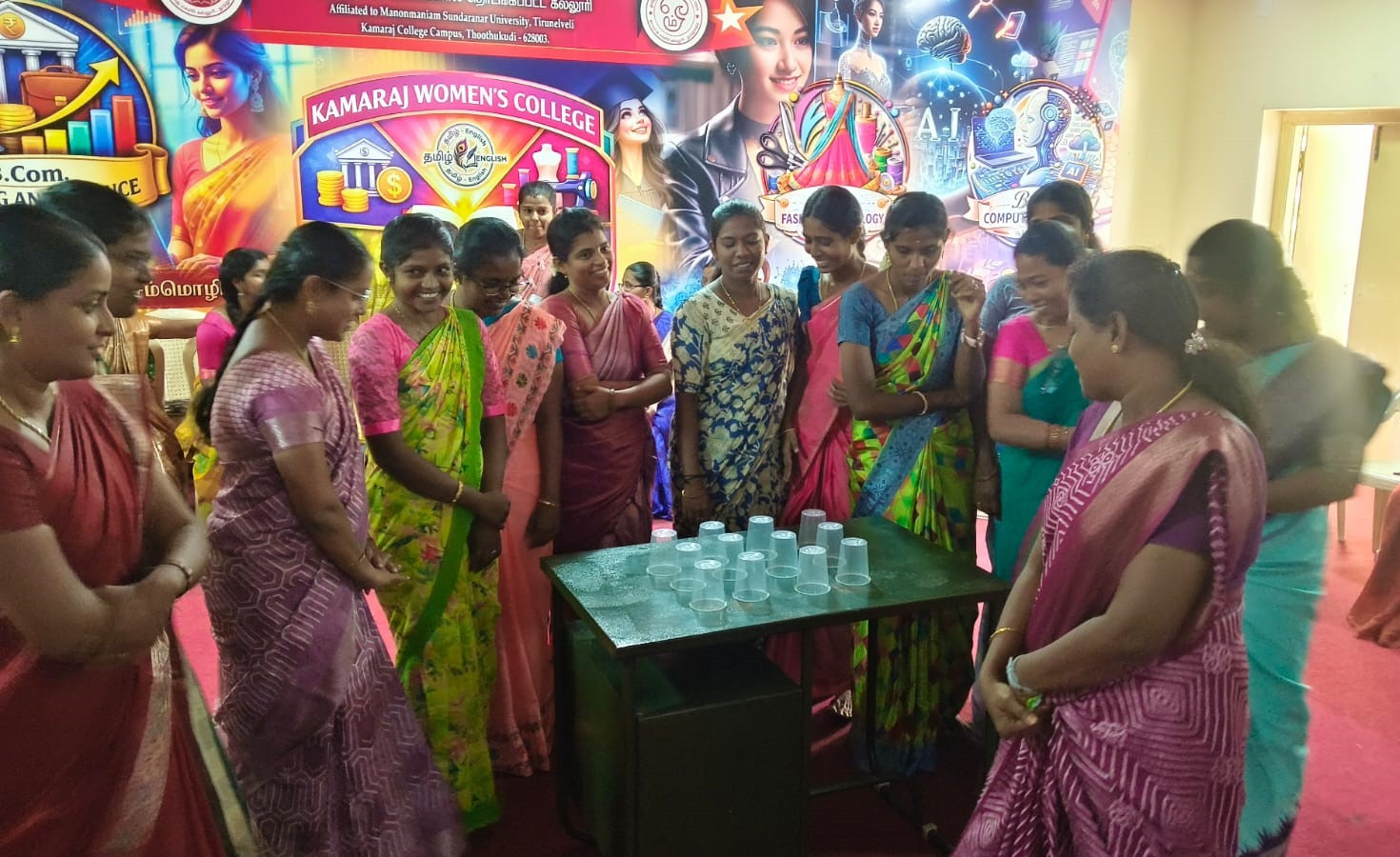
The Faculty Development Programme witnessed active participation from all staff members. Moreover, the programme provided an excellent platform for educators to refresh their knowledge, enhance their teaching practices, and improve their professional skills.
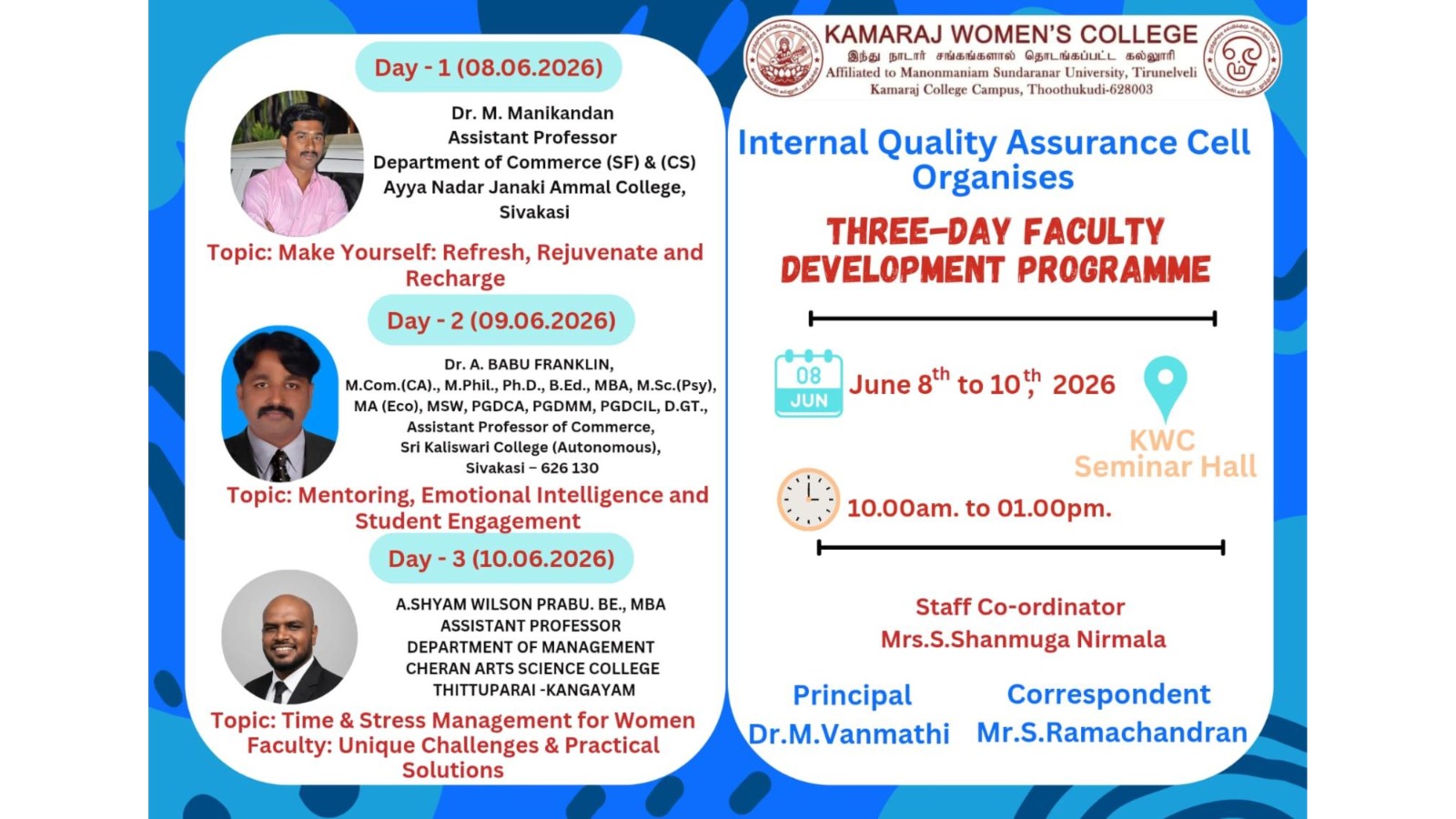
Inaugural Session
Each day of the Faculty Development Programme commenced with a prayer song, creating a positive atmosphere for learning and interaction. Subsequently, a welcome address was delivered to greet the participants and introduce the objectives of the programme.
Following the welcome speech, Dr. M. Vanmathi, Principal, delivered the introductory address. She highlighted the importance of continuous professional development and encouraged faculty members to utilize the programme for personal and professional growth.
Resource Persons
The programme featured distinguished academicians who shared their expertise and practical experiences with the participants.
- Dr. M. Manikandan, Assistant Professor of Commerce, Ayya Nadar Janaki Ammal College, Sivakasi
- Dr. A. Babu Franklin, Assistant Professor of Commerce, Sri Kaliswari College (Autonomous), Sivakasi
- Mr. A. Shyam Wilson Prabu, Assistant Professor of Management, Cheran Arts and Science College, Kangeyam
The resource persons conducted highly informative and interactive sessions throughout the three days. Therefore, the participants gained valuable insights and practical knowledge.
Day One: Make Yourself – Refresh, Rejuvenate and Recharge
The first day of the Faculty Development Programme focused on the theme “Make Yourself: Refresh, Rejuvenate and Recharge.”
The resource person delivered an inspiring session on work-life balance. He explained the importance of balancing professional responsibilities with personal well-being. Furthermore, he shared practical strategies to manage stress, improve productivity, and maintain emotional wellness.
The session encouraged faculty members to prioritize self-care and adopt positive habits. As a result, participants gained a better understanding of how personal well-being contributes to professional excellence.
- Understanding work-life balance
- Managing professional and personal responsibilities
- Improving emotional well-being
- Reducing workplace stress
- Enhancing productivity and effectiveness
Day Two: Mentoring, Emotional Intelligence and Student Engagement
The second day of the Faculty Development Programme focused on Mentoring and Emotional Intelligence and Student Engagement.
The resource person emphasized the significance of mentoring in higher education. He explained how effective mentoring can guide students academically and personally.
Furthermore, the session explored the role of Emotional Intelligence in teaching. Faculty members learned how empathy, emotional awareness, and effective communication can strengthen relationships with students.
In addition, practical methods were shared to improve student engagement inside and outside the classroom. Consequently, participants gained valuable techniques for creating supportive and inclusive learning environments.
- Importance of mentoring students
- Developing emotional intelligence
- Enhancing student engagement
- Building positive teacher-student relationships
- Creating supportive learning environments
Day Three: Time and Stress Management
The third day of the Faculty Development Programme focused on Time and Stress Management.
The resource person discussed the importance of effective time management for academic success and professional efficiency. He introduced practical techniques for prioritizing tasks, setting goals, and improving productivity.
Moreover, the session addressed workplace stress and its impact on professional performance. Faculty members learned strategies to identify stress triggers and manage challenges effectively.
The session also emphasized mindfulness, planning, and maintaining a positive outlook. Therefore, participants gained practical approaches to improve both personal well-being and professional effectiveness.
- Time management strategies
- Goal setting and prioritization
- Managing workplace stress
- Improving productivity and efficiency
- Promoting emotional wellness
Faculty Participation and Response
All faculty members attended the Faculty Development Programme with great enthusiasm and commitment. Throughout the sessions, participants actively engaged in discussions and interactions with the resource persons.
Moreover, faculty members provided excellent feedback and appreciated the relevance of the topics covered. The interactive nature of the programme created a dynamic learning environment.
Consequently, the sessions became highly engaging and meaningful for all participants.
Outcomes of the Faculty Development Programme
The programme successfully achieved its objectives by enhancing the knowledge and professional skills of faculty members.
The major outcomes included:
- Improved understanding of work-life balance
- Enhanced mentoring skills
- Greater awareness of emotional intelligence
- Better student engagement techniques
- Improved time management abilities
- Effective stress management strategies
- Strengthened professional competencies
Furthermore, the programme encouraged faculty members to adopt innovative approaches in teaching and mentoring.
Conclusion
The Three-Day Faculty Development Programme organized by the Internal Quality Assurance Cell of Kamaraj Women’s College was highly successful and beneficial. The sessions on Work-Life Balance, Mentoring and Emotional Intelligence, and Time and Stress Management provided valuable insights and practical knowledge.
Moreover, the programme enhanced professional effectiveness, emotional well-being, and teaching competencies among faculty members. The resource persons delivered highly informative and interactive sessions that received an excellent response from all participants.
The programme concluded with the National Anthem, marking the successful completion of three days of meaningful learning, reflection, and professional enrichment.