
Climate Change Mitigation Programme Promotes Sustainable Living
Report on Climate Change Mitigation through Sustainable Lifestyle Practices
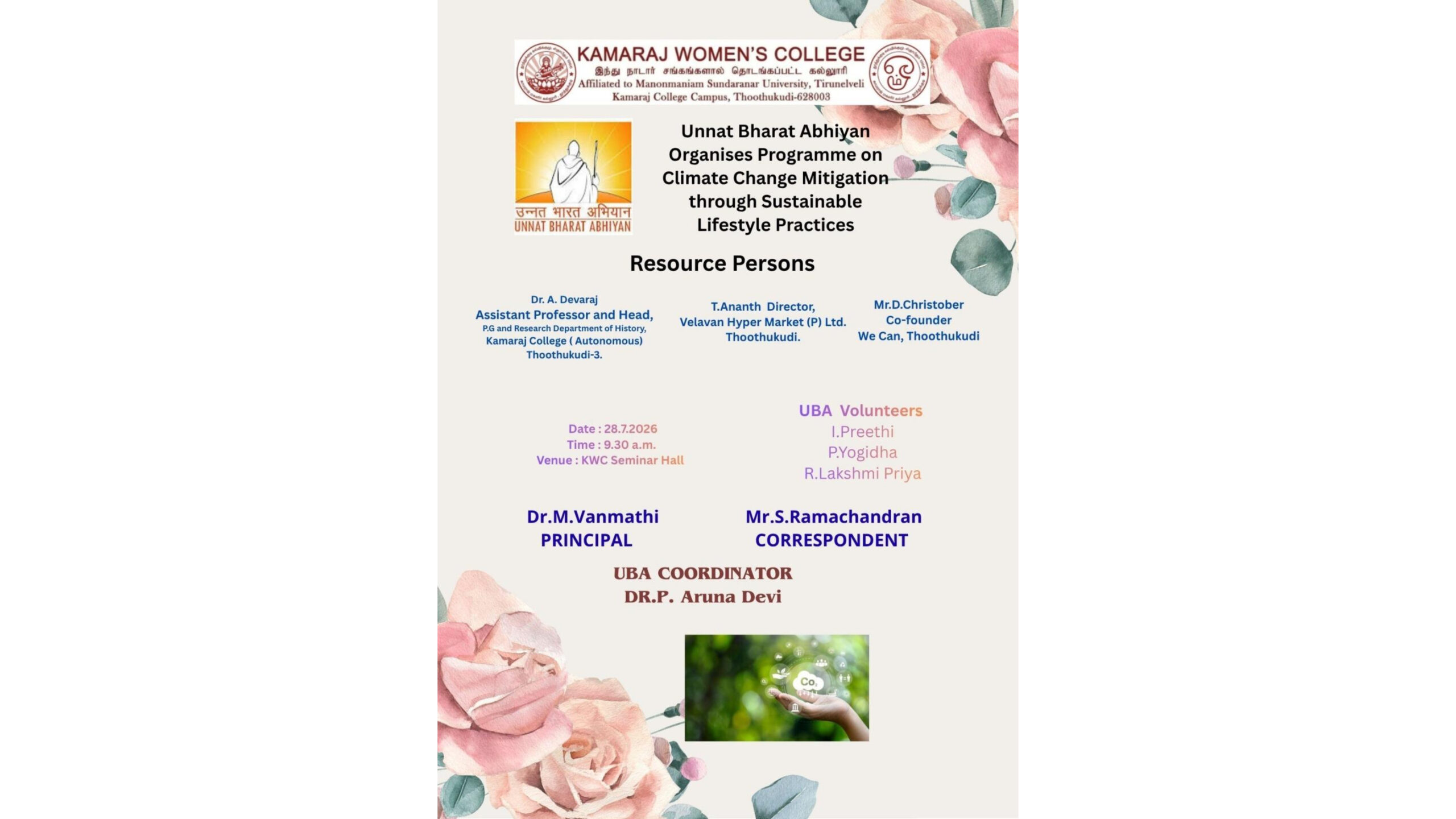
The Unnat Bharat Abhiyan Cell of Kamaraj Women’s College, Thoothukudi, organized an awareness programme on “Climate Change Mitigation through Sustainable Lifestyle Practices” on 28 July 2026 at 9.30 a.m.
The programme was organized under the guidance of Mrs. P. Aruna Devi, UBA Coordinator, with the objective of creating awareness among rural students about environmentally responsible lifestyles and practical measures to reduce carbon emissions.
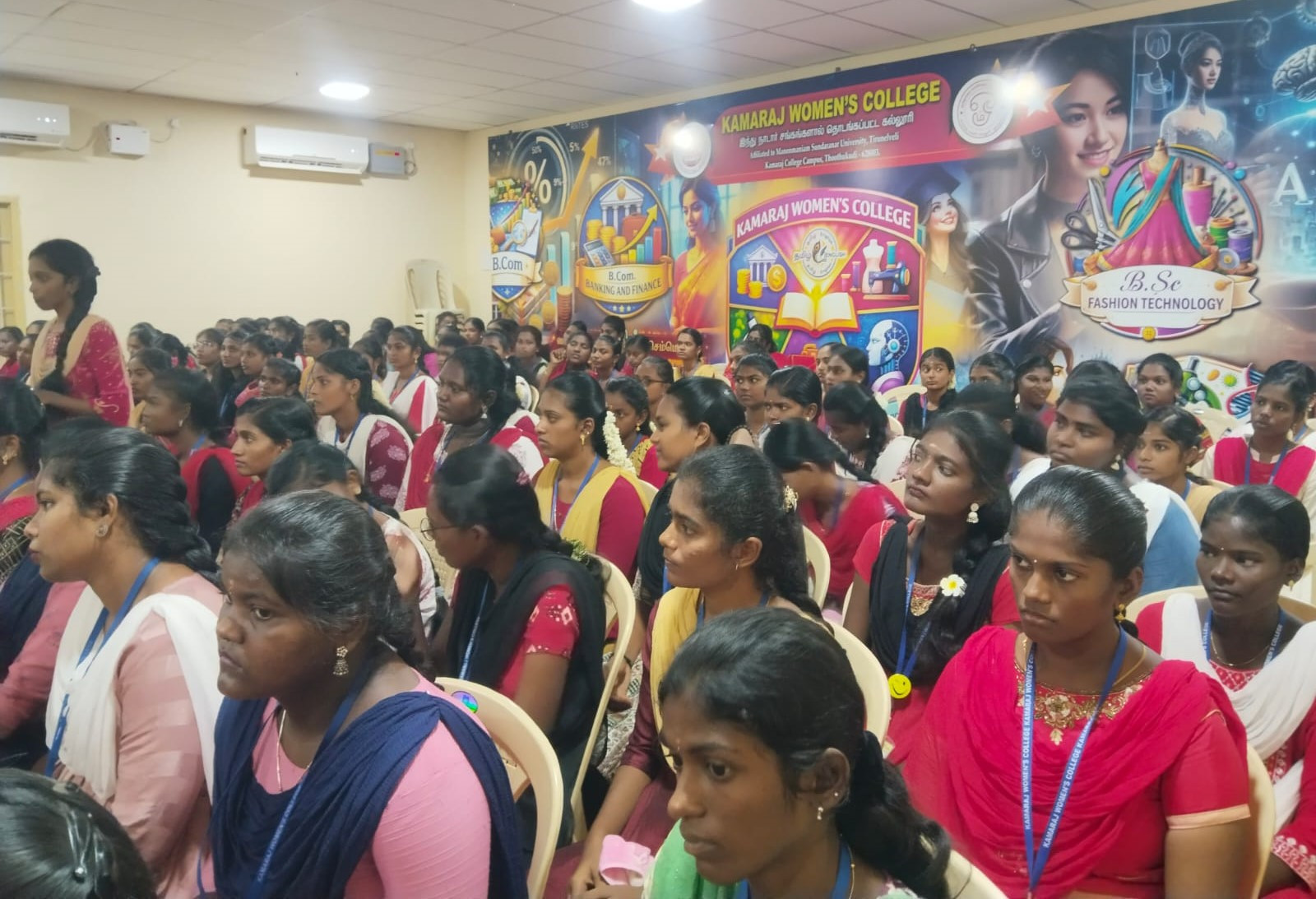
A total of 145 rural students actively participated in the programme. The event encouraged students to understand that simple changes in everyday habits can collectively make a meaningful contribution towards environmental protection and climate change mitigation.
Objectives of the Programme
The Climate Change Mitigation Programme was organized with the following objectives:
- Create awareness about climate change and global warming
- Promote sustainable lifestyle practices among rural students
- Encourage the reduction of carbon emissions
- Develop responsible energy and waste management habits
- Promote the use of public transport and bicycles
- Reduce the use of plastic and disposable materials
- Encourage tree plantation and biodiversity conservation
- Motivate students to become environmental ambassadors
Therefore, the programme focused on converting environmental awareness into practical action at the individual, family, and community levels.
Inaugural Session
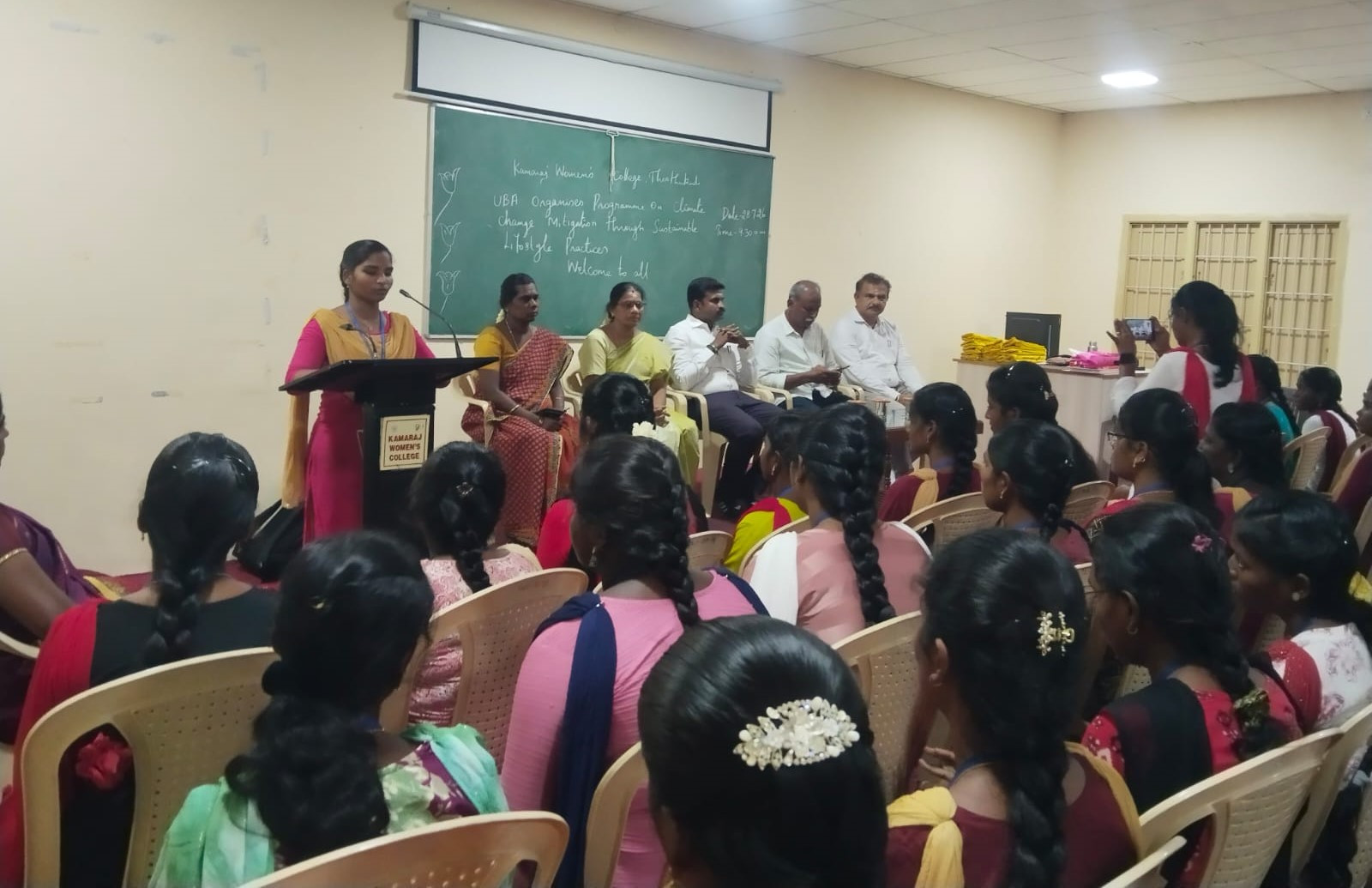
The programme was inaugurated in the presence of the Principal, Dr. Vanmathi, who appreciated the initiative of the Unnat Bharat Abhiyan Cell.
In her address, she emphasized the importance of adopting sustainable practices in everyday life. She encouraged students to become responsible citizens by protecting nature, conserving resources, and promoting environmental awareness within their families and communities.
She highlighted that environmental protection is not only the responsibility of governments and organizations. Every individual must contribute by making careful and responsible choices in daily life.
Resource Persons
The programme featured three eminent resource persons:
- Dr. A. Devaraj, Assistant Professor and Head, P.G. and Research Department of History, Kamaraj College (Autonomous), Thoothukudi
- Mr. T. Ananth, Director, Velavan Hyper Market Private Limited, Thoothukudi
- Mr. D. Christober, Co-founder, We Can, Thoothukudi
Representatives from Allikulam Village, one of the adopted villages under the Unnat Bharat Abhiyan, also participated in the programme and interacted with the students.
Simple Lifestyle Changes for Environmental Protection
Dr. A. Devaraj delivered an inspiring lecture on simple lifestyle changes that can significantly reduce carbon emissions.
He shared that his family has been following the practice of switching off all unnecessary mobile phones at night for the past six years. He explained that this practice helps reduce unnecessary mobile phone use during the night and encourages healthier and more disciplined habits.
He also stressed the importance of separating biodegradable and non-biodegradable waste before handing it over to municipal sanitation workers. Proper waste segregation makes the work of sanitation workers safer and more efficient and supports recycling and responsible waste disposal.
He encouraged students to:
- Use public transport whenever possible
- Travel by bicycle for short distances
- Switch off electrical appliances when not in use
- Separate biodegradable and non-biodegradable waste
- Reduce unnecessary mobile phone usage
- Live in harmony with nature
He inspired the students by emphasizing that human beings should live with nature rather than work against it.
Practical Guidance on Sustainable Living
Mr. T. Ananth shared several practical examples from his personal life and motivated the students to follow sustainable habits every day.
He explained that all lights, fans, and electrical appliances should be switched off before leaving a room. This simple practice can reduce unnecessary electricity consumption and help lower carbon emissions.
He also stated that he personally uses public transport whenever possible and encouraged the students to do the same.
Mr. T. Ananth emphasized the importance of respecting sanitation workers and maintaining cleanliness in public places. He requested participants not to throw waste on roads or in public spaces and advised them to use available dustbins.
Reducing Plastic Consumption
The resource person strongly encouraged everyone to carry reusable cloth bags instead of plastic bags.
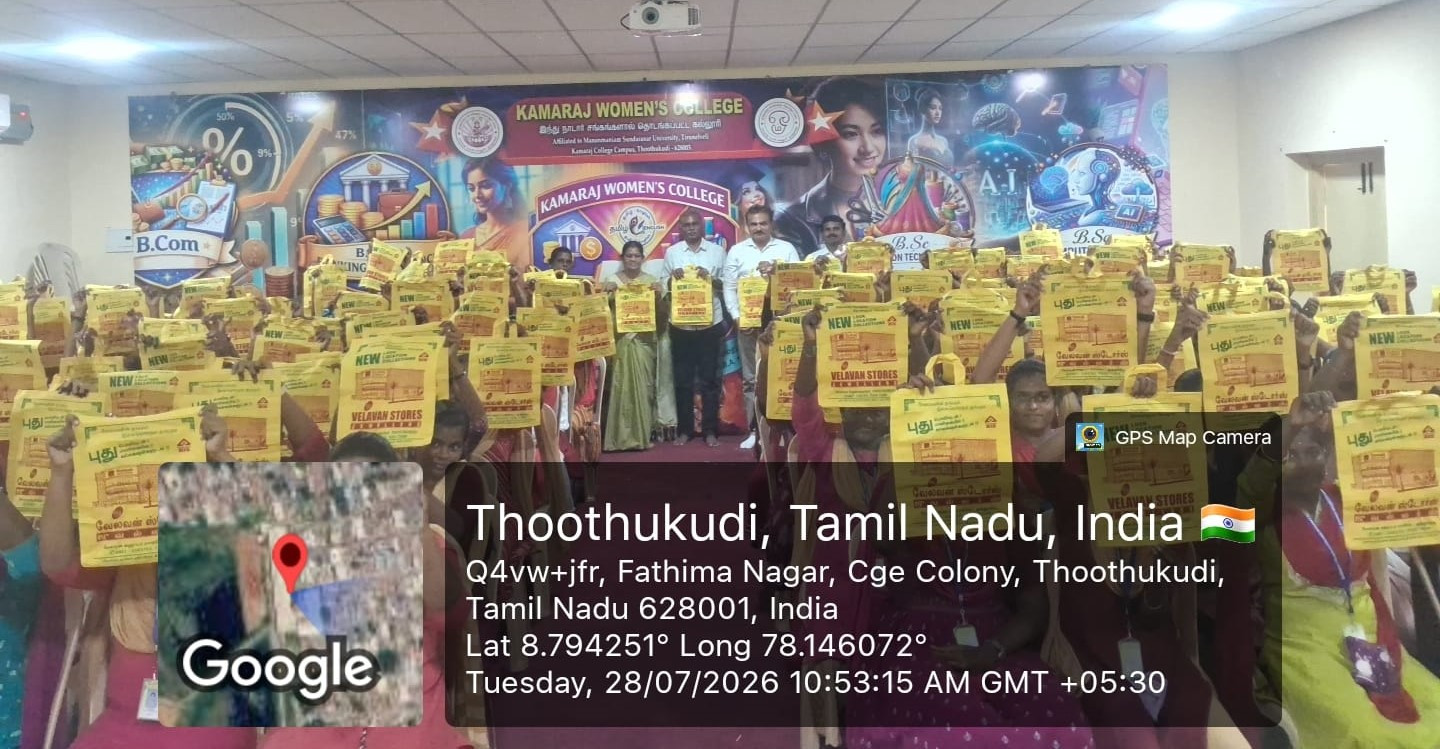
To reinforce this message, Mr. T. Ananth generously sponsored reusable cloth bags for all the participants. The distribution of cloth bags served as a practical reminder to reduce dependence on single-use plastic.
He also advised students to carry reusable vessels while purchasing food items such as:
- Idli and other takeaway food
- Coffee and tea
- Juice and beverages
- Snacks and other eatables
For takeaway food, he recommended requesting shops to use banana leaves instead of plastic packaging wherever possible.
Responsible Waste Disposal and Recycling
Mr. T. Ananth shared several useful methods for improving waste management at home and in public places.
He advised participants to carry a small waste bag when travelling if a dustbin was not immediately available. The collected waste could then be disposed of properly later.
He demonstrated that milk packets should be cut only at one corner. Cutting the packet in this manner helps ensure that small plastic pieces are not separated from the main packet and supports easier recycling.
He also advised crushing empty plastic water bottles after closing their caps before disposal. Households were encouraged to collect plastic waste separately and hand it over through proper recycling channels.
Other suggestions included:
- Use both sides of paper before disposal
- Grow plants in home gardens or containers
- Carry reusable bags and vessels
- Avoid unnecessary plastic packaging
- Dispose of waste only in designated places
- Separate recyclable waste at home
Tree Plantation and Biodiversity Conservation
Mr. T. Ananth encouraged every individual to plant and nurture at least one tree.
He offered to provide saplings whenever required and emphasized that planting a tree is only the beginning. Trees must also be regularly watered, protected, and cared for until they grow.
He invited the participants to visit the Mini Forest at Meelavittan Village to understand the importance of biodiversity, green spaces, and community participation in environmental conservation.
The students learned that trees help absorb carbon dioxide, provide oxygen, protect soil, support wildlife, reduce heat, and improve the overall quality of the environment.
Role of Youth in Protecting the Environment
Mr. D. Christober delivered a motivational address highlighting the responsibility of young people in protecting the environment.
He invited students to participate in the weekend tree-planting activities organized by the We Can organization.
He emphasized that positive individual habits can gradually create a cleaner and more responsible society. He stated that education is essential for personal growth, but sustainable development can be achieved only when people follow environmentally responsible practices.
He encouraged students to:
- Avoid unnecessary purchases
- Conserve water, electricity, and natural resources
- Plant and protect more trees
- Reduce waste and plastic consumption
- Participate in community environmental activities
- Spread environmental awareness among others
He reminded the students that while people save money for their future, they must also save nature for future generations.
Participation of Allikulam Village Representatives
Representatives from Allikulam Village, one of the villages adopted by Kamaraj Women’s College under the Unnat Bharat Abhiyan, participated in the programme.
Their presence strengthened the connection between the institution and the rural community. They interacted with the students and supported the message of adopting sustainable practices at the village and household levels.
The participation of village representatives also reflected the purpose of Unnat Bharat Abhiyan in connecting higher educational institutions with rural communities for sustainable and inclusive development.
Red Attire as a Symbol of Climate Awareness
All the 145 rural students wore red-coloured attire as a symbol of their commitment to creating awareness about global warming and climate change.
The coordinated attire created a strong visual message and reflected the unity of the participants in supporting environmental protection.
The activity helped students understand that public awareness campaigns can attract attention, encourage discussion, and inspire wider community participation.
Distribution of Reusable Cloth Bags
Reusable cloth bags sponsored by Mr. T. Ananth were distributed to all participants.
The distribution was one of the important highlights of the programme. It provided the participants with a practical alternative to plastic bags and reinforced the message of sustainable consumption.
Students were encouraged to use the cloth bags regularly and motivate their family members and friends to avoid single-use plastic.
Student Participation
The rural students participated enthusiastically throughout the awareness programme.
They listened attentively to the resource persons, interacted with the guests, and gained practical knowledge about reducing carbon emissions and protecting the environment.
The programme promoted:
- Environmental responsibility
- Sustainable living habits
- Energy conservation
- Responsible waste management
- Reduction of plastic usage
- Tree plantation and protection
- Community participation
The practical examples shared by the speakers made the programme easy to understand and relevant to the students’ daily lives.
Programme Outcomes
The Climate Change Mitigation Programme successfully achieved its objectives and created meaningful environmental awareness among rural students.
The programme enabled participants to:
- Understand the causes and effects of climate change
- Recognize the importance of reducing carbon emissions
- Adopt simple energy-saving habits
- Use public transport and bicycles whenever possible
- Reduce plastic consumption through reusable alternatives
- Practise proper waste segregation and recycling
- Plant and protect trees
- Conserve natural resources
- Promote sustainable practices within their communities
As a result, the students gained a clearer understanding of how their everyday choices can contribute to environmental protection.
Conclusion
The programme concluded with a strong appeal to the students to become ambassadors of environmental protection.
They were encouraged to practise sustainable living, conserve natural resources, reduce carbon emissions, avoid plastic waste, plant trees, and inspire their families and communities to protect the environment.
Overall, the awareness programme on Climate Change Mitigation through Sustainable Lifestyle Practices was highly informative, practical, and motivational.
The Unnat Bharat Abhiyan Cell successfully motivated the rural students to transform simple daily habits into meaningful environmental action. The programme reaffirmed that individual responsibility, community participation, and sustainable living are essential for protecting the planet for future generations.