
Restorative Prana Programme Promotes Mental Well-Being
Report on Restorative Prana Programme
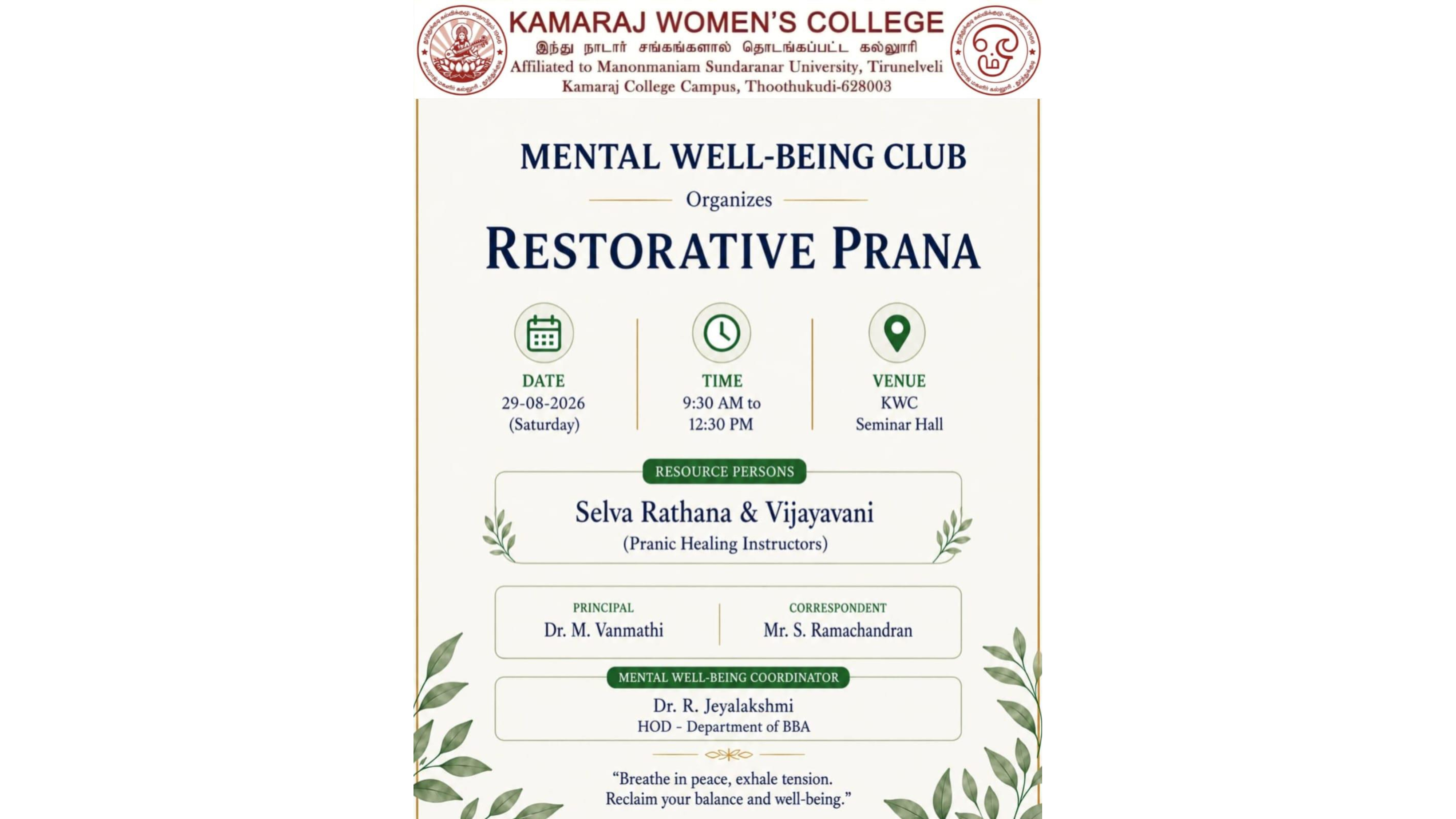
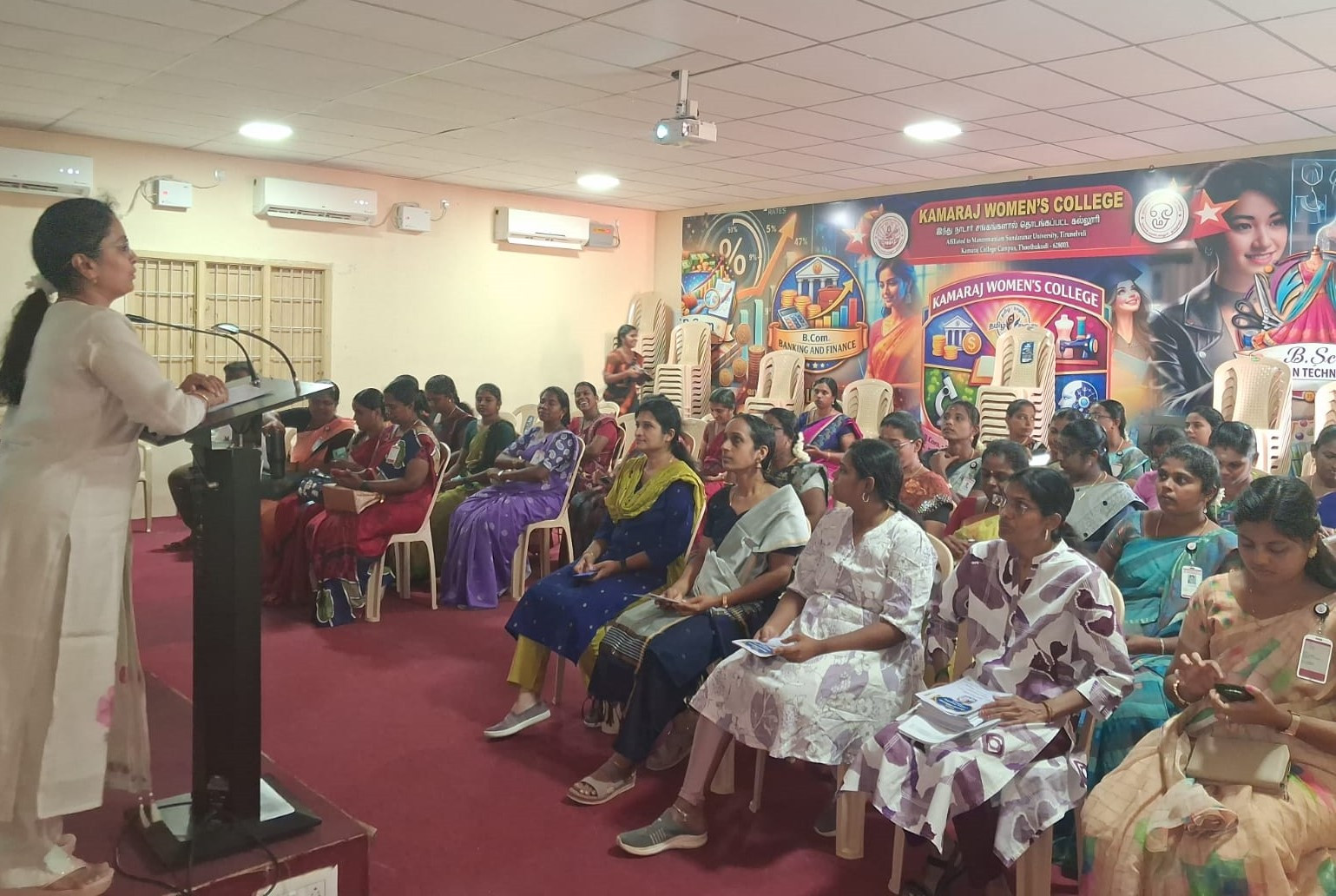
The Restorative Prana Programme organized by the Mental Well-Being Club, Kamaraj Women’s College, Thoothukudi, was held on 29 August 2026 from 9.30 a.m. to 12.30 p.m. at the KWC Seminar Hall. The programme focused on promoting inner peace, relaxation, balance and overall well-being through guided restorative prana practices.
Selva Rathana and Vijayavani, Pranic Healing Instructors, served as the resource persons for the programme. They guided the participants through the session and conducted practical activities aimed at supporting relaxation and personal well-being.
Objectives of the Restorative Prana Programme
The programme focused on the following objectives:
- Promote awareness about mental and emotional well-being
- Encourage relaxation and inner calm
- Introduce participants to restorative prana practices
- Promote a sense of balance in everyday life
- Provide participants with practical relaxation experiences
- Encourage greater awareness of personal well-being
- Create a peaceful and supportive environment for participants
Thus, the programme combined awareness, practical experience and relaxation to highlight the importance of overall well-being.
Welcome and Introduction
The programme commenced with a warm welcome by the organizers. Following the welcome, the participants received an introduction to the Restorative Prana Programme and its objectives.
The introductory session helped participants understand the purpose of the programme and prepared them for the activities that followed.
Moreover, the organizers highlighted the importance of giving adequate attention to mental well-being alongside academic, professional and personal responsibilities.
Resource Persons
The programme was conducted by Selva Rathana and Vijayavani, Pranic Healing Instructors.
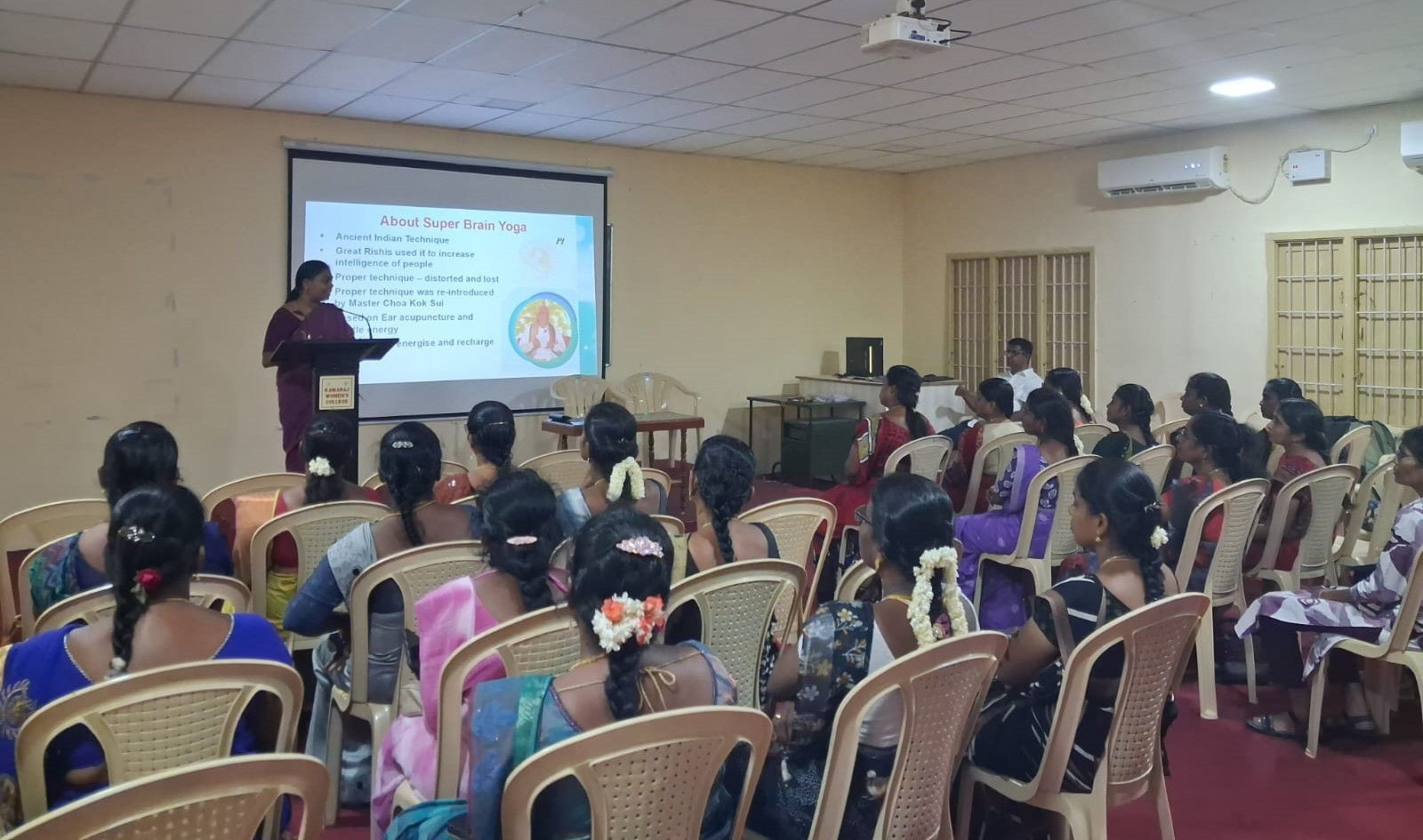
The resource persons guided participants throughout the session and introduced them to restorative prana practices. Their guidance helped participants understand the activities and engage with the session in a comfortable and focused manner.
Furthermore, the practical nature of the programme allowed participants to experience the activities directly rather than limiting the session to theoretical information.
Promoting Inner Peace and Relaxation
A major focus of the programme was the importance of inner peace and relaxation in everyday life.
Modern academic, professional and personal responsibilities can create demanding routines. Therefore, taking time for relaxation and mental well-being can help individuals approach their daily activities with greater calm and focus.
During the session, the resource persons guided participants through restorative practices intended to create a relaxed and peaceful experience.
In addition, the programme encouraged participants to recognize the value of setting aside time for their personal well-being.
Restorative Prana Practices
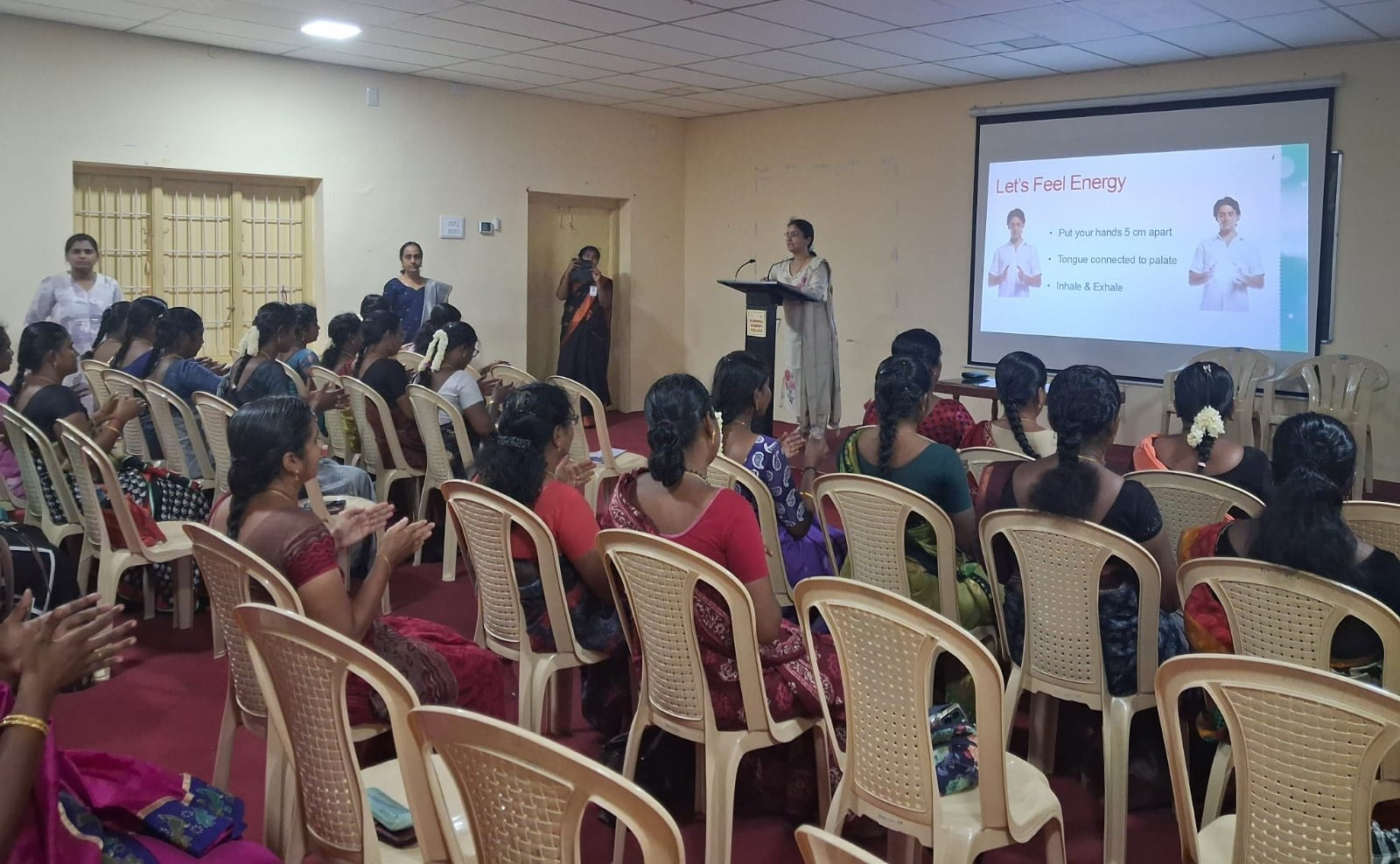
The Restorative Prana Programme included guided practical activities conducted by the resource persons.
Participants actively engaged in the practices and followed the instructions provided during the session. The activities focused on relaxation, balance, inner calm and overall well-being.
The practical approach made the programme more interactive and helped participants remain actively involved throughout the session.
Moreover, participating directly in the activities gave them an opportunity to experience the programme in a meaningful way.
Creating Awareness About Mental Well-Being
The programme also supported the broader objective of the Mental Well-Being Club by creating awareness about the importance of personal and emotional wellness.
Mental well-being plays an important role in maintaining a balanced daily life. Therefore, programmes that encourage relaxation, positive practices and personal awareness can help participants understand the importance of caring for their overall well-being.
Furthermore, such activities create opportunities for students and participants to explore simple practices that encourage calmness and balance.
Active Participation
The participants showed enthusiasm and actively engaged in the session.
Instead of remaining passive listeners, they took part in the practical activities under the guidance of the resource persons. As a result, the programme created an interactive environment where participants could experience the restorative practices directly.
Their active involvement contributed significantly to the meaningful conduct of the programme.
Importance of Balance in Daily Life
Another important theme of the programme was balance.
Students often manage academic responsibilities, examinations, assignments, extracurricular activities and personal commitments. Consequently, maintaining a balanced routine can become challenging.
The session encouraged participants to recognize the importance of relaxation and personal well-being within their daily schedules.
At the same time, the programme highlighted the value of developing greater awareness of one’s own need for rest and mental calm.
Practical Learning Experience
The practical activities formed an important part of the programme.
Participants received direct guidance from the resource persons and followed the restorative practices during the session. Therefore, they gained an experiential understanding of the activities introduced to them.
Such practical sessions can make well-being programmes more engaging because participants can experience the techniques rather than simply hear about them.
Furthermore, the session provided an opportunity to spend time in a calm and supportive environment.
Role of the Mental Well-Being Club
The Mental Well-Being Club of Kamaraj Women’s College organized the programme as part of its efforts to promote awareness about emotional balance and personal well-being.
Activities of this nature provide students and participants with opportunities to understand the importance of relaxation, self-awareness and maintaining a balanced approach to everyday life.
Moreover, the programme reflected the club’s focus on encouraging positive practices that support the overall development and well-being of students.
Programme Outcomes
The Restorative Prana Programme provided a meaningful and engaging experience for the participants. The major outcomes included:
- Participants gained awareness about the importance of mental well-being
- The session encouraged relaxation and inner calm
- Participants were introduced to restorative prana practices
- The practical activities encouraged active involvement
- The programme highlighted the importance of balance in daily life
- Participants experienced guided activities focused on relaxation and well-being
- The session encouraged greater awareness of personal wellness
- The programme created a calm and supportive learning environment
Overall, the session helped participants understand the value of setting aside time for relaxation, balance and personal well-being.
Conclusion
The Restorative Prana Programme organized by the Mental Well-Being Club, Kamaraj Women’s College, provided participants with an engaging experience focused on inner peace, relaxation, balance and overall well-being.
The guidance and practical activities conducted by Selva Rathana and Vijayavani, Pranic Healing Instructors, encouraged participants to actively engage with the session and understand the importance of personal well-being.
Most importantly, the programme provided an opportunity for participants to experience restorative practices in a peaceful and supportive environment.
The programme concluded with the National Anthem, marking the successful completion of a meaningful session dedicated to mental well-being and personal balance.