
Mentor Mentee Programme Strengthens Student Support at KWC
Report on Mentor–Mentee Programme
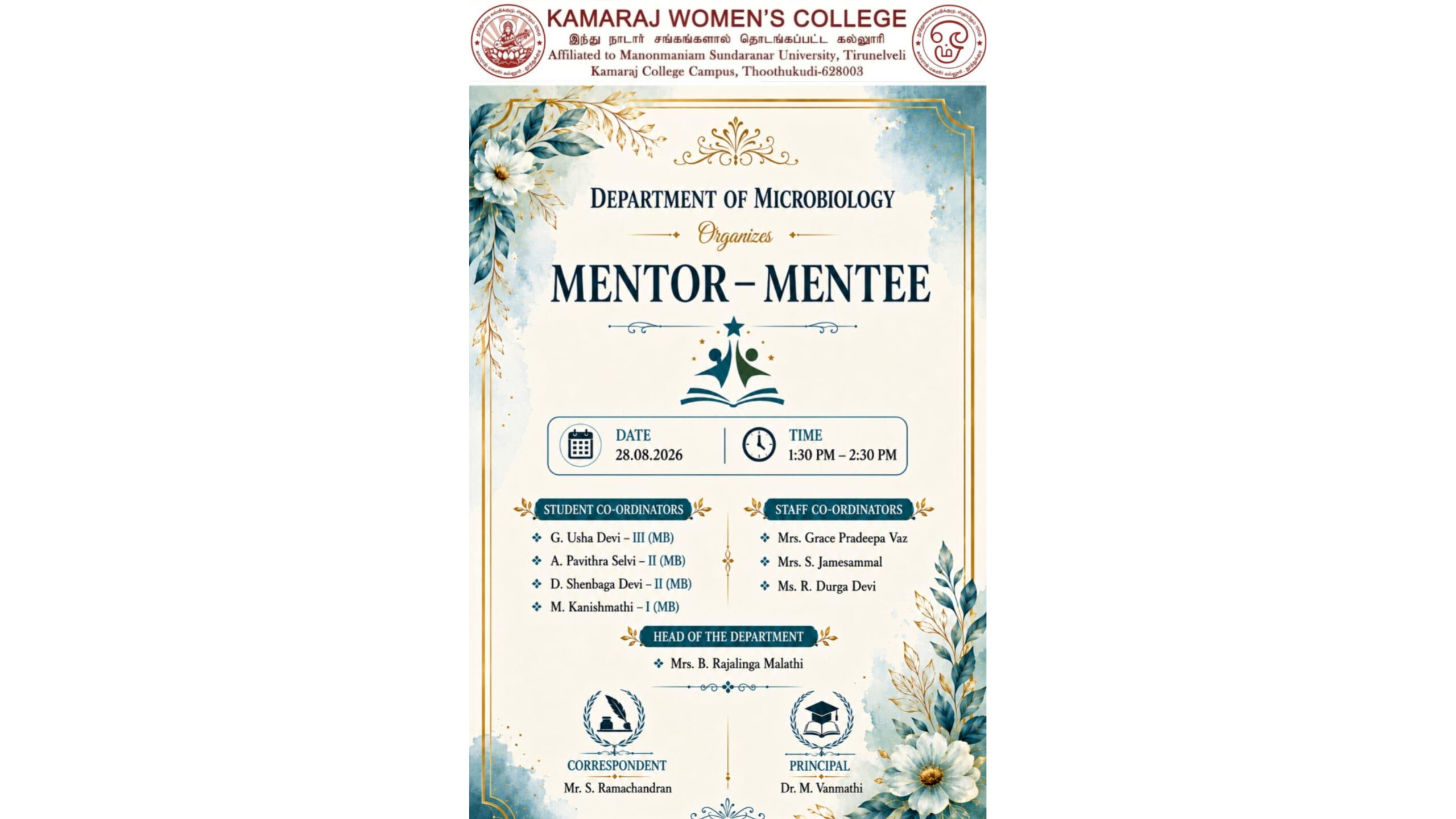
The Department of Microbiology, Kamaraj Women’s College, Thoothukudi, organized a Mentor–Mentee Programme on 28 August 2026 from 11.30 a.m. to 12.30 p.m. The programme aimed to strengthen the academic and personal relationship between faculty mentors and students while providing appropriate guidance and support to the mentees.
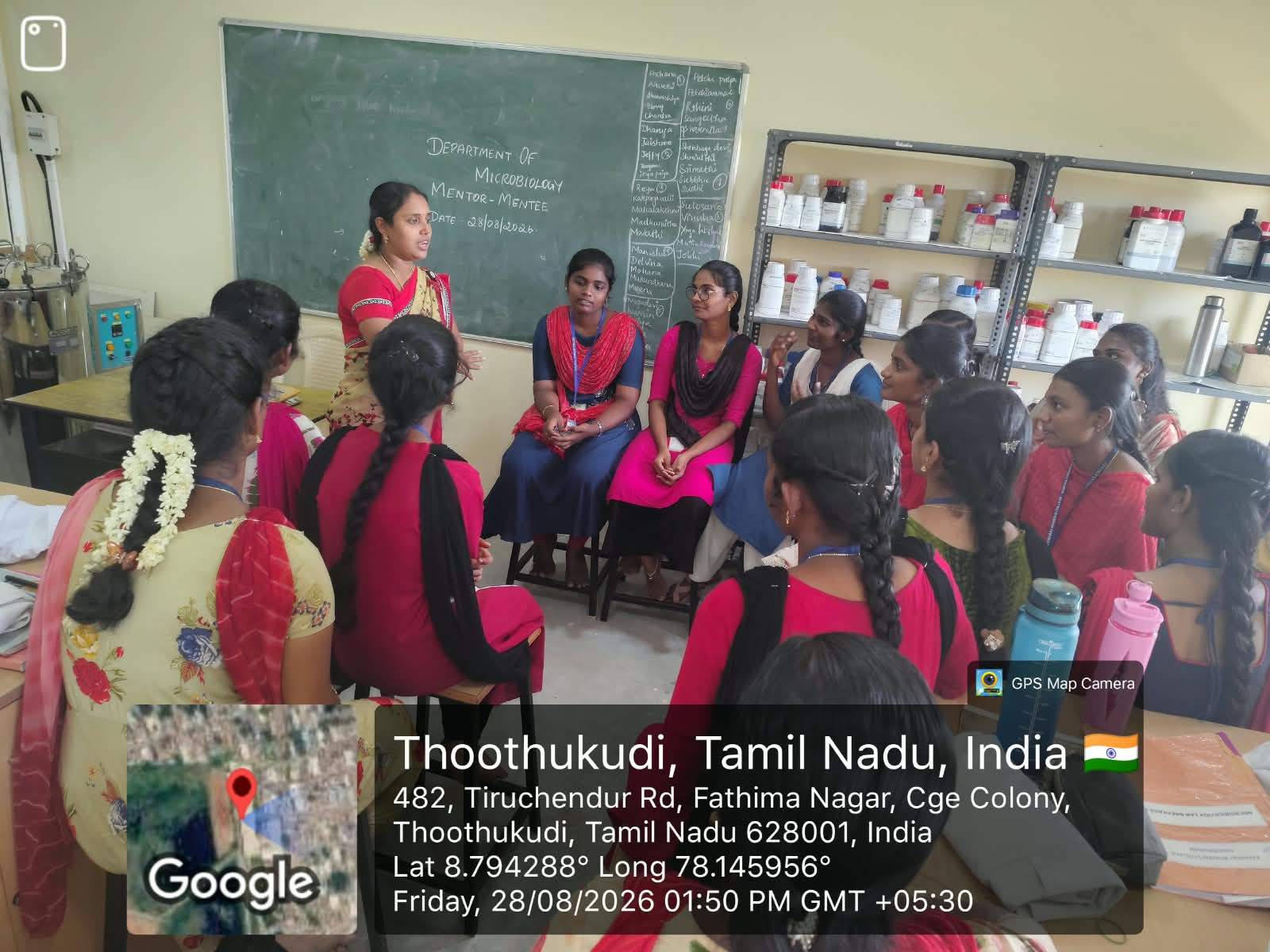
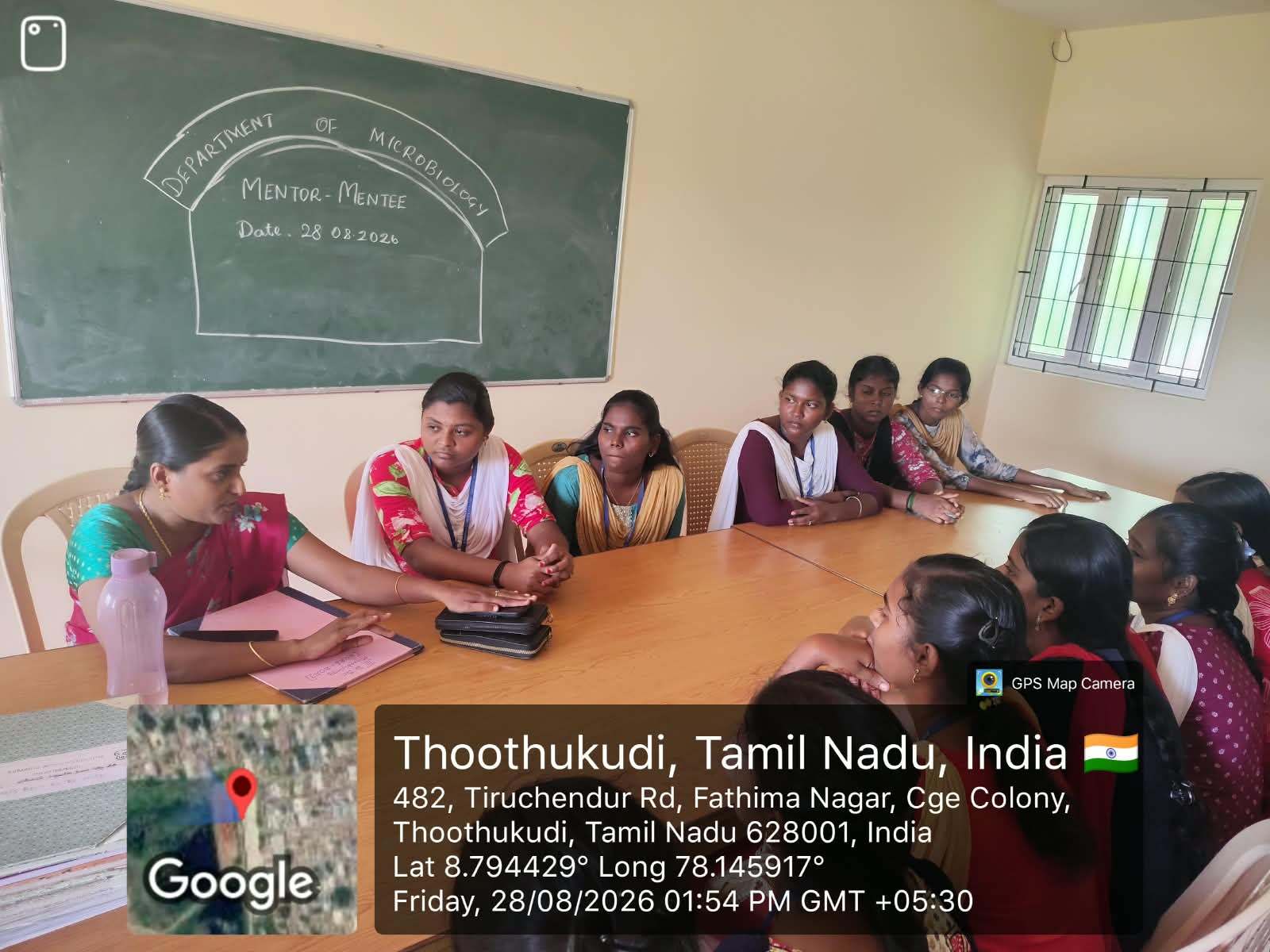
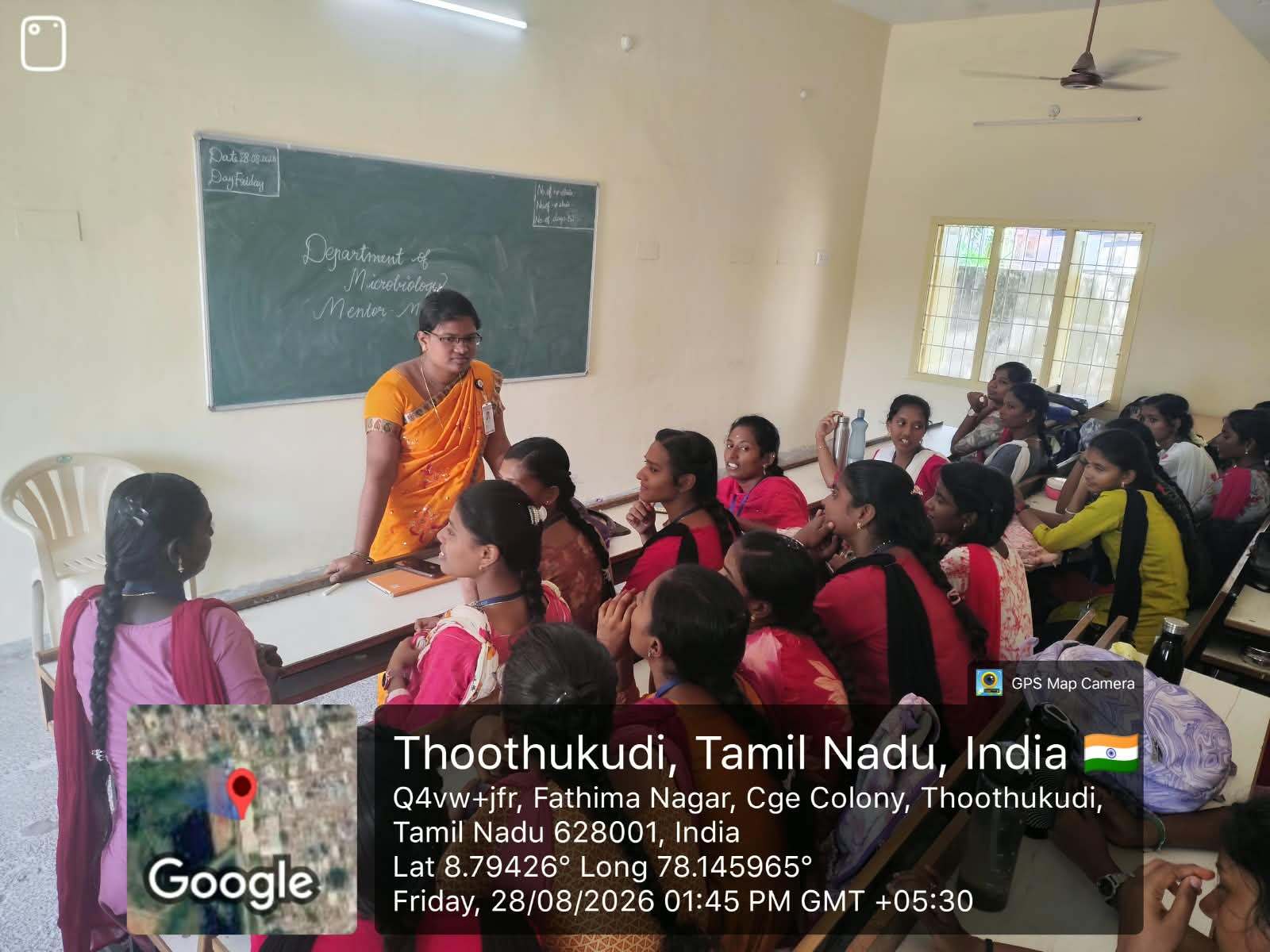
Students from I, II and III B.Sc. Microbiology participated in the programme along with the faculty mentors. The session created a comfortable environment where students could interact freely with their mentors, discuss their concerns and receive individual guidance.
Objectives of the Programme
The Mentor Mentee Programme focused on the following objectives:
- Strengthen the relationship between faculty mentors and students
- Review the academic progress of students
- Identify and address learning difficulties
- Encourage regular attendance and active participation
- Provide guidance on higher education and career opportunities
- Promote skill development and competitive examination preparation
- Help students identify their strengths and academic goals
- Provide individual support for student-related concerns
Thus, the programme combined academic mentoring, career guidance and personal development in a supportive environment.
Interaction Between Mentors and Mentees
The session provided students with an opportunity to interact openly with their faculty mentors.
During the interaction, students discussed their academic progress, learning difficulties, attendance, participation in departmental activities, career aspirations and other student-related concerns.
Moreover, the mentors encouraged students to communicate their difficulties without hesitation. This open interaction helped faculty members understand the individual needs of the students and provide suitable guidance.
Guidance on Academic Progress
Academic development formed an important part of the mentoring session.
Faculty mentors reviewed the students’ learning progress and encouraged them to maintain regular attendance and consistent study habits. They also guided students on improving their academic performance through better planning and focused learning.
Furthermore, students were encouraged to clarify doubts regularly and seek guidance whenever they faced difficulties in their studies.
The mentors highlighted that consistent effort and regular academic engagement can help students achieve better learning outcomes.
Developing Effective Study Habits
The mentors encouraged students to develop effective and organised study habits.
Students were advised to manage their study time properly and avoid postponing academic work. In addition, the faculty members stressed the importance of regular revision and continuous learning.
The session helped students understand that academic success depends not only on examination preparation but also on consistent participation and disciplined study throughout the academic year.
Participation in Academic and Co-Curricular Activities
Students were encouraged to participate actively in academic, departmental and co-curricular activities.
Such participation can provide valuable learning experiences beyond the classroom. Moreover, involvement in seminars, competitions, extension activities and other departmental programmes can help students improve their confidence and communication skills.
The mentors therefore motivated the students to make use of the opportunities provided by the department and college.
Career Opportunities in Microbiology
Career guidance formed another important part of the Mentor–Mentee Programme.
The faculty mentors discussed various career opportunities available to Microbiology students and encouraged them to begin career planning during their undergraduate studies.
Students received guidance on exploring suitable career paths based on their interests, strengths and future goals. Furthermore, the discussion helped them understand the importance of developing relevant knowledge and skills alongside their academic qualifications.
Higher Education and Competitive Examinations
The mentors also provided guidance regarding higher education, skill development and preparation for competitive examinations.
Students were encouraged to explore further study opportunities related to Microbiology and allied fields. In addition, they were advised to gather information about competitive examinations relevant to their career interests.
The faculty members stressed the importance of early preparation and regular practice. As a result, students gained a clearer understanding of the need to plan their academic and professional journey in advance.
Identifying Individual Strengths and Goals
The mentoring session encouraged students to identify their individual strengths, interests and areas for improvement.
Rather than comparing themselves with others, students were motivated to understand their own abilities and set realistic academic and career goals.
Furthermore, the mentors encouraged them to work consistently towards those goals and seek support whenever necessary.
This individual approach made the mentoring process more meaningful and student-centred.
Developing Essential Life Skills
Along with academic guidance, the mentors highlighted several essential skills required for personal and professional development.
Students were encouraged to focus on:
- Discipline
- Communication skills
- Teamwork
- Time management
- Positive attitude towards learning
- Responsibility and self-confidence
These skills can support students during their college education and prepare them for future academic and professional environments.
Addressing Individual Student Concerns
An important feature of the programme was the opportunity for students to raise their individual concerns.
The mentors listened to the issues shared by the students and provided suitable suggestions based on their needs. Therefore, the session went beyond general advice and offered personalised academic and personal support.
Such interaction helped create greater trust between mentors and mentees. It also encouraged students to approach their faculty mentors whenever they required guidance.
Creating a Supportive Academic Environment
The Mentor Mentee Programme played an important role in creating a supportive learning environment within the Department of Microbiology.
Regular interaction between students and faculty members can help identify academic challenges at an early stage. Moreover, mentoring enables students to receive guidance on both immediate concerns and long-term goals.
Consequently, the programme strengthened communication between teachers and students while promoting a positive approach towards learning.
Programme Outcomes
The programme provided several meaningful outcomes for the participating students. Through the session, the students were able to:
- Interact openly with their faculty mentors
- Review their academic progress and learning difficulties
- Understand the importance of regular attendance
- Develop better study and time management habits
- Gain awareness about career opportunities in Microbiology
- Receive guidance on higher education
- Understand the importance of skill development
- Gain guidance for competitive examination preparation
- Identify their strengths and areas for improvement
- Develop communication, teamwork and self-confidence
- Receive individual guidance for their concerns
Thus, the programme successfully combined academic guidance, career planning, skill development and personal mentoring.
Conclusion
Overall, the Mentor–Mentee Programme organised by the Department of Microbiology proved to be a meaningful and supportive initiative for students of I, II and III B.Sc. Microbiology.
The session provided an opportunity for students to discuss their academic progress, learning difficulties, attendance, career aspirations and individual concerns directly with their faculty mentors. Furthermore, the guidance on higher education, competitive examinations, career opportunities and skill development helped students think more clearly about their future goals.
Most importantly, the programme strengthened the bond between faculty mentors and students and created an environment of trust, communication and continuous support.
The session concluded with an interactive discussion between the mentors and mentees. Finally, the programme ended with a note of thanks to all the faculty members and students for their active participation and cooperation.