
Digital Libraries Guest Lecture Inspires Smart Learning at KWC
Report on National Librarian’s Day Guest Lecture
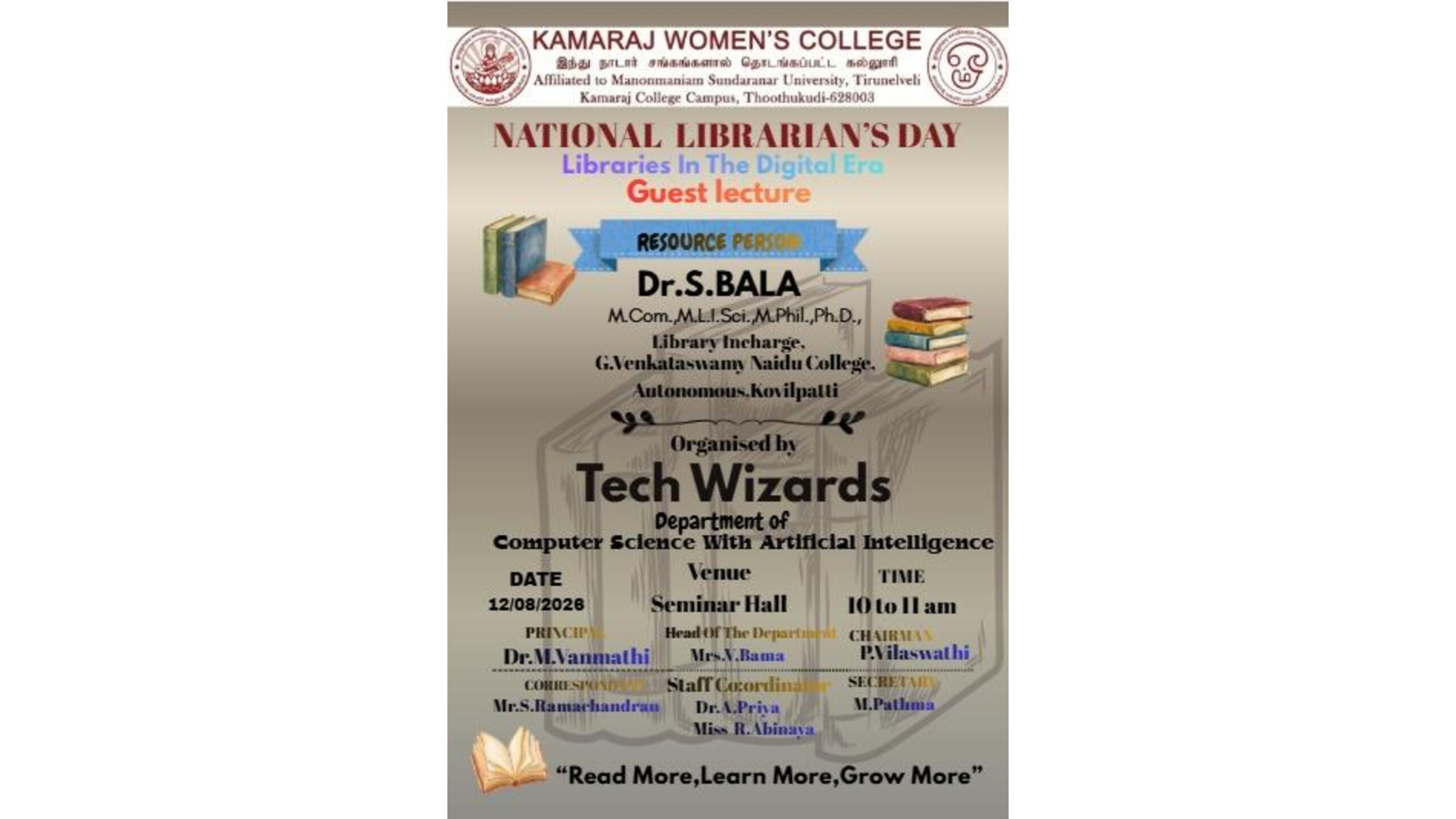
The Department of Computer Science with Artificial Intelligence, Kamaraj Women’s College, Thoothukudi, under the banner of Tech Wizards, organized a guest lecture on “Libraries in the Digital Era” on 12 August 2026 from 10.00 a.m. to 11.00 a.m. at the KWC Seminar Hall. The programme was organized on the occasion of National Librarian’s Day to create awareness about the changing role of libraries in the digital age.
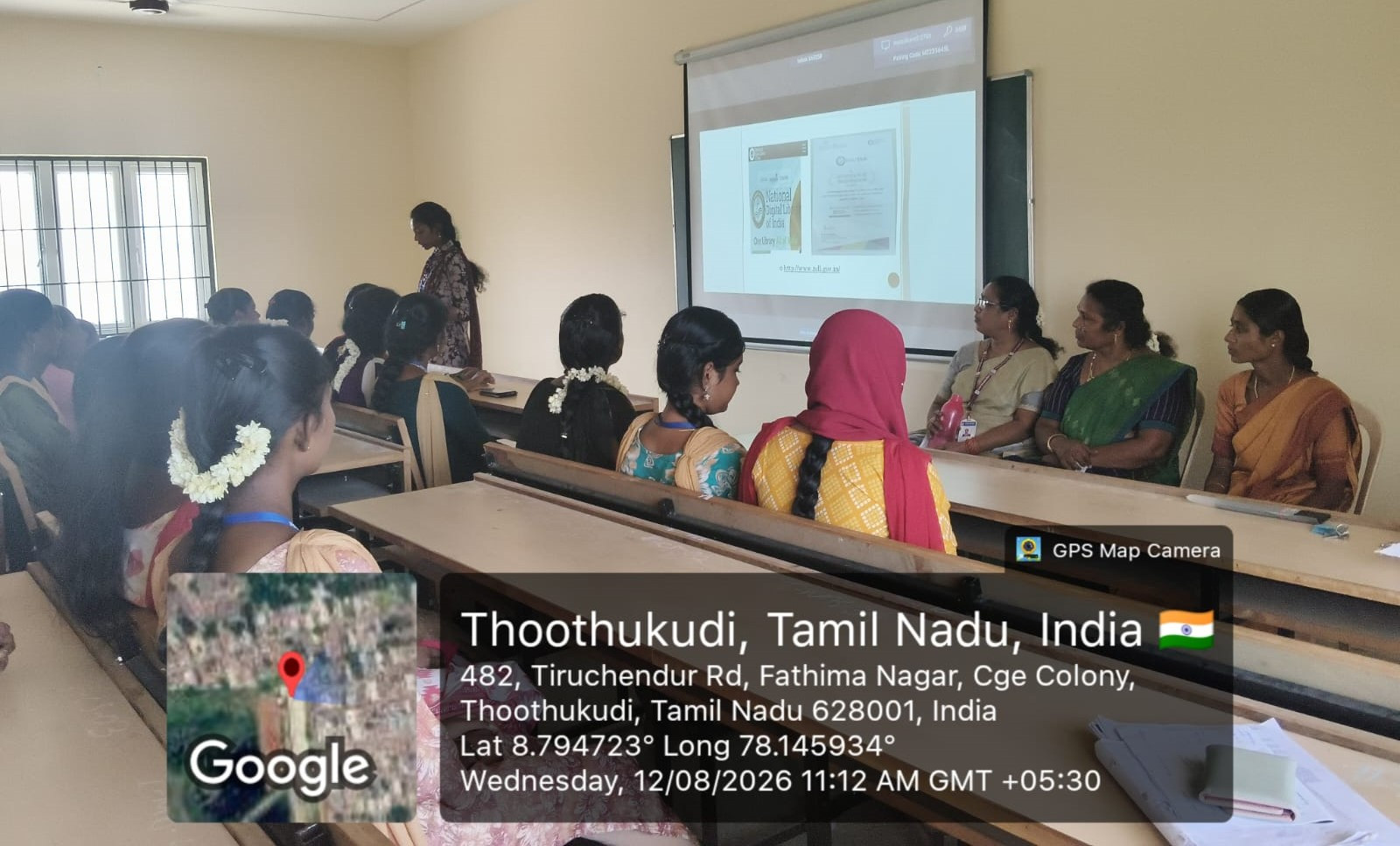
The session introduced students to modern library resources such as e-books, e-journals, online databases and digital information services. Moreover, it highlighted how technology and Artificial Intelligence are changing the way people search, access, organize and use information.
Objectives of the Programme
The guest lecture focused on the following objectives:
- Create awareness about digital libraries
- Introduce students to e-books and e-journals
- Explain the use of online academic databases
- Promote effective use of digital learning resources
- Develop information literacy among students
- Highlight the role of Artificial Intelligence in information management
- Encourage regular reading and lifelong learning
Therefore, the programme helped students understand how modern libraries support both academic learning and personal growth.
Resource Person
The resource person for the programme was Dr. S. Bala, M.Com., M.L.I.Sc., M.Phil., Ph.D., Library Incharge, G. Venkataswamy Naidu College (Autonomous), Kovilpatti.
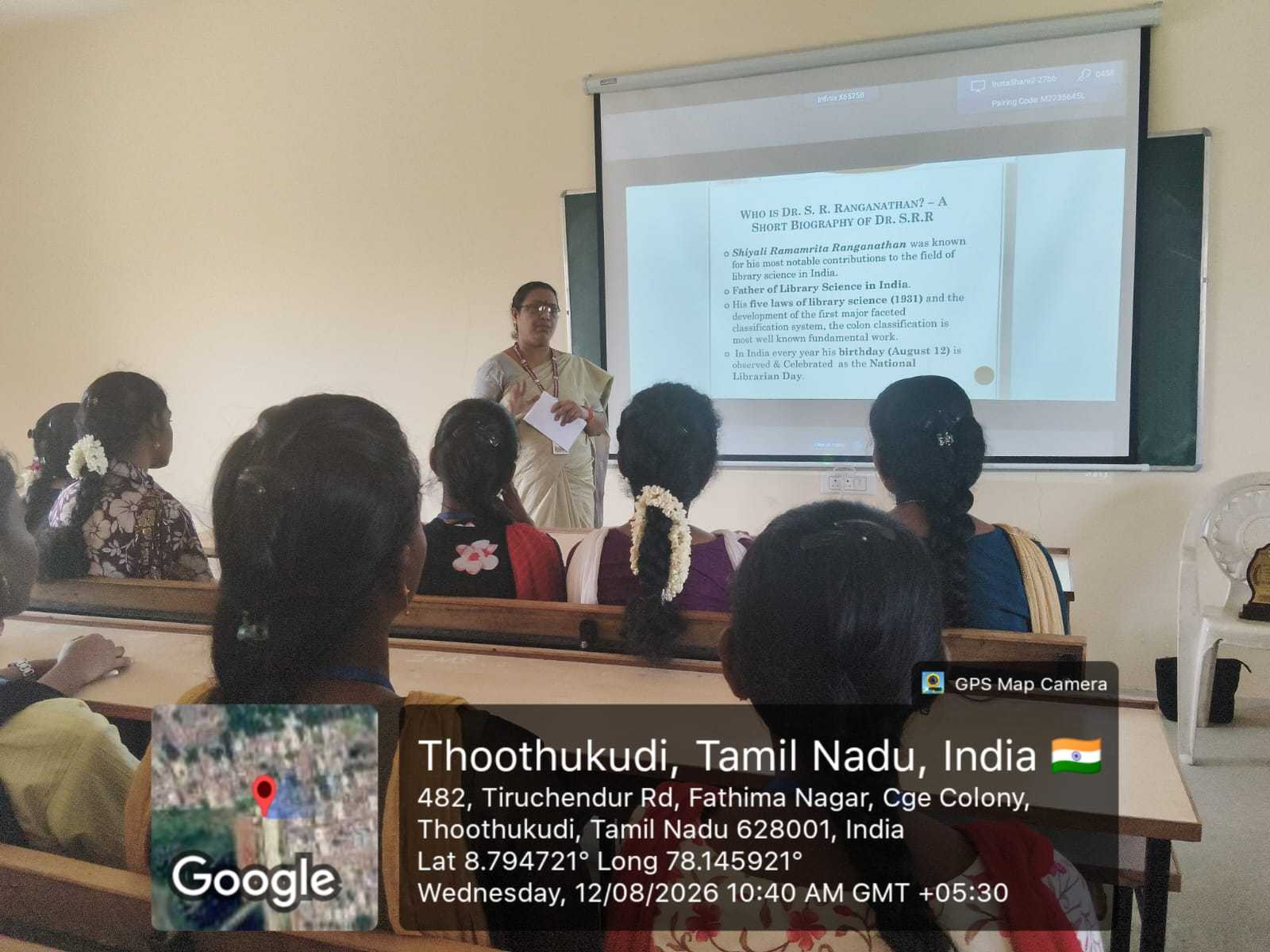
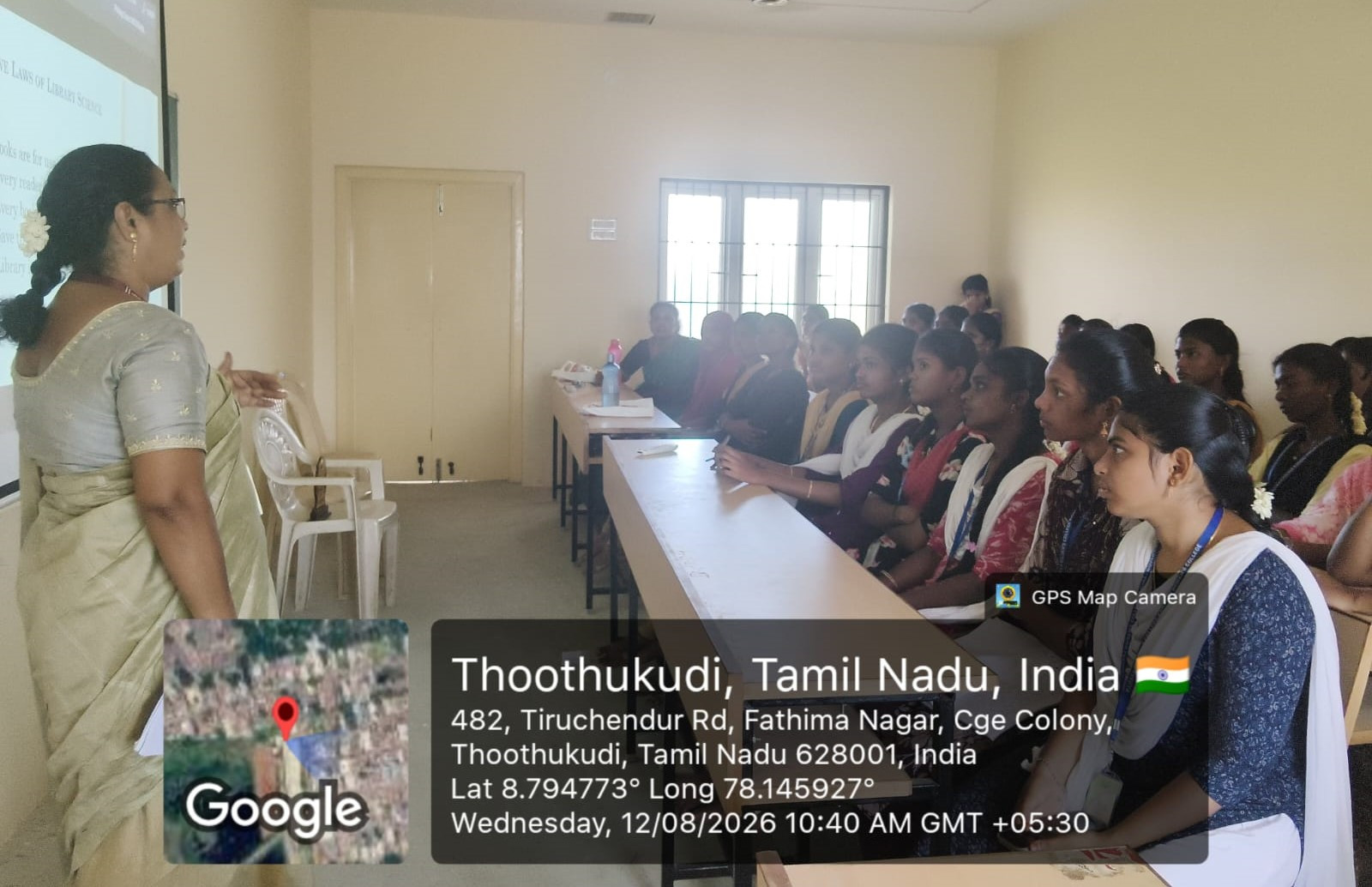
Dr. S. Bala shared valuable insights into the transformation of traditional libraries into technology-enabled learning spaces. She also explained how digital platforms have made academic resources more accessible to students and researchers.
Furthermore, her practical guidance helped students understand how they can use digital library services effectively for study, research and skill development.
Libraries in the Digital Era
The session focused on the changing nature of libraries in today’s technology-driven world.
Earlier, students depended mainly on printed books and physical library collections. However, digital technology has expanded access to learning materials beyond library shelves.
The resource person explained that modern libraries now provide access to:
- E-books
- E-journals
- Online databases
- Digital repositories
- Research articles
- Online reference resources
As a result, students can access academic information quickly and use a wider range of learning materials.
Effective Use of Digital Academic Resources
The lecture encouraged students to use digital academic resources more effectively.
The resource person explained that online databases and e-journals are useful for assignments, projects, seminars and research activities. In addition, she advised students to select reliable academic sources instead of depending only on general internet searches.
The session also highlighted the importance of identifying trusted information, comparing sources and using academic material responsibly.
Consequently, students gained a better understanding of how digital resources can improve the quality of their academic work.
Artificial Intelligence and Library Services
Another important part of the lecture focused on the growing role of Artificial Intelligence in modern library services.
The resource person explained how AI can support:
- Information searching
- Digital cataloguing
- Resource recommendations
- Information organization
- Research support
- Faster access to academic content
Moreover, the students learned that Artificial Intelligence can make information access faster and more personalized. At the same time, they were encouraged to verify information carefully and use digital tools responsibly.
Importance of Information Literacy
The programme strongly emphasized information literacy.
Students learned that finding information is only the first step. They must also evaluate whether the information is accurate, relevant and reliable.
The lecture encouraged students to:
- Check the credibility of sources
- Compare information from different references
- Use academic databases whenever possible
- Avoid unreliable online information
- Use information ethically and responsibly
Therefore, the session helped students develop a more careful and informed approach to digital learning.
Promoting Reading Habits
Although the lecture focused on digital libraries, the resource person also emphasized the continuing importance of reading.
She encouraged students to read beyond their prescribed textbooks and explore books, journals, articles and other useful materials. Furthermore, she explained that regular reading improves vocabulary, concentration, communication and critical thinking.
Students were motivated to make reading a part of their daily routine and use both printed and digital resources for continuous learning.
Student Participation
Students actively participated in the programme and listened with great interest to the resource person’s presentation.
The session helped them understand:
- The role of digital libraries
- The value of e-books and e-journals
- The importance of online academic databases
- The role of AI in information access
- The need for information literacy
- The importance of regular reading
Moreover, the programme encouraged students to use available digital resources more confidently in their academic work.
Programme Outcomes
The guest lecture successfully achieved its objectives.
The programme enabled students to:
- Understand the changing role of libraries
- Explore digital learning resources
- Use e-books and e-journals effectively
- Develop better information-searching skills
- Recognize the role of Artificial Intelligence in library services
- Strengthen information literacy
- Develop interest in reading and lifelong learning
As a result, the students became more aware of how modern libraries can support academic excellence and continuous self-development.
Conclusion
Finally, the guest lecture on “Libraries in the Digital Era” concluded successfully with the active support of the college administration, faculty members and students.
Overall, the programme created meaningful awareness about digital libraries, online academic resources, information literacy and Artificial Intelligence. Most importantly, it encouraged students to combine technology with the habit of reading and to continue learning throughout their lives.
The programme reinforced the inspiring message:
“Read More, Learn More, Grow More.”