
7 Inspiring Highlights of Hands-on Training Workshop
Report on 3-Day Hands-on Training Workshop
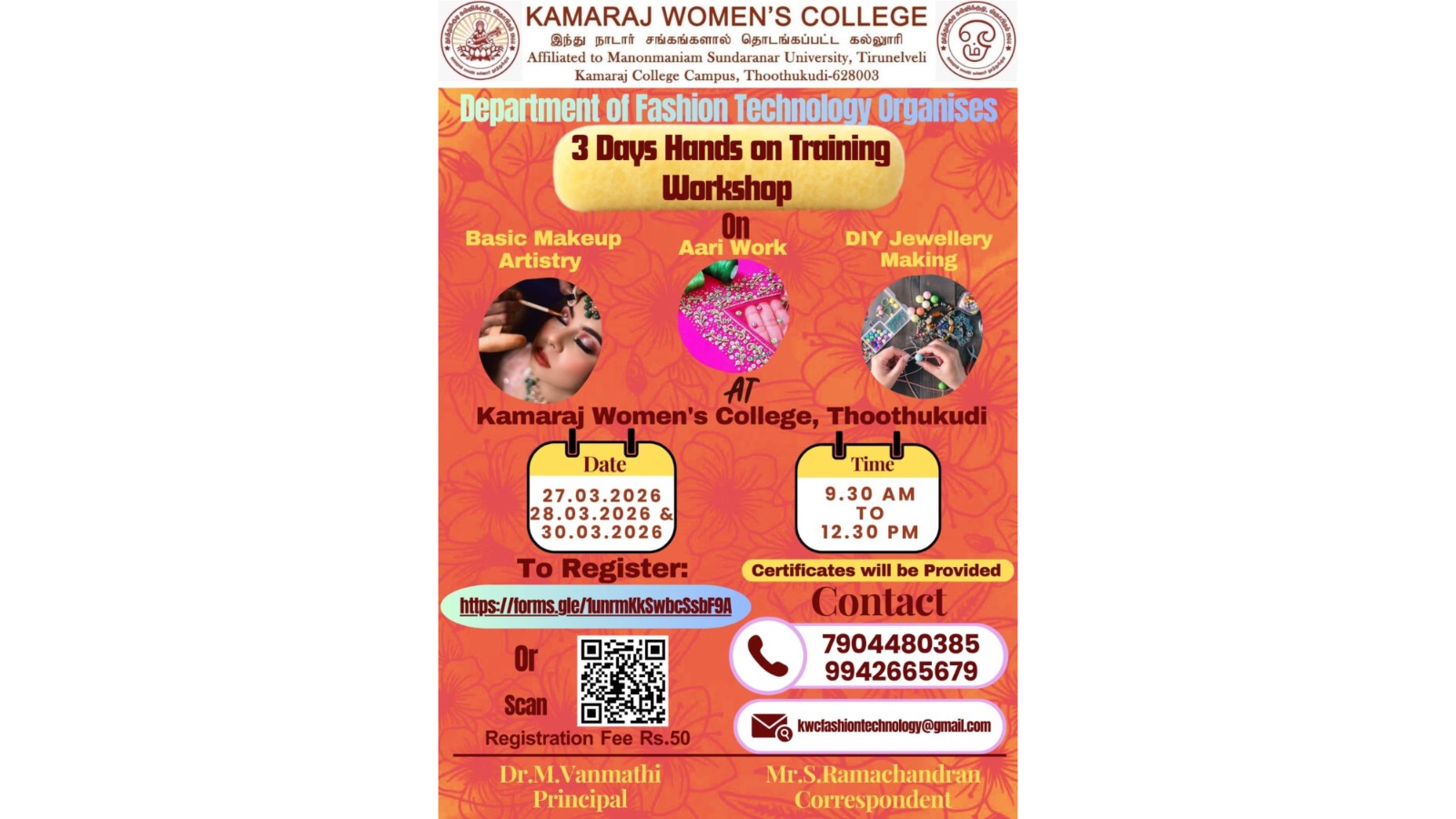
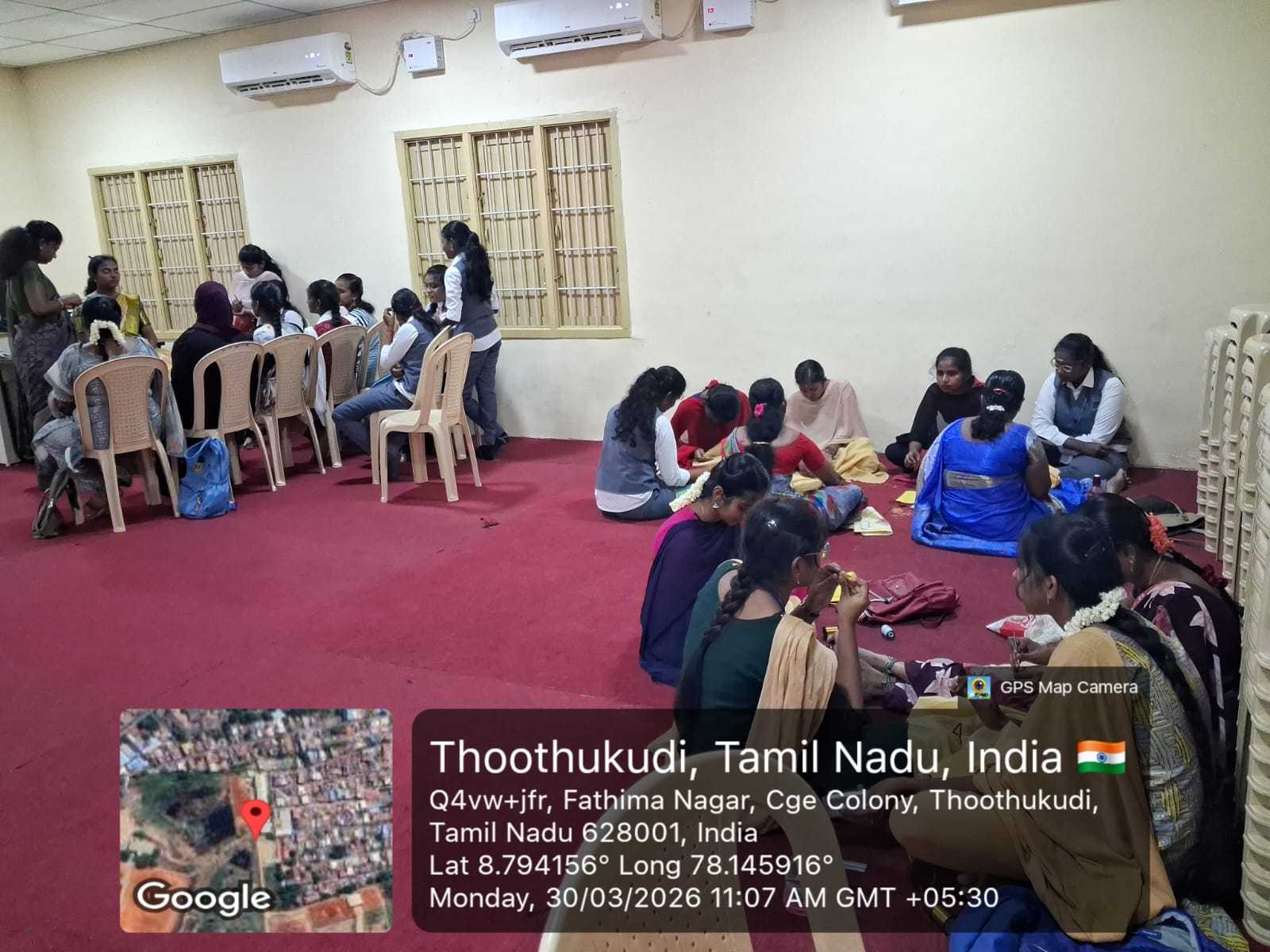
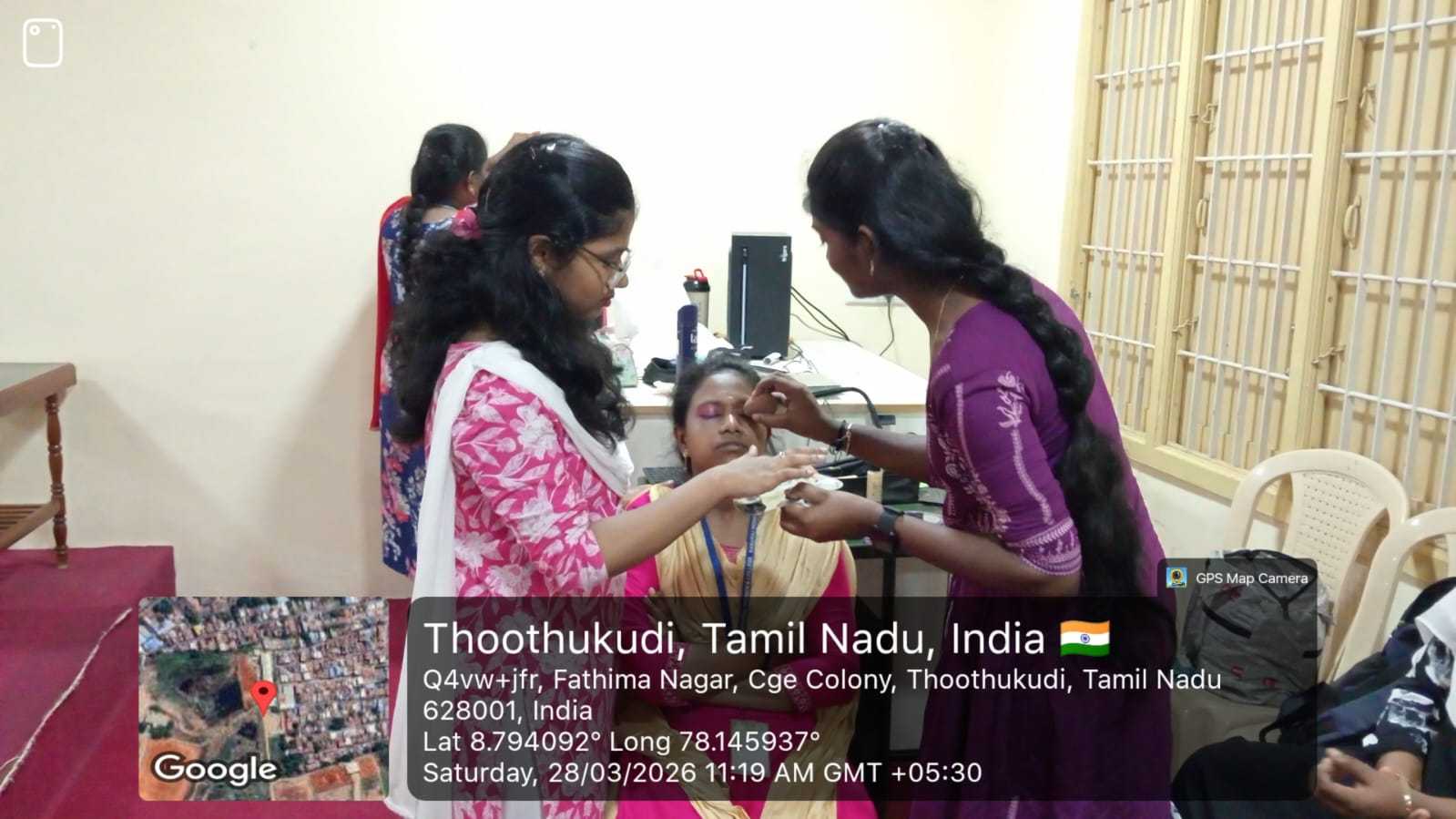
The Department of Fashion Technology, Kamaraj Women’s College, Thoothukudi, successfully organized a 3-Day Hands-on Training Workshop on 27, 28, and 30 March 2026 from 9:30 a.m. to 12:30 p.m. at the college premises. The workshop focused on Aari Work, Basic Makeup Artistry, and DIY Jewellery Making. It gave the participants practical exposure, creative learning, and skill-based training in a supportive environment.
Skill-based workshops are highly important in today’s learning environment. They help students and the public gain practical knowledge beyond theory. At the same time, such programmes improve confidence, creativity, and employability. Therefore, this Hands-on Training Workshop served as a valuable initiative for learners from different backgrounds.
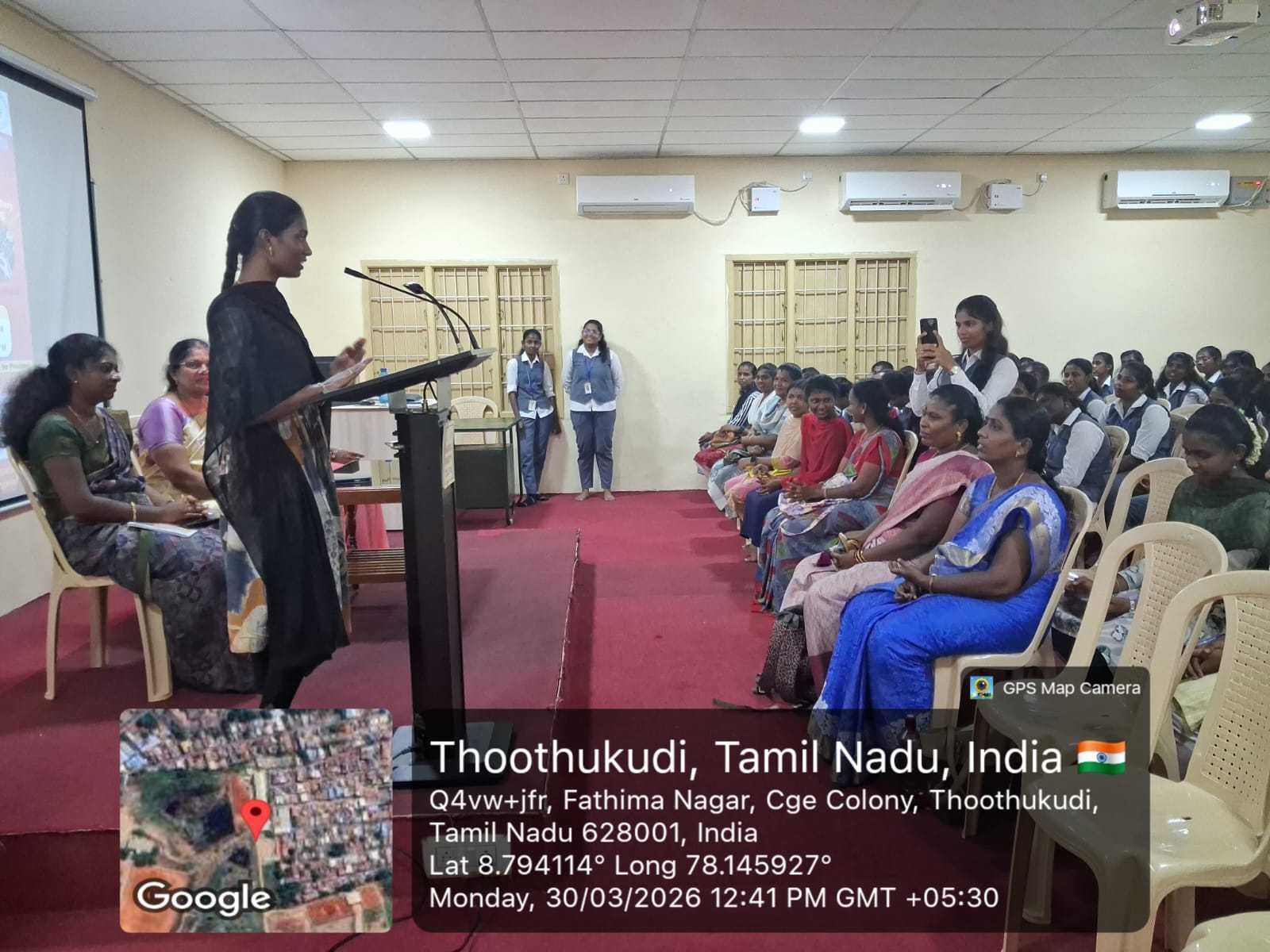
Moreover, the workshop attracted participants from various schools and colleges. It also welcomed members of the general public, including working women and homemakers. Because of this diverse participation, the programme became lively, inclusive, and highly interactive. As a result, the event created a strong learning atmosphere and encouraged practical creativity.
Purpose of the Hands-on Training Workshop
The main purpose of the Hands-on Training Workshop was to provide practical skill development in creative fields. In addition, the programme aimed to foster self-confidence, improve technical ability, and encourage self-employment opportunities among participants.
The workshop also focused on the importance of learning by doing. Instead of limiting participants to theory alone, it allowed them to work directly with tools, materials, and techniques. Therefore, the programme became both useful and inspiring.
- To develop practical skills through direct training
- To improve creativity and technical knowledge
- To encourage self-employment opportunities
- To enhance employability through skill-based learning
- To build self-confidence in creative work
Thus, the workshop was not only an academic event. It also acted as a platform for personal growth and professional skill development.
Wide and Enthusiastic Participation
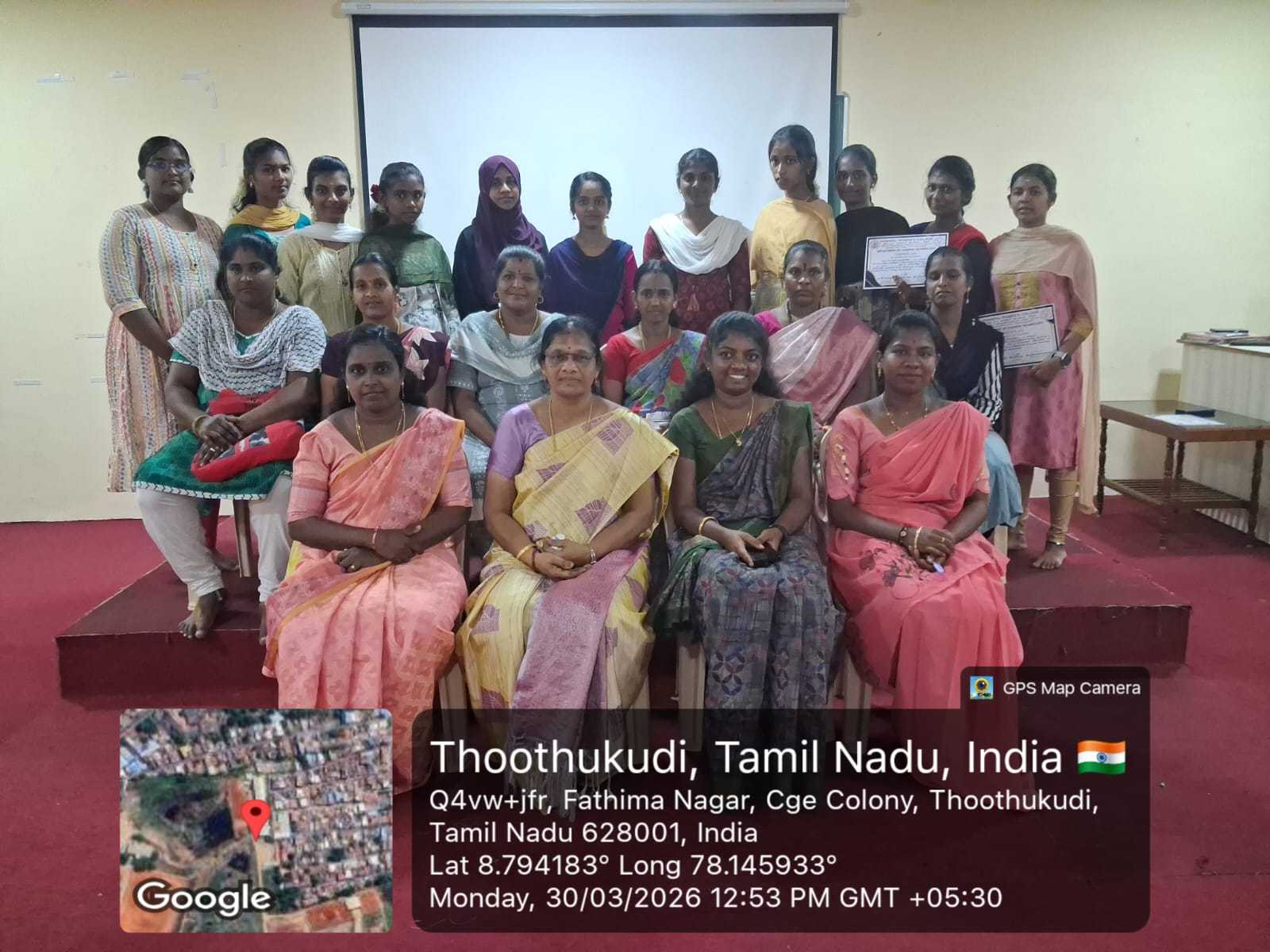
The Hands-on Training Workshop witnessed enthusiastic participation from students of various schools and colleges. Along with them, members of the general public, including working women and homemakers, also joined the programme with great interest.
This wide participation added strength to the event. It created an environment where learners from different age groups and backgrounds could come together and learn practical skills. Furthermore, their active involvement made the sessions more vibrant and meaningful.
Because of this positive response, the programme became a successful example of community-based skill development. It also showed the importance of opening educational opportunities to a wider audience.
Day 1 Highlights: Introduction and Basic Training
On Day 1, 27.03.2026, the programme began with the registration of participants. After registration, the session opened with an invocation and a welcome address delivered by the faculty coordinator. This opening gave the programme a warm and organized start.
Next, the objectives of the workshop were clearly explained. The importance of hands-on training in improving creativity, employability, and practical skill was highlighted. This introduction helped the participants understand the value of the training they were about to receive.
After that, the training sessions began. Participants were introduced to the basics of their chosen course. The trainers demonstrated the fundamental techniques, required tools, and materials used in each area. Therefore, the learners got their first level of practical experience in a guided way.
- Participant registration
- Invocation and welcome address
- Introduction to workshop objectives
- Basic training in chosen skill area
- Demonstration of tools and materials
As a result, Day 1 created a strong foundation for the workshop. It prepared the participants for deeper practical learning in the next sessions.
Day 2 Highlights: Intensive Practical Learning
On Day 2, 28.03.2026, the session began with attendance and a brief recap of the previous day’s learning. This helped the participants refresh their understanding before continuing with the next stage of training.
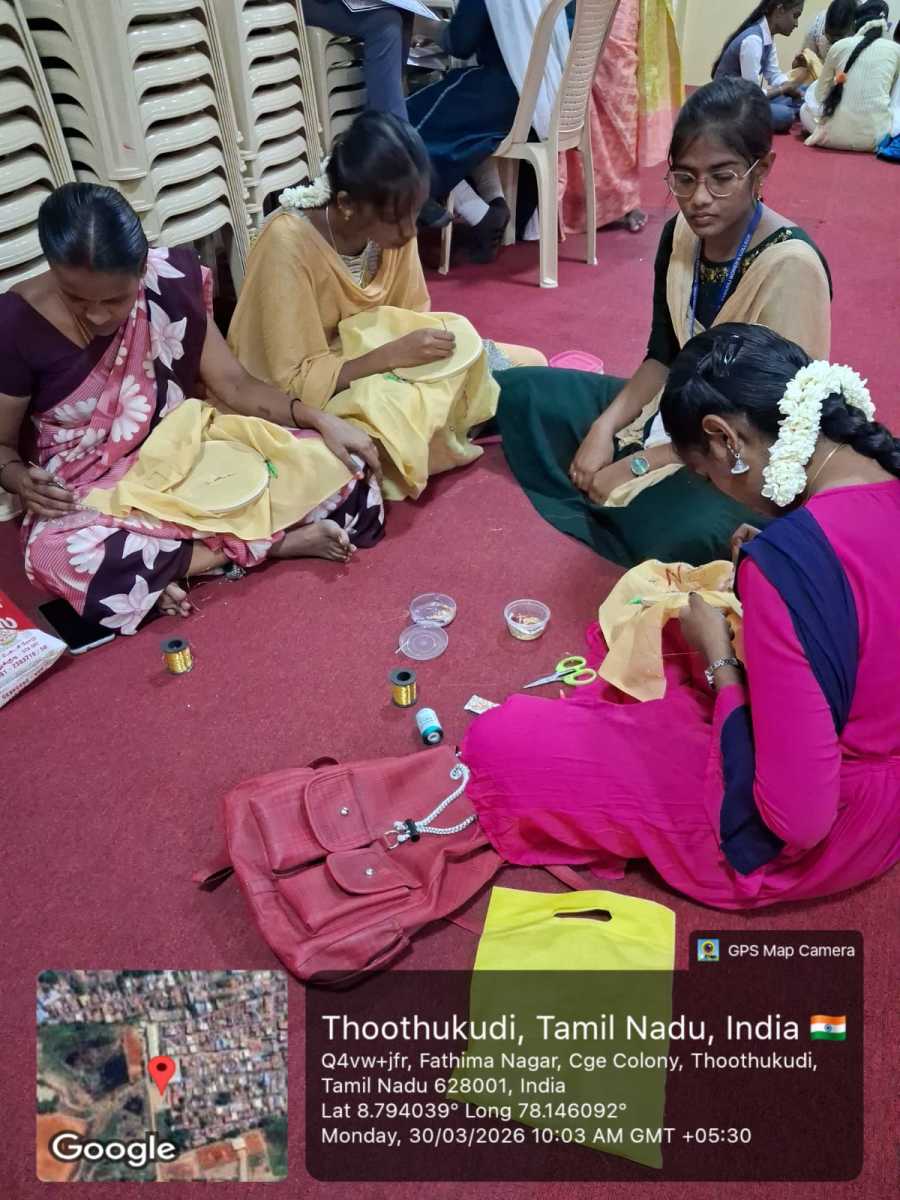
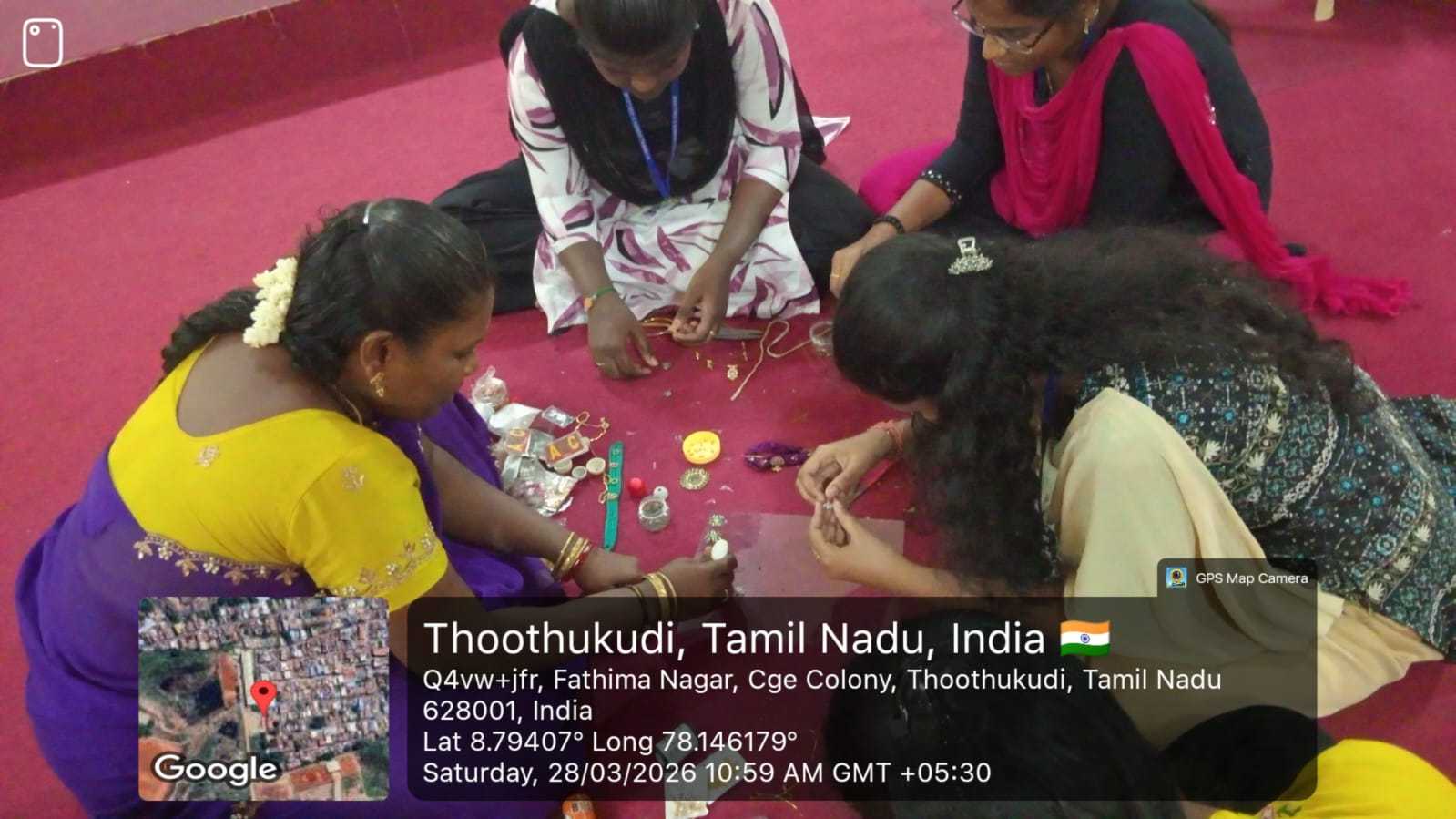
The focus of the day was on intensive practical training. Participants actively engaged in hands-on work under the direct guidance of the trainers. In addition, the trainers provided individual attention to each participant. This helped them understand techniques better and improve the quality of their work.
The learners showed keen interest throughout the session. They asked questions, interacted with the trainers, and worked with enthusiasm. Because of this active participation, the session became highly effective and engaging.
Moreover, Day 2 gave the participants the confidence to practise more independently. It strengthened their technical skill and helped them apply what they had learned in a practical setting.
Day 3 Highlights: Final Output and Feedback
On Day 3, 30.03.2026, the programme began with attendance and then moved into the final phase of practical training. By this stage, the participants had gained enough familiarity with their chosen skill areas. Therefore, they were able to complete their assigned work with more confidence.
The participants showcased their outputs at the end of the session. This display of completed work reflected their learning progress, effort, and creativity. It also gave them a sense of achievement and pride in what they had created.
After the practical work, a feedback and interaction session was conducted. During this session, participants shared their experiences and expressed satisfaction with the training. Their responses showed that the workshop had been useful, enjoyable, and inspiring.
- Final practical session
- Completion of assigned work
- Display of participant outputs
- Feedback and interaction session
- Expression of satisfaction by participants
Thus, Day 3 brought the workshop to a meaningful and rewarding close. It highlighted the practical growth of the learners and the overall success of the programme.
Certificate Distribution and Formal Conclusion
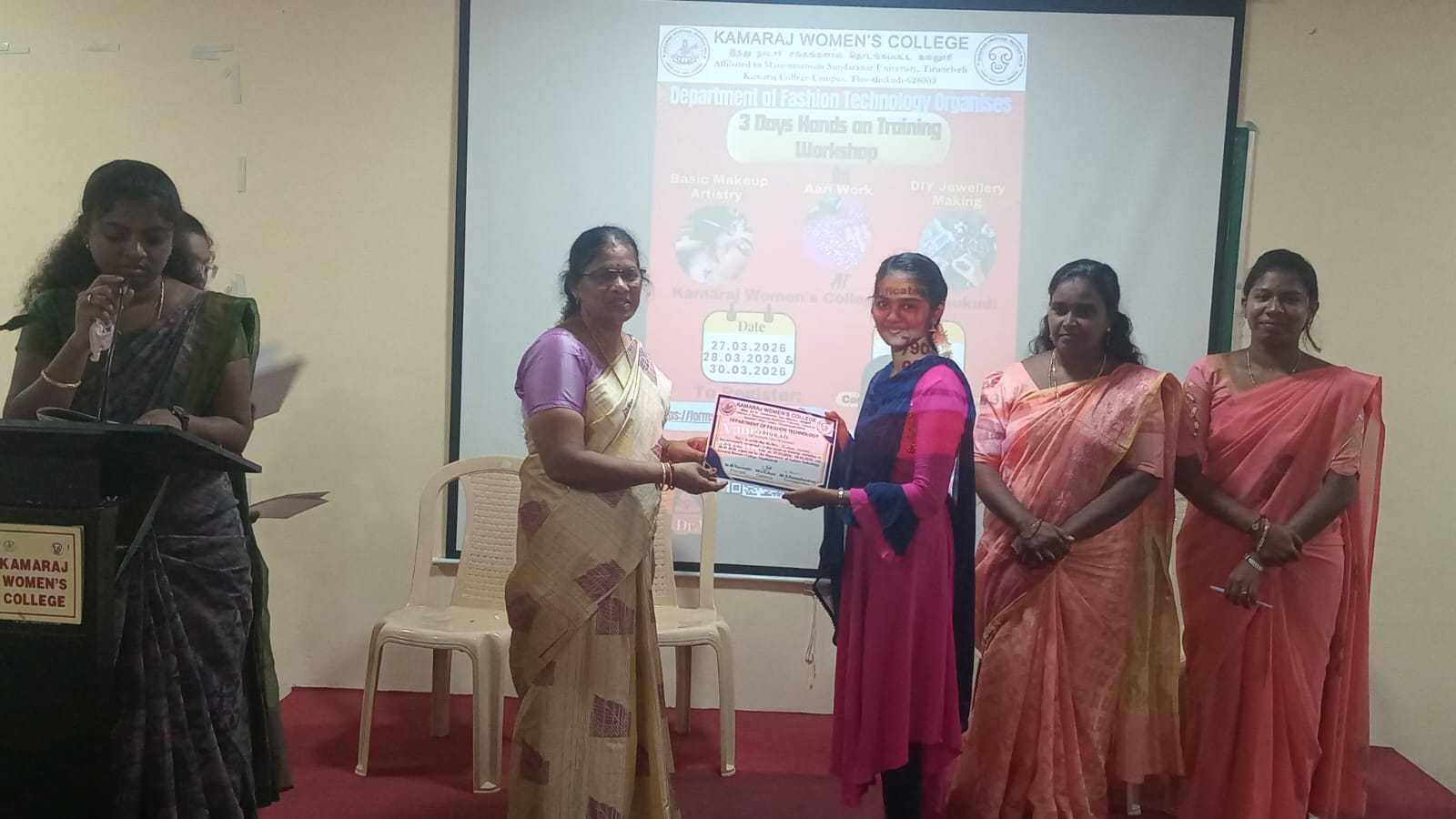
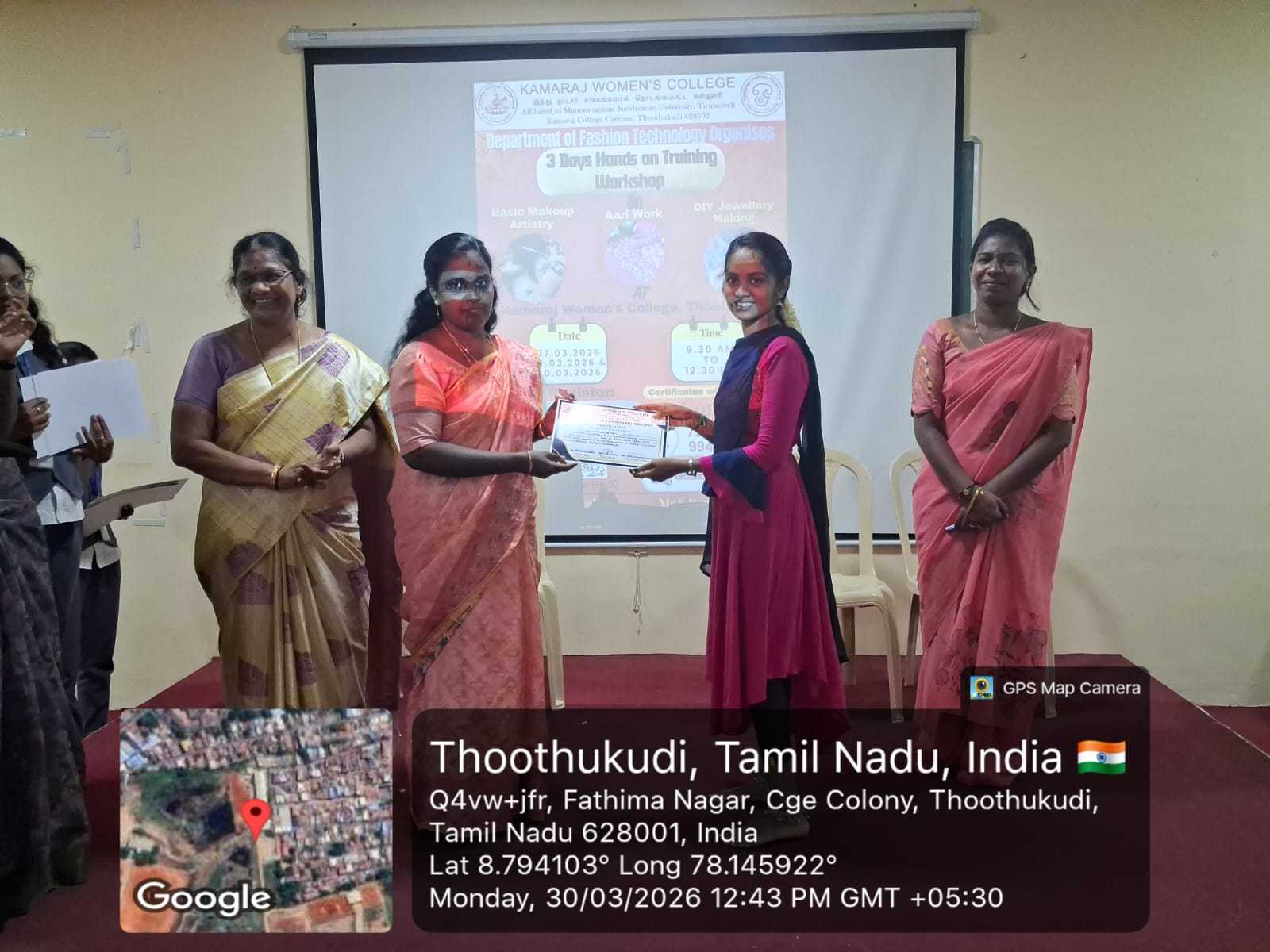
A major highlight of the final day was the distribution of certificates to all participants. These certificates recognized the successful completion of the Hands-on Training Workshop and appreciated the commitment shown by the learners.
The programme then concluded with a formal Vote of Thanks. Gratitude was expressed to the management, resource persons, organizers, and participants for their cooperation and support. This brought the workshop to a graceful and respectful end.
In addition, the certificate distribution motivated the participants and added value to their learning experience. It recognized not only attendance but also sincere involvement in practical skill development.
Skills Developed Through the Workshop
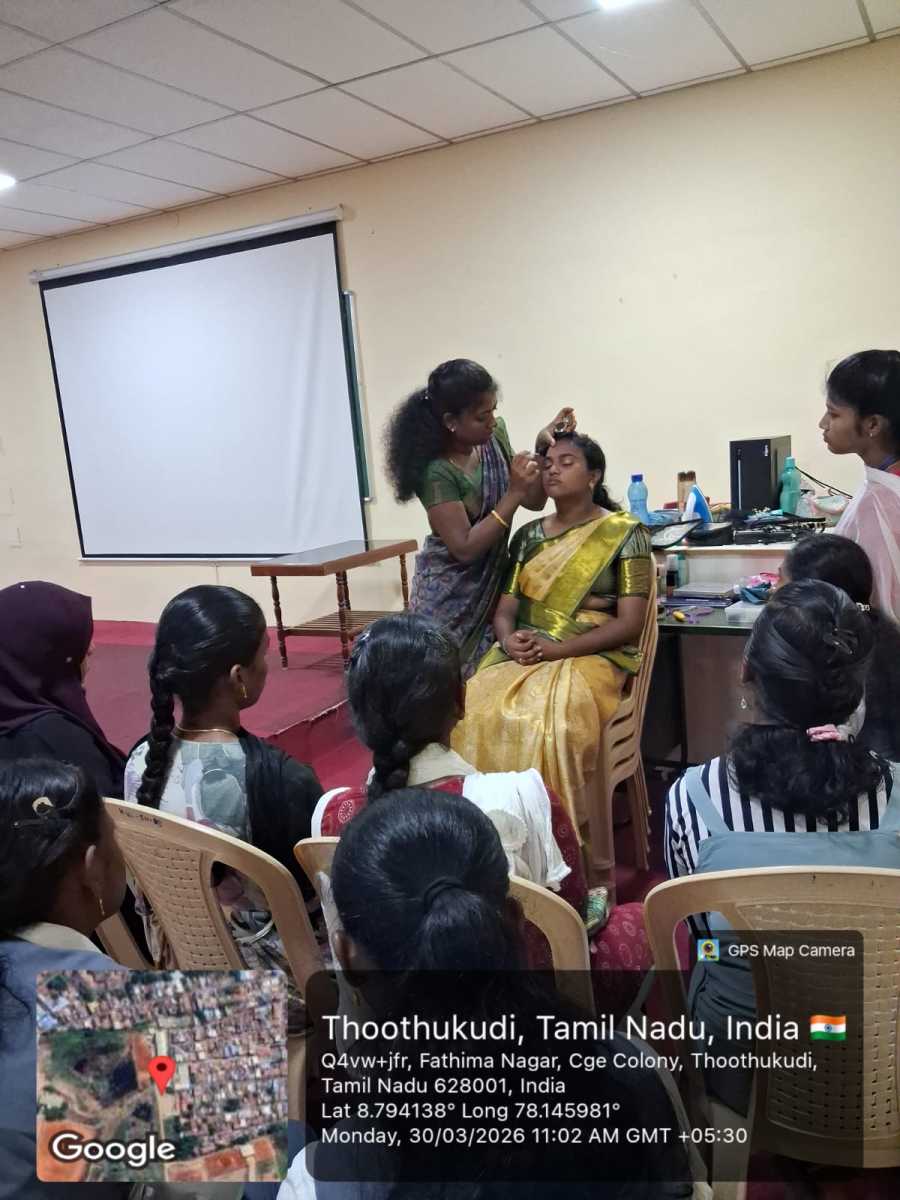
The Hands-on Training Workshop helped participants improve several useful skills. Since the training focused on Aari Work, Basic Makeup Artistry, and DIY Jewellery Making, it combined craft, design, and practical creativity in an effective way.
The programme helped participants develop:
- Technical skill in Aari Work
- Basic knowledge of makeup artistry
- Creative ability in DIY jewellery making
- Confidence through practical learning
- Interest in self-employment opportunities
- Improved concentration and fine work skills
Furthermore, the workshop encouraged learners to think creatively and work with patience. It also showed them that practical skills can become useful opportunities for income generation and self-reliance.
Impact of the Workshop
The overall impact of the Hands-on Training Workshop was highly positive. It enhanced technical skills, encouraged creativity, and improved self-confidence among the participants. At the same time, it created awareness about self-employment and skill-based career opportunities.
Because the workshop included students, working women, and homemakers, it also showed the social value of practical education. The programme proved that skill training can benefit a wide range of learners. Therefore, the event became both educational and empowering.
Above all, the workshop created a vibrant and interactive learning environment. It encouraged participants to learn with interest, practise with confidence, and explore their own creativity.
Conclusion
The 3-Day Hands-on Training Workshop organized by the Department of Fashion Technology, Kamaraj Women’s College, Thoothukudi, was highly successful and meaningful. It provided practical training in Aari Work, Basic Makeup Artistry, and DIY Jewellery Making. It also fulfilled its objective of developing creativity, technical skill, and self-employment awareness.
Overall, the workshop offered a rich learning experience to all participants. It combined guided instruction, individual practice, feedback, and recognition in a balanced way. Most importantly, it encouraged learners to use their creativity with confidence and purpose.
Such workshops continue to play an important role in skill development and community empowerment. Therefore, this programme stood as a valuable and inspiring initiative of the department.