
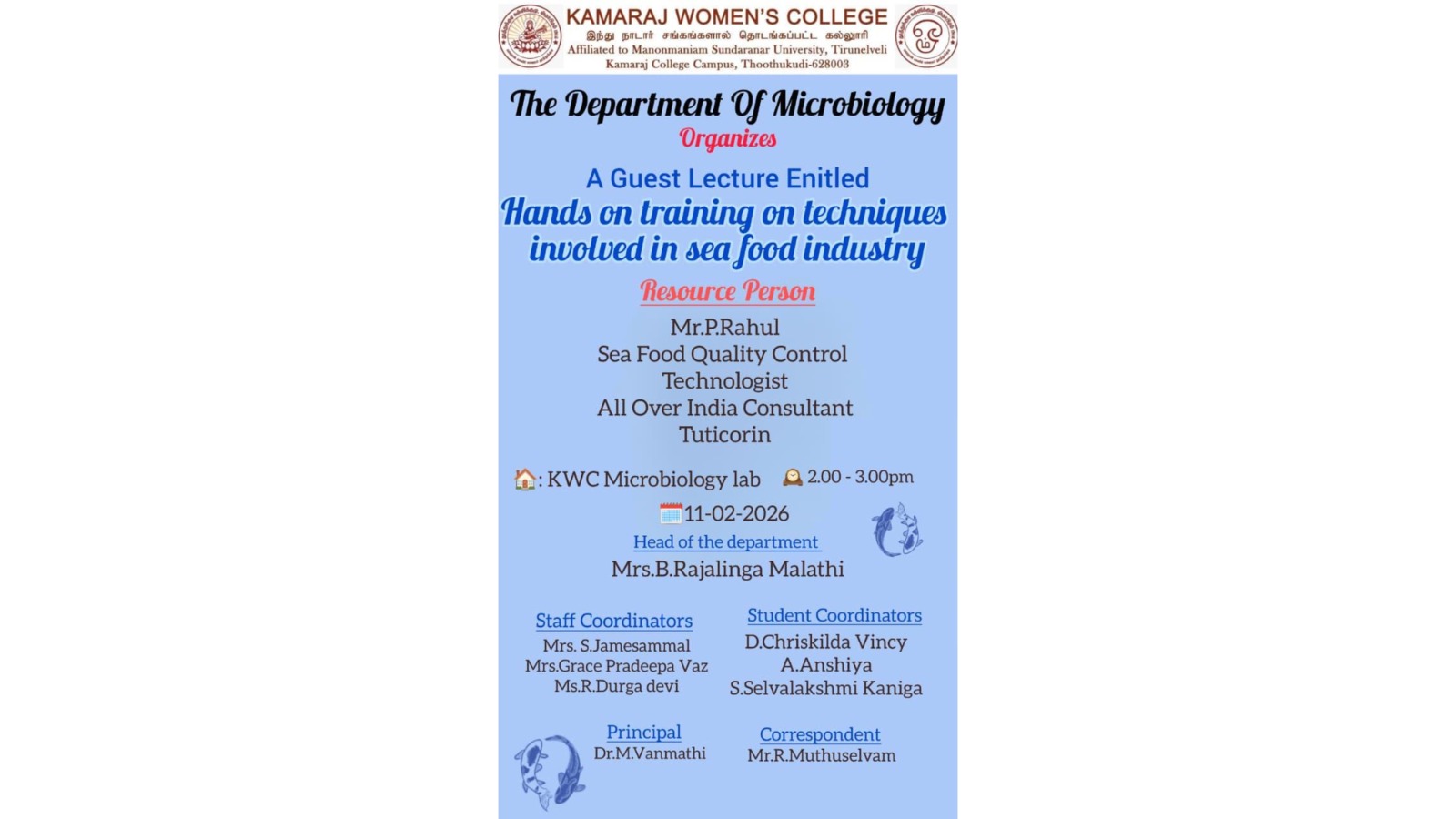
Empowering Skill Development Programme on Seafood
Skill Development Programme
On 11.02.2026, the Department of Microbiology, Kamaraj Women’s College, Thoothukudi, organized a highly impactful Skill Development Programme aimed at enhancing the employability of its III-year students. The programme was designed to provide practical exposure and industry-oriented training, particularly in the seafood processing and export sector.
Moreover, the initiative aligned with the department’s commitment to bridging the gap between academic knowledge and real-world industrial expectations. As a result, students gained valuable insights into career pathways and skill requirements within the seafood industry.
Objectives of the Skill Development Programme
The primary objectives of the Skill Development Programme were to:
- Enhance students’ employability in the seafood industry
- Provide hands-on understanding of seafood processing and preservation
- Introduce export standards and quality control measures
- Create awareness about industry expectations and job roles
- Encourage students to develop industry-specific skills
Therefore, the programme aimed to equip students with both technical knowledge and professional awareness.
Expert Resource Person and Industry Insights
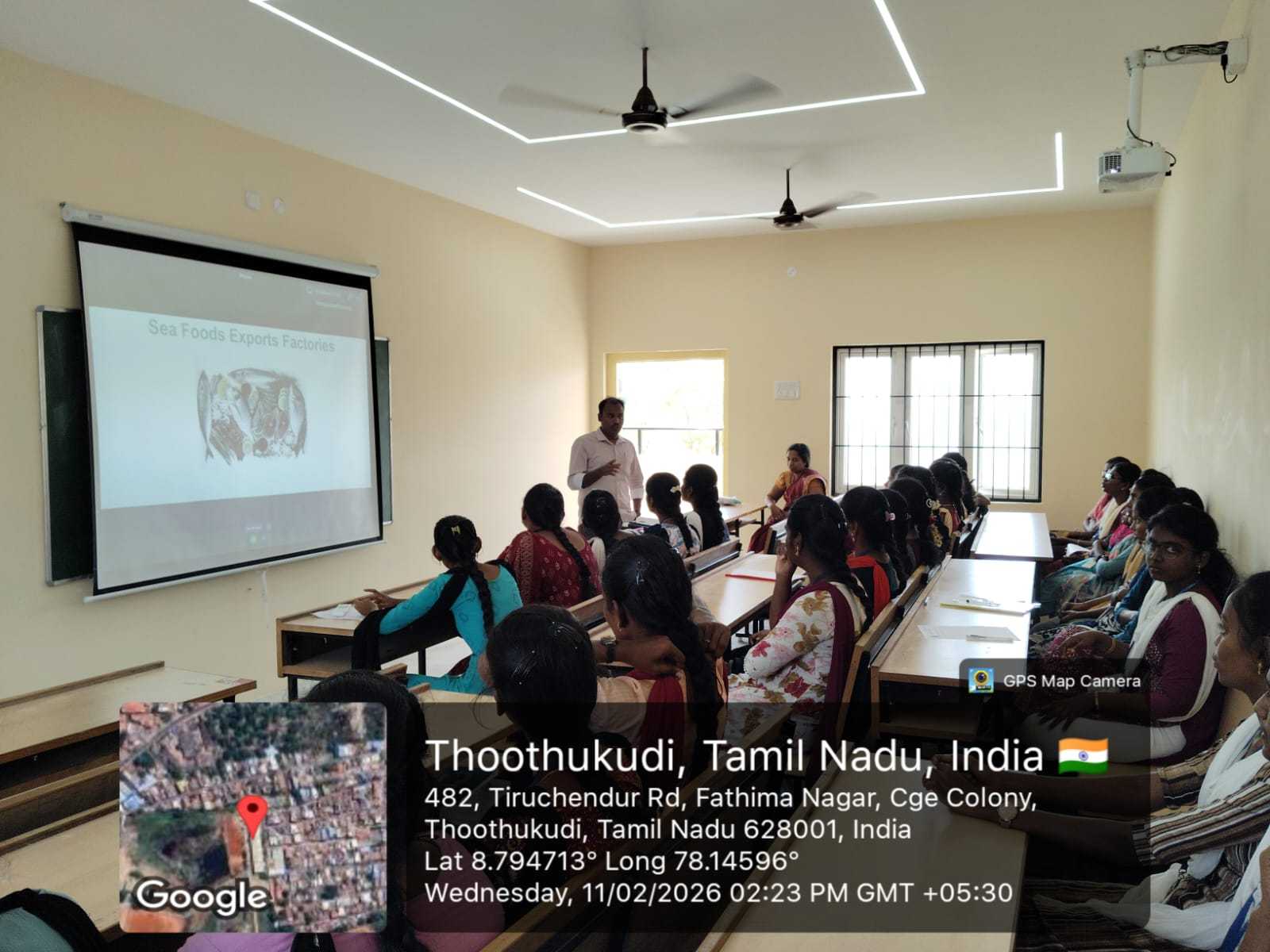
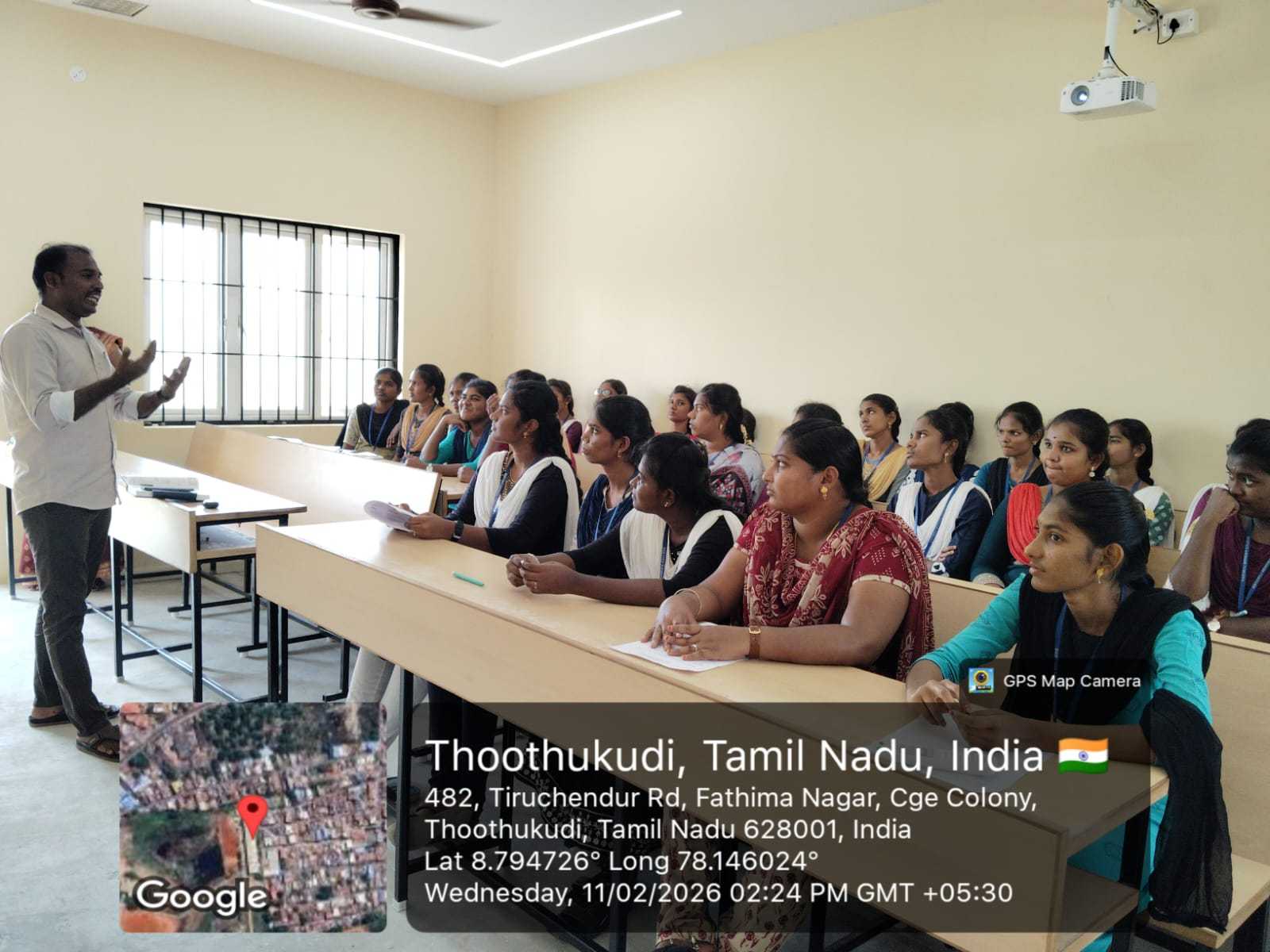
The training session was conducted by Mr. P. Rahul, a renowned Seafood Quality Control Technologist and All India Consultant from Kulayankarisal. With his vast industry experience, Mr. Rahul delivered an informative and engaging session that captured the attention of the students.
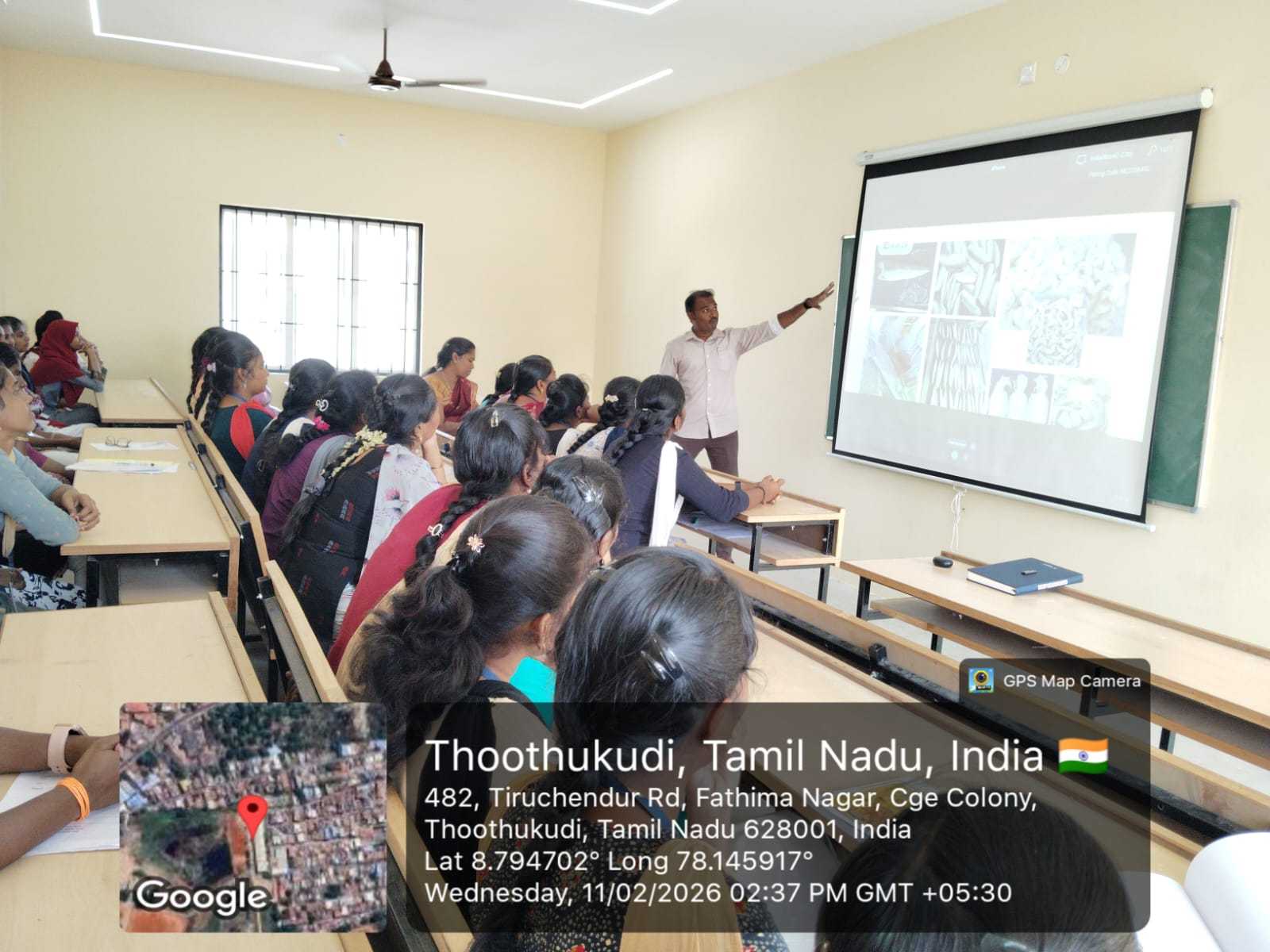
Furthermore, he used real-life images and case examples to explain the various stages of seafood processing. Through detailed explanations, he illustrated the technical and quality aspects that determine the success of seafood products in national and international markets. Consequently, students gained clarity about industry standards and operational procedures.
Understanding Seafood Processing and Preservation
During the Skill Development Programme, students were introduced to the complete workflow of seafood processing. The session covered essential aspects such as:
- Sorting and grading of seafood
- Cleaning and hygienic handling practices
- Preservation techniques including freezing and packaging
- Quality control and laboratory testing procedures
- Export documentation and compliance requirements
In addition, the importance of maintaining hygiene and adhering to global food safety standards was emphasized. As a result, students understood the critical role of microbiologists in ensuring product quality and consumer safety.
Industry Expectations and Career Opportunities
Mr. Rahul also highlighted the diverse career opportunities available in the seafood industry. He explained how students with microbiology backgrounds can secure positions in:
- Quality control laboratories
- Seafood export companies
- Food safety and inspection units
- Research and development sectors
- Consultancy and compliance roles
Moreover, he stressed the importance of acquiring additional certifications, practical training, and updated knowledge about industry trends. Therefore, students were encouraged to continuously upgrade their skills to remain competitive in the job market.
Interactive Learning and Student Engagement
The session was highly interactive, allowing students to raise questions and clarify doubts regarding industry practices. Not only did students listen attentively, but they also actively participated in discussions about export standards, quality assurance methods, and career growth strategies.
As a result, the training programme fostered a dynamic learning environment. Students gained confidence in understanding industrial expectations and practical applications of microbiology concepts. Furthermore, the interaction strengthened their motivation to pursue specialized career paths in seafood technology.
Impact of the Skill Development Programme
The Skill Development Programme proved to be a resounding success. It significantly enhanced students’ awareness of industrial processes and job opportunities. Additionally, it helped them recognize the importance of combining theoretical knowledge with hands-on expertise.
The key outcomes of the programme included:
- Improved understanding of seafood industry operations
- Enhanced knowledge of quality control practices
- Greater awareness of export standards and compliance
- Increased confidence in pursuing industry careers
- Strengthened employability skills
Thus, the session effectively prepared students for real-world professional challenges.
Institutional Commitment to Employability
Through initiatives like the Skill Development Programme, Kamaraj Women’s College continues to demonstrate its commitment to holistic education and career readiness. The institution consistently promotes industry-oriented training to ensure students graduate with both academic excellence and practical expertise.
For more information about the institution and its academic programmes, visit:
👉 Kamaraj Women’s College – Official Website
To learn more about seafood export standards and quality regulations, visit:
👉 Food Safety and Standards Authority of India (FSSAI)
Conclusion
In conclusion, the Skill Development Programme organized by the Department of Microbiology on 11.02.2026 was highly impactful and professionally enriching. Through expert guidance, practical illustrations, and interactive discussions, the session empowered III-year students with valuable industry insights.
Ultimately, the programme not only enhanced students’ technical knowledge but also strengthened their readiness for careers in the seafood industry. The department looks forward to conducting more such skill-oriented initiatives to support the employability and professional growth of its students.